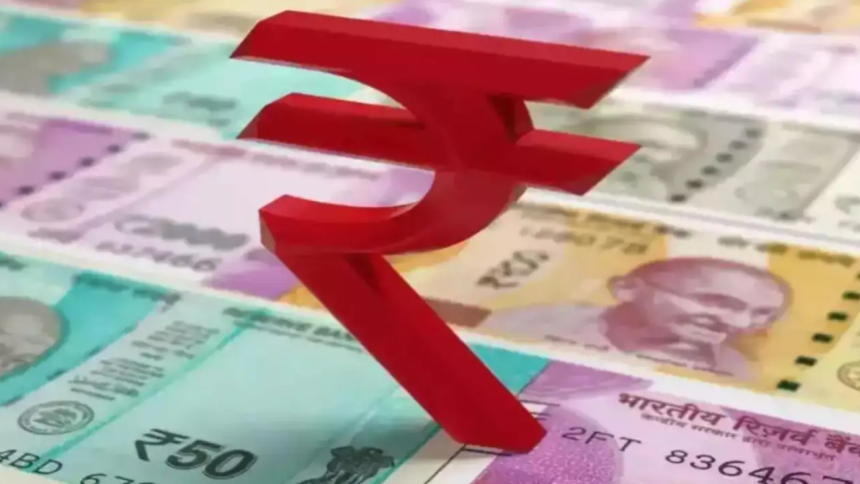
The Indian rupee continued its downward spiral, depreciating by 30 paise to close at 94.63 against the US dollar on Monday, amidst growing concerns about the global economic landscape. The strength of the American currency overseas, coupled with lingering uncertainty surrounding developments in the Middle East, weighed heavily on the rupee’s value. As investors remain cautious about the potential impact of these external factors on the Indian economy, the rupee’s depreciation is likely to have far-reaching consequences for importers, exporters, and the overall market.
Global Economic Uncertainty Takes Center Stage
The depreciation of the rupee is not an isolated incident; it is a symptom of a broader global economic trend. The US dollar, considered a safe-haven currency, has been gaining strength in recent weeks due to concerns about the global economic outlook. The ongoing tensions in the Middle East, particularly the Iran-US conflict, have added to the uncertainty, causing investors to flock to the dollar as a safe bet. This has led to a surge in demand for the dollar, further exacerbating the rupee’s depreciation.
The impact of the rupee’s depreciation is already being felt in the Indian market, with importers facing higher costs and reduced purchasing power. Exporters, on the other hand, may benefit from the weaker rupee, as their products become more competitive in the global market. However, the overall effect on the economy is likely to be negative, as a weaker rupee can lead to higher inflation and reduced consumer spending power.
Indian Economy’s Vulnerability to Global Trends
The Indian economy has been vulnerable to global trends in recent years, and the rupee’s depreciation is a stark reminder of this reality. India’s dependence on imported goods, coupled with its large trade deficit, makes it more susceptible to fluctuations in the global economy. The country’s economic growth, which has been slowing down in recent quarters, is also a concern, as a weaker rupee can further exacerbate the slowdown.
The Indian government has been taking steps to address the economic slowdown, including implementing fiscal measures and reducing interest rates. However, the impact of these measures is yet to be seen, and the rupee’s depreciation is likely to put additional pressure on the government to take further action. The Reserve Bank of India (RBI) has been intervening in the foreign exchange market to stabilize the rupee, but the effectiveness of these measures remains to be seen.
A Delicate Balance Between Economic Growth and Price Stability
The rupee’s depreciation has highlighted the delicate balance between economic growth and price stability. A weaker rupee can lead to higher inflation, which can erode the purchasing power of consumers and reduce economic growth. On the other hand, a stable rupee can lead to higher interest rates, which can reduce economic growth. The Indian government and the RBI face a daunting task in finding the right balance between these two competing objectives.
The future of the rupee remains uncertain, and the path ahead is fraught with challenges. However, one thing is clear: the Indian economy needs a stable and predictable exchange rate to achieve sustained economic growth. The government and the RBI must work together to find a solution to the rupee’s depreciation and restore confidence in the Indian economy.
As the global economic landscape continues to evolve, the Indian rupee is likely to remain a key indicator of the country’s economic health. The depreciation of the rupee is a wake-up call for the government and the RBI to take proactive measures to address the underlying structural issues in the economy and restore a stable exchange rate.