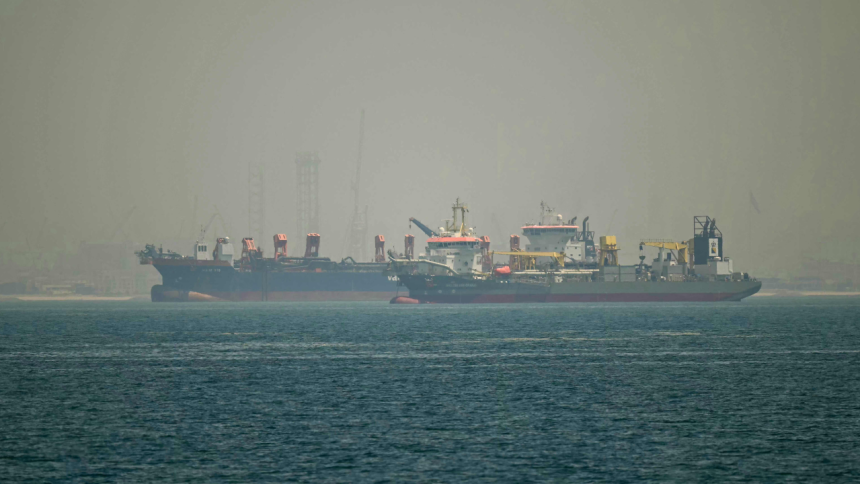
The recent firing incident involving two Indian vessels by the Islamic Revolutionary Guard Corps (IRGC) on April 18 in the Persian Gulf has raised concerns about the safety of Indian-flagged ships in the region. In response, the Indian Navy has issued guidelines for these vessels to transit the area only when directed by the Indian authorities, ensuring a safer and more secure passage.
The IRGC’s firing incident has sparked widespread condemnation from the international community, with many expressing concerns about the escalating tensions in the region. The Indian government has been working closely with international partners to de-escalate the situation and ensure the safe passage of Indian-flagged vessels. As a precautionary measure, the Indian Navy has directed all Indian-flagged vessels to refrain from transiting the Persian Gulf without explicit permission from the Indian authorities.
India’s Diplomatic Efforts to De-Escalate Tensions
The Indian government has been engaged in diplomatic efforts to resolve the issue and prevent any further escalation of tensions. India’s Ambassador to Iran, Saurabh Kumar, has been in regular communication with his Iranian counterpart, working to resolve the issue through diplomatic channels. Meanwhile, the Indian Navy has also been in close coordination with the international community, including the United States, the United Kingdom, and other regional powers, to ensure the safe passage of Indian-flagged vessels.
The Indian Navy’s decision to direct Indian-flagged vessels to transit the Persian Gulf only when directed has been welcomed by many in the shipping industry. This move is seen as a proactive step to ensure the safety of Indian sailors and vessels, and to prevent any further escalation of tensions in the region.
The Impact on Indian Shipping Industry
The firing incident has had a significant impact on the Indian shipping industry, with many vessels now choosing to avoid the Persian Gulf altogether. The Indian Navy’s guidelines have been seen as a necessary measure to mitigate the risks associated with transiting the region. However, some industry experts have expressed concerns about the potential economic impact of this decision, particularly for Indian shipowners who rely heavily on the Persian Gulf trade.
The Indian government has been working to mitigate the economic impact of this decision, offering financial assistance and other support to Indian shipowners affected by the situation. However, the long-term implications of this decision remain to be seen, and many in the industry are watching the situation closely.
Way Forward
The Indian Navy’s guidelines for Indian-flagged vessels to transit the Persian Gulf only when directed are seen as a key step towards ensuring safety and security in the region. As the situation continues to unfold, the Indian government and the Indian Navy will remain vigilant and take all necessary steps to protect Indian interests and ensure the safe passage of Indian-flagged vessels.
The incident highlights the need for greater cooperation and dialogue between nations to prevent such incidents in the future. The Indian government has been at the forefront of efforts to promote peace and stability in the region, and it is hoped that this incident will serve as a catalyst for greater international cooperation.
In the meantime, Indian-flagged vessels will continue to transit the Persian Gulf only when directed by the Indian authorities, ensuring a safer and more secure passage for all.