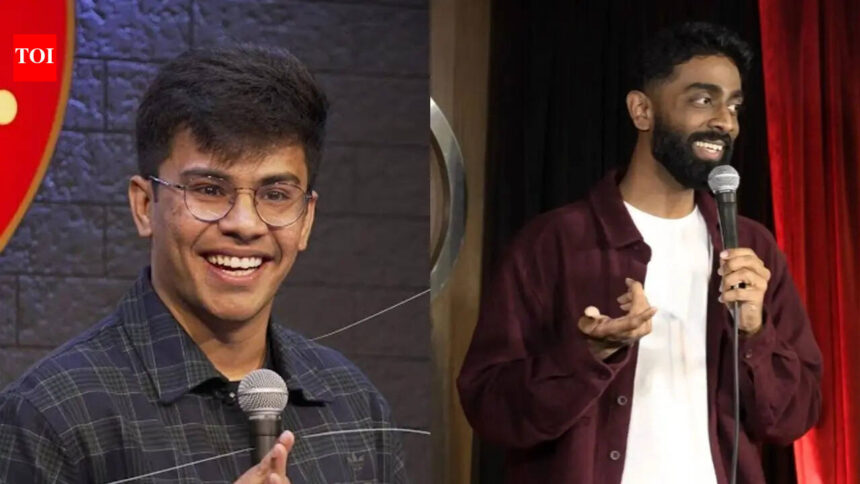
Stand-up comedy has long been a platform for free expression, pushing boundaries and provoking laughter. However, recent controversies surrounding comedians Pranit More and Madhur Virli have left many questioning whether the art form is losing its way. The resurfaced rape joke by Madhur Virli, which sparked outrage online, has reignited the debate about the state of Indian stand-up comedy and the role of responsibility in the face of controversy.
Pranit More and the Slippery Slope of Crowd-Work
Pranit More’s crowd-work clips, which featured him engaging with audience members and making light of sensitive topics, have been widely criticized for crossing the line between comedy and harassment. While some have defended his intentions as a genuine attempt to connect with his audience, others have accused him of using his platform to shame and belittle individuals. The incident serves as a reminder that comedy is a delicate balance between pushing boundaries and respecting the audience’s comfort level.
The controversy surrounding Pranit More’s crowd-work clips has raised important questions about the role of comedians in modern society. Should they be free to tackle any topic, no matter how sensitive, in the pursuit of comedy, or is there a point at which they must draw the line? The answer, it seems, is not as clear-cut as it once was.
Losing the Wit in Shock Value
The rise of Indian stand-up comedy in recent years has been attributed, in part, to the willingness of comedians to tackle taboo subjects and push the envelope. However, with the growing emphasis on shock value and controversy, it’s beginning to feel like comedy is losing its way. Rather than relying on clever wordplay and witty observations, many comedians are opting for the quick fix of outrage and shock. This trend is not only alienating audiences but also undermining the very principles of comedy that made it so beloved in the first place.
The impact of this shift is evident in the growing number of comedians who are relying on controversy to get attention. Rather than focusing on crafting nuanced and thought-provoking material, they’re opting for the easy route of shock and outrage. This not only diminishes the art form but also sets a bad precedent for future generations of comedians.
A Comedy of Errors?
As the dust settles on the latest controversy surrounding Madhur Virli, it’s clear that Indian stand-up comedy is at a crossroads. Will it continue down the path of shock value and controversy, or will it rediscover its roots in wit, nuance, and clever observation? The answer lies with the comedians themselves, who must navigate the fine line between pushing boundaries and respecting their audience’s boundaries. Ultimately, it’s up to them to decide whether comedy will remain a platform for free expression or a laughing stock for controversy.
The future of Indian stand-up comedy hangs in the balance, and it’s up to the comedians to prove that they’re more than just a punchline. With controversy still simmering in the background, it’s time for them to take a step back and reassess their approach to comedy. Only then can they hope to reclaim their place as the nation’s favourite comedians.