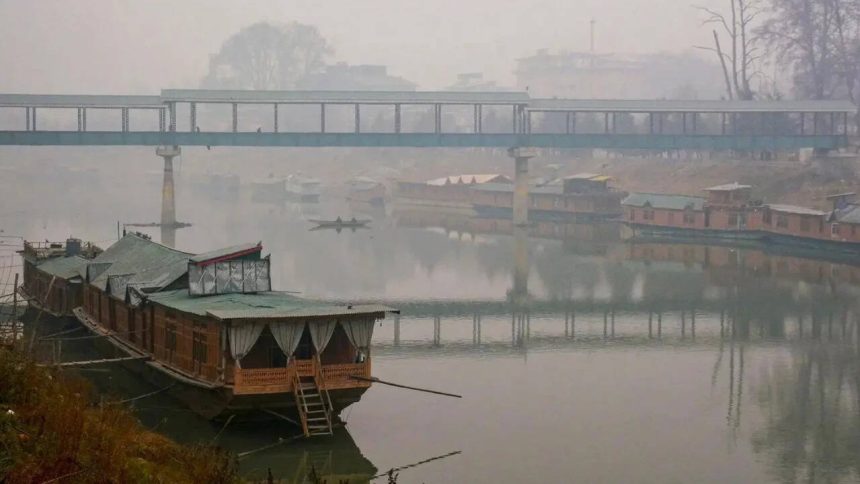
The serene waters of the Jhelum river, a lifeline for centuries and the lifeblood of Srinagar’s rich heritage, may soon be disrupted by the Jammu and Kashmir government’s ambitious plan to launch inland water transport. While the move is touted as a way to boost tourism and economy, the owners of the iconic houseboats that dot the river are bracing for a potentially devastating impact. For them, the recent sinking of Queen’s Club, a majestic British-era-style houseboat, has sounded a warning bell that their way of life is under threat.
Heritage at Stake: The Sinking of Queen’s Club
The sinking of Queen’s Club, which served as both a home and a livelihood for a family on the river, has left the community reeling. The houseboat, a stunning example of traditional Kashmiri architecture, had been a beloved landmark for generations. Its demise has sparked fears that the remaining river houseboats may not be far behind, victims of the constant erosion and sedimentation caused by the river’s unpredictable currents and the impact of dredging operations.
The houseboat owners claim that the government’s water transport plan, which includes regular passenger boats and cruise tourism operations, will only exacerbate the problem. They point out that the boats will churn up the river’s sediment, making it even more difficult for the fragile wooden structures of the houseboats to withstand the constant buffeting of the water. The dredging operations, which are necessary to maintain the river’s navigability, will also further weaken the riverbed, making it more prone to erosion.
A Legacy at Risk: The Cultural Significance of Jhelum’s Houseboats
The houseboats on the Jhelum river are more than just a tourist attraction or a way of life for the owners. They are a living testament to the region’s rich cultural heritage, a symbol of the ingenuity and resilience of the people who have called the river home for centuries. The traditional Kashmiri architecture that defines these houseboats is a unique blend of Islamic, Hindu, and Buddhist influences, a reflection of the region’s complex history and its ability to absorb and assimilate diverse cultures.
The houseboats are also an important part of the region’s social fabric, providing a sense of community and identity for the people who live and work on them. They are a reminder of the region’s storied past, a connection to the ancestors who built these magnificent structures using traditional techniques and materials that have been passed down through generations.
A Call to Action: Save the Jhelum Houseboats
The sinking of Queen’s Club has sent shockwaves through the community, and the houseboat owners are now urging the government to reconsider its water transport plan. They are calling for a more nuanced approach that takes into account the cultural and environmental significance of the houseboats and the river itself.
It is not too late to act, and the government must take heed of the concerns of the houseboat owners and the community. By working together, it is possible to find a solution that balances the need for economic development with the need to preserve the region’s rich cultural heritage. The fate of the Jhelum houseboats is in our hands, and it is up to us to ensure that these magnificent structures continue to thrive for generations to come.
The Jhelum river, with its majestic houseboats, is a treasure that deserves to be protected and preserved. It is a reminder of the region’s rich history, its cultural heritage, and its people’s resilience and ingenuity. Let us work together to save the Jhelum houseboats and ensure that they continue to float on the river’s serene waters for generations to come.