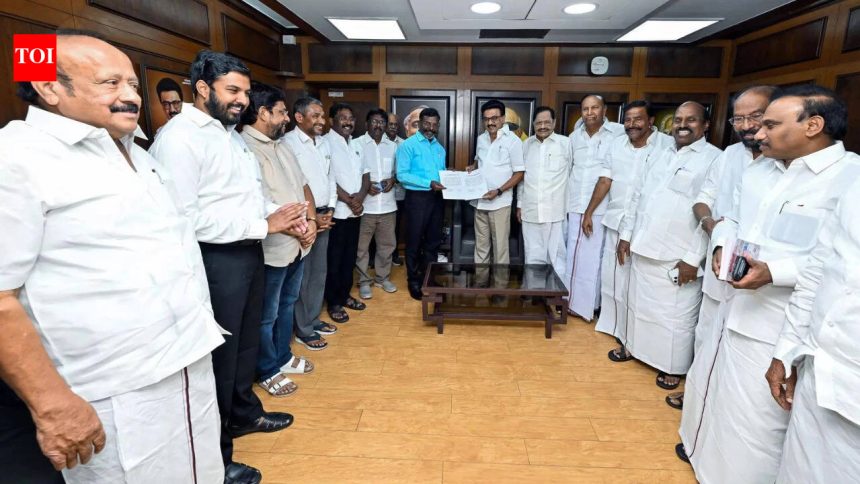
The drums of democracy are beating loud in Tamil Nadu, and the DMK has fired the first salvo by releasing its candidate list for the upcoming assembly election. In a move that’s being seen as a strategic masterstroke, Chief Minister MK Stalin will contest from the Kolathur constituency, a seat that’s considered a DMK stronghold. This development has set the tone for what promises to be a fiercely contested election, with the DMK looking to capitalize on its current momentum.
DMK’s Candidate Selection: A Mix of Experience and Fresh Faces
The DMK’s candidate list is a fascinating blend of seasoned politicians and new faces, with over a third of the constituencies allocated to fresh entrants. This move is likely to inject new energy into the party and help it connect with a younger demographic. At the same time, the DMK has retained most of its incumbent ministers, a decision that’s expected to provide continuity and stability. By striking this balance, the party is attempting to navigate the delicate task of rejuvenating its ranks while leveraging the experience of its seasoned leaders.
The inclusion of new faces is also a testament to the DMK’s efforts to promote internal democracy and provide opportunities for talented individuals to rise through the ranks. This approach is likely to pay dividends in the long run, as it will help the party build a strong bench of future leaders. Moreover, by giving tickets to fresh faces, the DMK is trying to send a message that it’s committed to change and willing to take risks to achieve its goals.
Election Strategies and Implications
The DMK’s candidate selection is just one part of its overall election strategy, which is focused on showcasing the party’s commitment to good governance and development. The party is likely to highlight its achievements in the current term, including its handling of the pandemic and its efforts to promote economic growth. At the same time, the DMK will need to navigate the challenges posed by its opponents, including the AIADMK and the BJP, which are likely to launch a fierce campaign to discredit the ruling party.
The election in Tamil Nadu is also being closely watched for its implications on national politics. The DMK is a key ally of the Congress party, and a victory in the state would be a significant boost to the opposition’s efforts to challenge the BJP’s dominance. Moreover, the election will provide valuable insights into the mood of the electorate, particularly with regards to issues like economic development, social justice, and corruption.
What’s at Stake for the DMK and its Leaders
For the DMK, the upcoming election is a make-or-break moment, with the party’s very survival at stake. A defeat would be a significant setback for the party and its leaders, including Chief Minister Stalin, who has invested heavily in the election campaign. On the other hand, a victory would cement the DMK’s position as a dominant force in Tamil Nadu politics and provide a launching pad for the party’s national ambitions.
The stakes are also high for individual leaders, including Chief Minister Stalin, who is contesting from the Kolathur constituency. A win would validate his leadership and provide a strong mandate for the party, while a defeat would raise questions about his ability to connect with the electorate. As the campaign heats up, the DMK and its leaders will need to navigate the complexities of Tamil Nadu politics, manage their alliances, and communicate their vision effectively to the voters.
The election in Tamil Nadu is shaping up to be a thrilling contest, with the DMK, AIADMK, and BJP locked in a fierce battle for power. As the parties and their leaders engage in a war of words and ideas, the voters will ultimately decide who will reign supreme in the state. One thing is certain, though – the outcome of this election will have far-reaching implications for Tamil Nadu and national politics, and will be closely watched by politicians and analysts across the country.