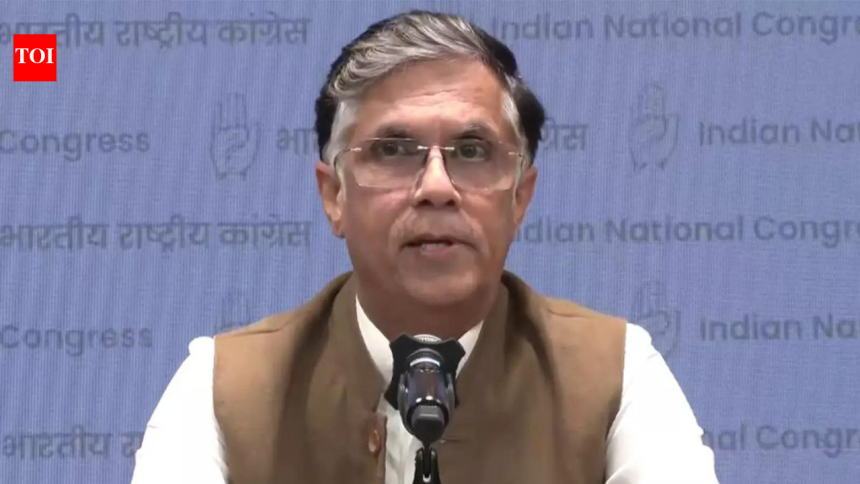
The Supreme Court of India dealt a significant blow to Congress leader Pawan Khera on Friday, rejecting his plea for interim protection from arrest. The development comes as a major setback for Khera, who had sought the court’s intervention to prevent his arrest in connection with a defamation case. The court’s decision has left Khera with limited options and has once again put the spotlight on the ongoing tensions between the ruling Bharatiya Janata Party (BJP) and the opposition Congress party.
Legal Battle Escalates
The Supreme Court’s refusal to grant Khera interim protection from arrest is a significant development in the ongoing legal battle. The Congress leader had filed a petition in the apex court seeking to stay his arrest till Tuesday, when his bail plea is scheduled to be heard in the High Court. However, the Supreme Court bench comprising justices Sanjay Kishan Kaul and Abhay S. Oka rejected Khera’s plea, asking him to seek anti-arrest bail from the High Court instead. The decision is likely to have far-reaching implications for Khera, who has been at the receiving end of intense scrutiny from the BJP and its supporters.
The defamation case against Khera stems from a speech he made in November last year, in which he allegedly made derogatory remarks about Prime Minister Narendra Modi’s government. The BJP has been quick to capitalize on the controversy, with several of its leaders accusing Khera of attempting to tarnish the government’s image. Khera has denied the allegations, claiming that his remarks were taken out of context and were meant to highlight the government’s failures on various fronts.
BJP’s Crackdown on Opposition Continues
The Supreme Court’s decision to reject Khera’s plea is part of a broader pattern of the BJP’s crackdown on the opposition. Over the past few months, several opposition leaders have been arrested and charged with various offenses, including defamation, sedition, and inciting public unrest. The BJP has justified the crackdown, claiming that it is necessary to maintain law and order and prevent the spread of misinformation. However, critics argue that the move is an attempt to muzzle dissent and silence opposition voices.
Human rights activists and opposition leaders have expressed concern over the BJP’s tactics, arguing that they are an affront to democratic principles and the right to free speech. The situation has sparked widespread debate, with many calling for the government to tone down its rhetoric and respect the rights of citizens to express their opinions without fear of reprisal.
Khera’s Future Hangs in the Balance
The Supreme Court’s decision to reject Khera’s plea has left his future hanging in the balance. With the arrest warrant still in place, Khera is likely to face intense pressure from the BJP and its supporters to withdraw his bail plea. However, the Congress leader has remained resolute, vowing to fight the defamation case and clear his name. As the situation unfolds, one thing is clear: the Supreme Court’s decision has set the stage for a high-stakes battle between the BJP and the Congress, with Khera’s freedom and reputation at stake.
The implications of the Supreme Court’s decision will be closely watched by the Indian public and the international community. As the situation continues to evolve, one thing is clear: the battle for freedom of speech and the right to dissent is far from over.