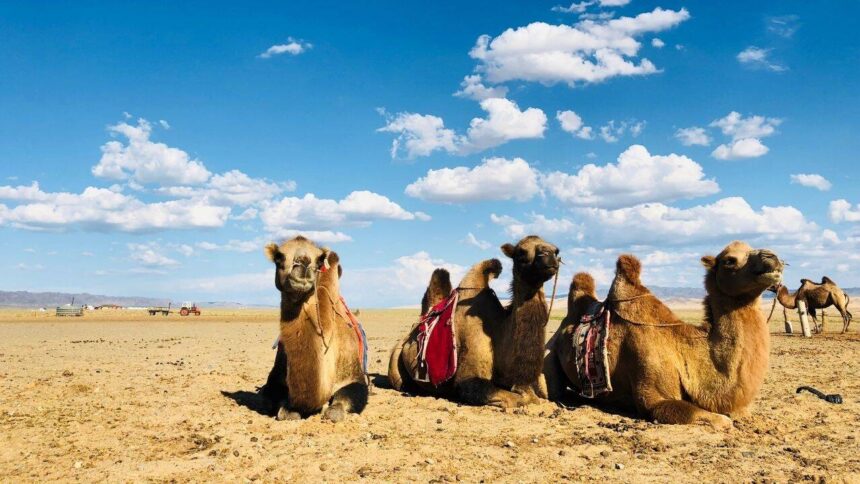
Deep within the vast expanse of Mongolia’s Gobi Desert, a centuries-old tradition has been passed down through generations of herding families, a testament to the profound connection between humans and animals. The tradition, known as Khööslökh, or the camel coaxing ritual, is a poignant display of empathy and understanding, where herders use song to reunite a mother camel with her rejected newborn. This ancient practice, recognized by UNESCO, not only highlights the resourcefulness and compassion of Mongolian herders but also underscores the intricate social bonds within camel families.
The Origins of Khööslökh
The Gobi Desert, with its harsh climate and limited vegetation, is an unforgiving environment that demands adaptability and resilience from both humans and animals. It is here that the camel, with its distinctive humps and robust constitution, has become an indispensable companion for Mongolian herders. However, the birth of a camel calf can sometimes be met with rejection by the mother, a situation that threatens the very survival of the newborn. It is in these moments that the herders intervene, using the Khööslökh ritual to coax the mother back to her calf.
The ritual itself is a mesmerizing spectacle, with the herder singing a haunting melody that seems to resonate deep within the camel’s psyche. The song, often accompanied by gentle gestures and soft whispers, is designed to calm the mother and reestablish her bond with the calf. This ancient lullaby, passed down through generations, holds a profound significance that extends beyond the immediate context of camel herding, speaking to a deeper understanding of animal behavior and the human capacity for empathy.
The Significance of Khööslökh in Modern Times
As the world grapples with the challenges of environmental degradation and species conservation, the Khööslökh ritual offers a compelling example of traditional knowledge and its relevance to modern society. By recognizing the importance of this ancient practice, UNESCO has underscored the need to preserve cultural heritage and promote sustainable livelihoods. For Mongolian herders, the continuation of Khööslökh is not only a matter of cultural pride but also an essential component of their daily lives, reflecting a profound respect for the natural world and the creatures that inhabit it.
Moreover, the study of Khööslökh and similar traditions can provide valuable insights into animal behavior and welfare, highlighting the complex social dynamics at play within species. As scientists and conservationists seek to develop more effective strategies for protecting endangered species and preserving ecosystems, the knowledge and practices of indigenous communities like the Mongolian herders can play a vital role, offering a unique perspective that blends traditional wisdom with modern scientific understanding.
Preserving Cultural Heritage in the Modern World
The recognition of Khööslökh by UNESCO serves as a powerful reminder of the importance of cultural preservation and the need to support communities that are working to maintain their traditional practices. In a world where globalization and urbanization are increasingly threatening the diversity of cultural expression, the story of the Mongolian herders and their camel coaxing ritual stands as a testament to the enduring power of tradition and the human spirit. As we look to the future, it is imperative that we prioritize the preservation of cultural heritage, not only for the benefit of the communities that practice these traditions but for the enrichment of humanity as a whole.
And so, in the heart of the Gobi Desert, the ancient lullaby of the Khööslökh ritual continues to resonate, a haunting melody that weaves together the lives of humans and animals in a profound dance of mutual respect and understanding. It is a reminder that, even in the most inhospitable of environments, there exists a deep and abiding connection between species, one that transcends the boundaries of culture and geography, speaking to a common language of compassion and empathy that unites us all.