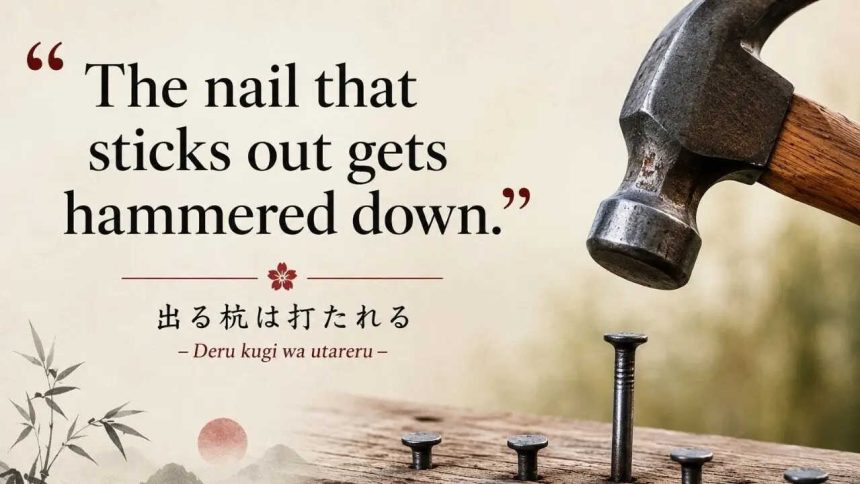
The Japanese proverb ‘the nail that sticks out gets hammered down’ is a stark reminder of the cultural pressures to conform that exist in many societies. This ancient saying, which has been passed down through generations, serves as a warning to those who dare to be different, emphasizing the importance of blending in with the crowd. But what does this proverb reveal about Japanese culture and society, and what lessons can be learned from its enduring wisdom?
Understanding the Proverb’s Origins
The origins of this proverb are unclear, but it is believed to have originated in the Edo period, when Japan was a highly stratified society with strict social hierarchies. During this time, conformity was highly valued, and individuals who failed to comply with social norms risked facing severe consequences. The proverb may have been used to caution people against expressing dissenting opinions or behaving in ways that were deemed unacceptable by society.
Despite its origins in a bygone era, the proverb remains highly relevant today, offering insights into the complexities of human relationships and the tensions between individuality and collective harmony. In Japan, where group cohesion is highly valued, the proverb serves as a reminder of the importance of prioritizing social harmony over personal interests. However, this emphasis on conformity can also have negative consequences, such as stifling creativity and innovation.
The Tension Between Conformity and Individuality
The Japanese proverb highlights the delicate balance between conformity and individuality, a tension that exists in many cultures around the world. On the one hand, conforming to social norms can provide a sense of security and belonging, while on the other hand, it can also lead to a loss of personal autonomy and creativity. In Japan, this tension is particularly pronounced, where the pressure to conform can be overwhelming, especially in the workplace and in social situations.
However, there are also many examples of Japanese individuals who have successfully challenged the status quo and achieved great things through their innovative thinking and creativity. From the world of art and design to technology and entrepreneurship, Japan is home to a thriving community of innovators and risk-takers who are pushing the boundaries of what is possible. These individuals are proof that it is possible to balance individuality with social responsibility, and that conformity is not the only path to success.
Lessons for the Modern World
So what lessons can be learned from this timeless Japanese proverb? One key takeaway is the importance of finding a balance between individuality and social responsibility. While it is essential to prioritize social harmony and cooperation, it is also crucial to create space for creativity, innovation, and self-expression. By embracing diversity and promoting inclusivity, we can foster a more vibrant and dynamic society that values both conformity and individuality.
As we navigate the complexities of modern life, the Japanese proverb ‘the nail that sticks out gets hammered down’ serves as a powerful reminder of the importance of empathy, compassion, and understanding. By recognizing the value of different perspectives and experiences, we can build stronger, more resilient communities that are better equipped to meet the challenges of the future. Ultimately, the proverb’s message is one of hope and resilience, encouraging us to find ways to thrive in a world that often seems hostile to individuality and creativity.