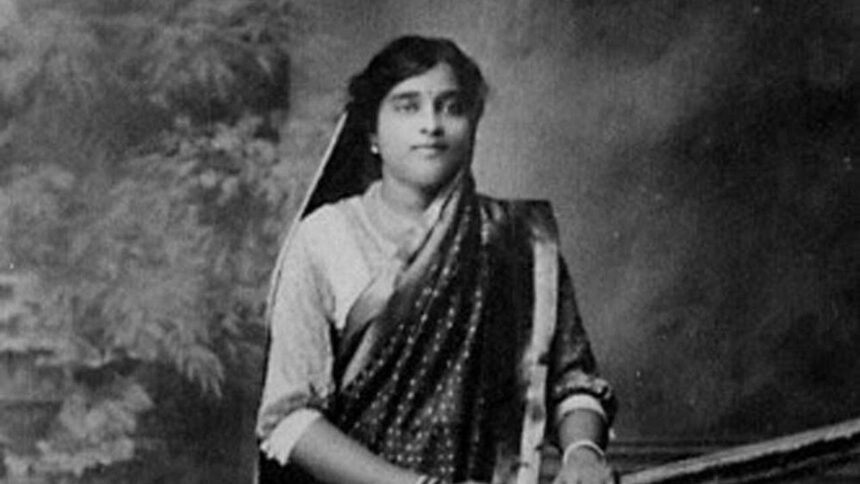
As India continues to push the boundaries of space exploration, a lesser-known achievement in the realm of music has been echoing through the cosmos for decades. The enchanting voice of Kesarbai Kerkar, a renowned Hindustani classical singer, has been floating in space since the 1970s, a testament to the universal language of music. Her rendition of ‘Jaat Kahan Ho’ in Raag Bhairavi, a classic composition, was included in the Voyager Golden Record, a gold-plated copper record that was sent aboard the Voyager spacecraft to represent the diversity of life and culture on Earth.
Early Life and Career
Kesarbai Kerkar was born in 1892 in the village of Keri, in the state of Goa, India. She began her musical training at a young age, learning from some of the most esteemed gurus of her time. Her unique voice and style quickly gained recognition, and she went on to become one of the most celebrated Hindustani classical singers of her era. Kesarbai’s music was characterized by its emotional depth, technical precision, and spiritual resonance, captivating audiences across the country.
Throughout her career, Kesarbai Kerkar was honored with numerous awards and accolades, including the prestigious Padma Shri award. Her contributions to Indian classical music have been widely acknowledged, and she remains an inspiration to generations of musicians and music lovers. The inclusion of her song in the Voyager Golden Record is a testament to her enduring legacy, which continues to transcend borders and boundaries.
The Voyager Golden Record
The Voyager Golden Record was a groundbreaking project conceived by a committee chaired by Carl Sagan, the famous American astronomer and science communicator. The record was designed to serve as a message from humanity to any extraterrestrial life form that might encounter the spacecraft. It contains a diverse range of sounds and music from around the world, including natural sounds, spoken greetings, and musical compositions.
The selection of Kesarbai Kerkar’s ‘Jaat Kahan Ho’ in Raag Bhairavi was a deliberate choice, intended to showcase the richness and complexity of Indian classical music. The song’s intricate melodies, nuanced emotional expression, and spiritual undertones make it an exemplary representation of the genre. As the Voyager spacecraft journeyed deeper into the cosmos, Kesarbai’s voice became an ambassador of Indian culture, carrying the essence of the country’s musical heritage to the farthest reaches of the solar system.
A Timeless Legacy
Today, as we reflect on Kesarbai Kerkar’s remarkable legacy, we are reminded of the power of music to transcend time and space. Her voice, which once filled the concert halls and courts of India, now echoes through the vast expanse of the cosmos, a celestial songstress singing to the stars. The Voyager Golden Record, with Kesarbai’s song at its heart, has become a cultural artifact, a symbol of humanity’s boundless creativity and its quest to connect with the unknown.
As we continue to explore the mysteries of the universe, Kesarbai Kerkar’s music remains a poignant reminder of the beauty and diversity of human experience. Her song, ‘Jaat Kahan Ho’ in Raag Bhairavi, will forever be etched in the annals of history, a testament to the enduring power of music to touch the hearts and minds of all who listen, whether on Earth or in the farthest reaches of the cosmos.