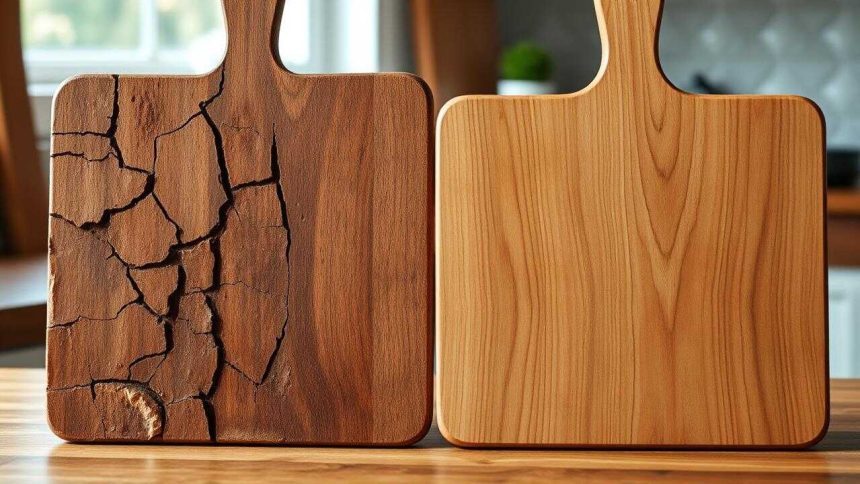
There’s something undeniably charming about a wooden cutting board – the warmth of the wood, the subtle grain patterns, and the gentle patina that develops over time. But for many of us, that charm can quickly turn to frustration when our beloved boards start to crack and split. If you’re tired of watching your wooden cutting board deteriorate before your eyes, you’ll be relieved to know that there’s a simple solution to this common problem. By understanding why your board is cracking in the first place, and learning a few easy maintenance techniques, you can extend the life of your board and keep it looking its best.
The Problem with Wooden Cutting Boards
So why do wooden cutting boards crack? The answer lies in the natural properties of wood itself. Wood is a porous, organic material that’s prone to shrinking and expanding in response to changes in temperature and humidity. When you wash your cutting board, the wood absorbs water, causing it to swell. As it dries, the wood contracts, which can lead to cracks and splits over time. This process is accelerated if you put your board in the dishwasher or expose it to extreme temperatures.
Despite these challenges, wooden cutting boards remain a popular choice among home cooks and professional chefs alike. And for good reason – wood has natural antimicrobial properties that make it a more hygienic choice than plastic or other materials. Wood is also incredibly durable, able to withstand the rigors of frequent use and cleaning. With a little care and attention, your wooden cutting board can last for years to come.
The Benefits of Wood Over Plastic
So what makes wood a better choice than plastic when it comes to cutting boards? For one, wood is a more sustainable option – it’s biodegradable, non-toxic, and can be sourced from responsibly managed forests. Wood also has a unique aesthetic appeal that plastic simply can’t match. And then there’s the issue of safety – plastic cutting boards can harbor bacteria and other microorganisms, which can be difficult to remove even with thorough cleaning. Wood, on the other hand, has natural oils that help to repel moisture and prevent the growth of bacteria.
Of course, the benefits of wood don’t stop there. Wooden cutting boards are also incredibly versatile – they can be used for everything from chopping vegetables to serving cheese and charcuterie. And with a little creativity, you can even use your board as a decorative element in your kitchen – try using it as a base for a centerpiece or as a backdrop for a kitchen island.
Simple Rehydration Techniques to Save Your Board
Now that we’ve explored the benefits of wood and the common problems that can arise, it’s time to talk about solutions. If your wooden cutting board is cracking, the first step is to assess the damage and determine the best course of action. If the cracks are minor, you may be able to repair them with a little wood oil or wax. For more severe cracks, you may need to consider replacing your board altogether. But before you give up on your beloved board, try this simple rehydration technique – apply a generous amount of wood oil or conditioner to the affected area, and let it sit for several hours or overnight. This can help to replenish the wood’s natural oils and restore its moisture balance.
By following these simple tips and taking the time to properly care for your wooden cutting board, you can extend its life and keep it looking its best. Whether you’re a seasoned chef or a culinary novice, a well-maintained wooden cutting board is an essential tool that’s sure to become a trusted companion in the kitchen. With its natural beauty, durability, and versatility, it’s no wonder that wooden cutting boards remain a popular choice among home cooks and professional chefs alike. By giving your board the care it deserves, you can enjoy years of faithful service and delicious meals to come.