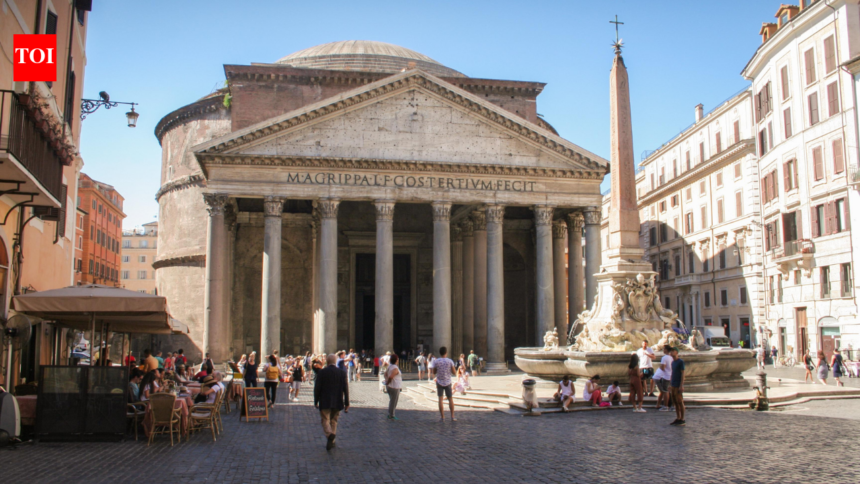
Rome’s ancient structures have long been a source of fascination for engineers, historians, and the general public alike. For centuries, these testaments to the ingenuity of the Roman Empire have withstood the ravages of time, defying earthquakes, storms, and the relentless passage of nearly two millennia. The question that has puzzled many is straightforward yet profound: what is the secret behind the durability of Roman concrete, which has allowed it to outlast many of its modern counterparts by centuries?
Unraveling the Mystery of Roman Concrete
The mystery of Roman concrete’s remarkable endurance has been the subject of extensive research by scientists at MIT. By conducting a detailed analysis of Roman concrete samples, the researchers aimed to understand the unique composition and properties that have enabled these structures to stand the test of time. Their findings suggest that the secret to Roman concrete’s longevity lies in its innovative use of volcanic ash, lime, and water, which combined to form a durable and flexible binding agent.
This ancient binding agent, known as pozzolanic cement, was capable of self-healing and had a unique capacity to absorb and redirect stress, making it more resilient to external pressures. In contrast, modern concrete often relies on a simpler mixture of cement, water, and aggregate, which can be more prone to cracking and degradation. The MIT researchers believe that by studying and emulating the properties of Roman concrete, modern engineers can develop more sustainable and durable building materials for the future.
The Science Behind Roman Concrete’s Durability
A key factor in Roman concrete’s remarkable durability is its ability to undergo a process called autogenous healing, where the material can repair itself over time. This is made possible by the presence of calcium carbonate, which helps to fill in cracks and gaps, effectively extending the lifespan of the concrete. Additionally, the use of volcanic ash in Roman concrete provided a source of aluminum and silicon, which reacted with the lime to form a stable and cohesive matrix.
These findings have significant implications for modern construction practices, where the emphasis is often on speed and cost-efficiency rather than long-term durability. By adopting a more sustainable approach to building design and materials, engineers can create structures that are not only more environmentally friendly but also more resilient to the challenges of time and nature. The study of Roman concrete serves as a powerful reminder of the importance of learning from the past in order to build a better future.
Reviving Ancient Wisdom for a Sustainable Future
As the world grapples with the challenges of climate change, urbanization, and environmental degradation, the secrets of Roman concrete offer a timely and valuable lesson in sustainable building practices. By revisiting the ancient wisdom of the Romans and incorporating their innovative approaches into modern construction, we can create buildings and infrastructure that are designed to last, rather than merely to meet the demands of the present moment. This requires a fundamental shift in our approach to engineering and architecture, one that prioritizes durability, flexibility, and environmental stewardship.
The discovery of the secrets behind Roman concrete’s remarkable endurance is a testament to the power of interdisciplinary research and collaboration. As we continue to uncover the mysteries of the ancient world, we are reminded of the importance of preserving our cultural heritage and learning from the achievements of past civilizations. The legacy of Roman concrete serves as a powerful inspiration for innovation and progress, inviting us to reimagine the built environment of the future and to create structures that will stand the test of time for generations to come.