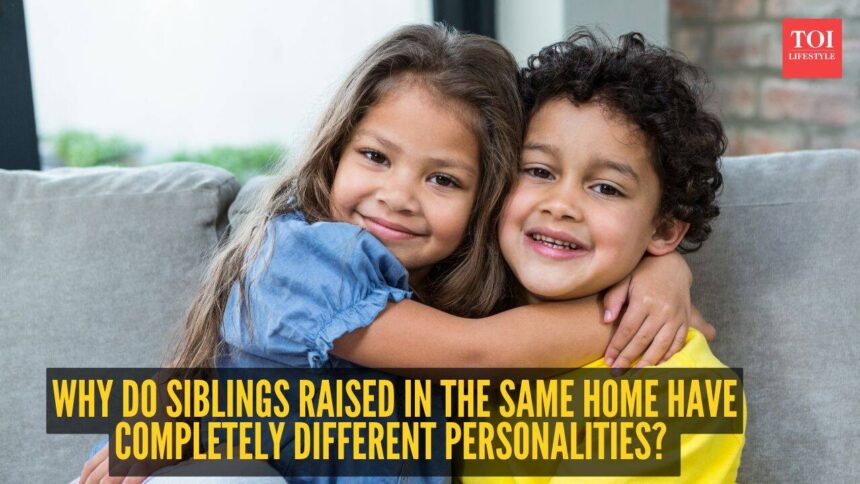
It’s a phenomenon that has puzzled parents for generations: why do siblings raised in the same home, under the same roof, with the same rules and meals, grow up with such vastly different personalities? While one child may thrive as a confident social butterfly, their sibling may be more reserved and introspective. This sibling paradox has long been a source of fascination and frustration for families, but new research is beginning to shed light on the complex factors that contribute to these differences.
Genetics and Environmental Influences
One of the primary factors that contribute to the development of individual personalities is genetics. Research has shown that identical twins, who share the same DNA, often exhibit similar personality traits, even when raised apart. This suggests that genetic predispositions play a significant role in shaping our personalities. However, genetics is not the sole determining factor. Environmental influences, such as parenting styles, family dynamics, and social experiences, also play a crucial role in shaping our personalities.
Studies have shown that children who are exposed to different parenting styles, such as authoritarian or permissive parenting, may develop distinct personalities. For example, children raised in authoritarian households may be more likely to develop a rigid and controlling personality, while those raised in permissive households may be more likely to develop a free-spirited and independent personality. Additionally, family dynamics, such as sibling rivalry or parental conflict, can also impact the development of personality traits.
The Power of Experience and Choice
Another key factor that contributes to the development of individual personalities is the power of experience and choice. As children grow and develop, they are constantly exposed to new experiences, people, and situations that shape their perspectives and preferences. These experiences, in turn, influence the development of their personality traits. For example, a child who is exposed to a variety of social situations, such as sports teams or clubs, may develop a more extroverted and outgoing personality.
Choice also plays a critical role in shaping personality. Children who are given the freedom to make choices, such as what toys to play with or what activities to participate in, may develop a more independent and self-directed personality. On the other hand, children who are not given the opportunity to make choices may develop a more dependent and anxious personality.
The Complex Interplay of Factors
The development of individual personalities is a complex and multifaceted process that involves the interplay of multiple factors. While genetics, environmental influences, and the power of experience and choice all contribute to the development of personality traits, they do not act in isolation. Rather, they interact and influence one another in complex ways, resulting in the unique and diverse range of personalities that we see in siblings and other family members.
Understandably, this can make it difficult for parents to understand and navigate the differences between their children’s personalities. However, by recognizing the complex interplay of factors that contribute to personality development, parents can begin to better support and understand their children’s individual needs and quirks.
Ultimately, the sibling paradox is a reminder that every individual is unique and complex, with their own distinct personality and experiences. By embracing and celebrating these differences, we can foster a more inclusive and compassionate understanding of the world around us.