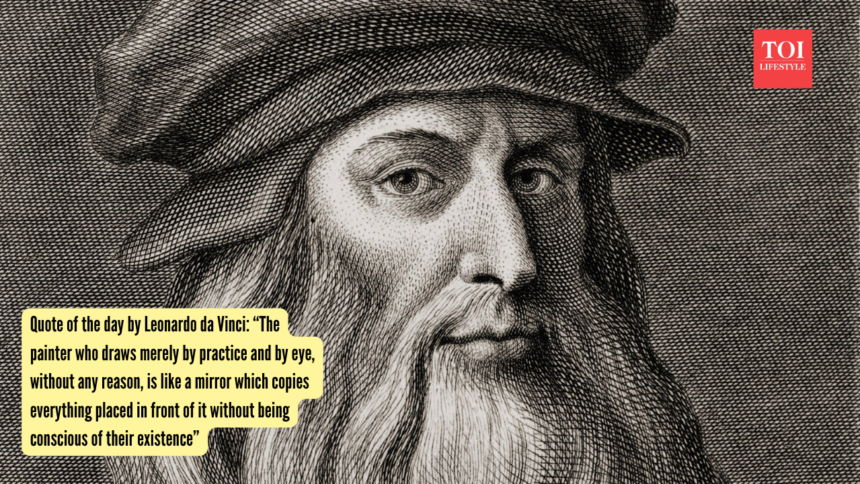
The quote by Leonardo da Vinci, ‘The painter who draws merely by practice and by eye, without any reason, is like a mirror which copies everything placed in front of it without being conscious of their existence,’ highlights the profound difference between art that is merely aesthetically pleasing and art that holds a deeper meaning. Great art has always been like an iceberg, where the tip and surface are just the show; the real and a far deeper meaning lies beneath. This concept not only applies to visual art but also to music, literature, and every form of creative expression. The surface level of a piece may captivate our senses, but it is the underlying themes, symbolism, and the artist’s intention that truly give it substance and longevity.
Understanding the Artist’s Vision
When we look at a painting, listen to a song, or read a book, we are often drawn to its immediate appeal – the beauty of the colors, the melody, or the storyline. However, to truly appreciate a work of art, we must look beyond its surface. Understanding the artist’s vision, the context in which the piece was created, and the messages it conveys requires a deeper level of engagement. It involves not just seeing or hearing but also interpreting and reflecting. The artist’s use of symbolism, allegory, and metaphor adds layers of meaning that can be uncovered with careful consideration and study.
The process of creating art is not merely a technical exercise but a reflection of the artist’s inner world, their experiences, beliefs, and perspectives. The best art challenges us, makes us question our assumptions, and encourages us to see the world from different viewpoints. It is this ability to inspire, to provoke thought, and to connect with something deeper within us that sets great art apart from mere decoration or entertainment.
The Role of the Observer
The observer or the audience plays a crucial role in uncovering the deeper meaning of a piece of art. Our own experiences, biases, and perspectives influence how we interpret what we see, hear, or read. This subjective interpretation is what makes art a personal and intimate experience. However, to fully appreciate the artist’s intent, we must also be willing to learn, to be open to new ideas, and to challenge our own beliefs. The interaction between the artwork and the observer is a dynamic process, with each influencing the other in a continuous cycle of interpretation and reflection.
This dynamic is what makes art timeless. A piece created centuries ago can still evoke powerful emotions and spark profound thoughts today. The ability of art to transcend time, to speak to different generations, and to remain relevant in changing contexts is a testament to its depth and universality. As we engage with a work of art, we are not just passive recipients of its beauty or message; we are active participants in a dialogue that spans centuries, cultures, and ideologies.
The Power of Art to Transform
Art has the power to transform not just our individual perspectives but also our collective culture and society. It can challenge existing norms, advocate for change, and inspire action. Through its ability to express the inexpressible, to capture the essence of the human condition, and to reflect our highest aspirations, art can unite us in a shared humanity. It reminds us of our commonalities, our hopes, and our fears, transcending the boundaries that divide us. In a world filled with noise and distractions, art offers a quiet reflection of our deepest selves and our place in the world.
As we navigate the complexities of our modern world, the importance of engaging with art on a deeper level cannot be overstated. It is through this engagement that we can uncover the hidden depth of art, unveil the unseen meanings, and discover the profound impact it can have on our lives and our understanding of the world. By looking beyond the surface, by seeking to understand the artist’s vision, and by being open to the transformative power of art, we can experience the full richness and complexity that great art has to offer.