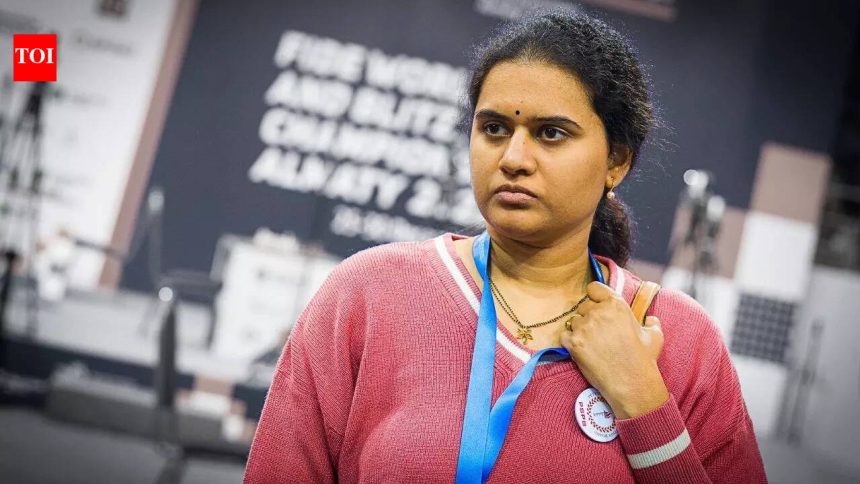
The world of chess is reeling from the shocking withdrawal of India’s Koneru Humpy from the Candidates tournament, citing concerns over the potential hosting of future events in disputed territories. This bold move has sparked a heated debate about the intersection of sports and politics, leaving fans and pundits alike wondering what this means for the future of the game. As the chess community struggles to come to terms with Humpy’s decision, one question lingers: can the sport truly remain neutral in a world where geopolitics plays an increasingly prominent role?
The Candidate’s Conundrum
Koneru Humpy’s decision to pull out of the tournament has sent shockwaves through the chess world, with many of her peers and fans expressing surprise and admiration for her stance. The Indian Grandmaster, currently ranked fifth in the world, has long been a trailblazer for women’s chess in India, and her withdrawal from the tournament is seen by many as a powerful statement about the need for sports organizations to consider the broader implications of their actions. As the world’s top chess players gather to compete for the highest honors, Humpy’s absence serves as a poignant reminder that, for many athletes, the decision to participate in a tournament is never simply about the sport itself.
For Humpy, the issue at hand is a deeply personal one, rooted in her concerns about the potential hosting of future chess events in Kashmir, a disputed territory that has been at the center of tensions between India and Pakistan for decades. By withdrawing from the tournament, Humpy is drawing attention to the complex web of political and social issues that underlie the world of competitive chess, and highlighting the need for sports organizations to engage more thoughtfully with the contexts in which they operate. As the chess community grapples with the implications of Humpy’s decision, it is clear that this is a issue that will not be easily resolved.
The FIDE Factor
The Fédération Internationale des Échecs, or World Chess Federation, is the governing body responsible for overseeing the sport of chess worldwide. As such, the organization plays a critical role in shaping the trajectory of the game, from determining tournament schedules and locations to establishing rules and regulations for player conduct. In the wake of Humpy’s withdrawal, the FIDE is facing renewed scrutiny over its handling of sensitive geopolitical issues, with many questioning whether the organization is doing enough to address the concerns of players like Humpy. The FIDE’s response to Humpy’s decision will be closely watched in the coming weeks and months, as the organization seeks to balance its commitment to the sport with its responsibility to navigate the complex and often fraught world of international politics.
As the FIDE navigates this delicate situation, it is clear that the organization is facing a formidable challenge. On the one hand, the FIDE has a responsibility to ensure that chess tournaments are held in a safe and secure environment, free from the influences of politics and ideology. On the other hand, the organization must also be sensitive to the concerns of players like Humpy, who are increasingly demanding that sports organizations take a more nuanced and thoughtful approach to issues of geopolitics and social justice. As the FIDE seeks to find a way forward, it is likely that the organization will be forced to confront some difficult questions about its own role and responsibilities in the world of chess.
A New Era for Chess?
Koneru Humpy’s withdrawal from the Candidates tournament marks a significant turning point in the world of chess, one that highlights the growing intersection of sports and politics in the 21st century. As athletes and organizations alike become increasingly aware of the social and political implications of their actions, it is likely that we will see more and more examples of players using their platforms to speak out on issues that matter to them. For the world of chess, this shift represents both a challenge and an opportunity, as the sport seeks to navigate the complex and often fraught landscape of modern geopolitics. As we look to the future, it is clear that the game of chess will never be the same, and that the decisions we make today will have a lasting impact on the sport for generations to come.
As the chess community continues to grapple with the implications of Humpy’s decision, it is worth considering what this might mean for the future of the sport. Will we see more players using their platforms to speak out on issues of social justice and geopolitics? How will the FIDE respond to the growing demands of players like Humpy, who are seeking a more nuanced and thoughtful approach to the sport? And what does this mean for the fans, who are ultimately the lifeblood of the game? As we ponder these questions, one thing is clear: the world of chess is on the cusp of a new era, one that will be shaped by the complex interplay of sports, politics, and society.
The road ahead will not be easy, and there will undoubtedly be challenges and controversies along the way. But as we look to the future, it is clear that the game of chess is poised for a new era of growth, innovation, and transformation. And as we embark on this journey, we would do well to remember the words of Koneru Humpy, who has shown us that even in the most unexpected ways, the game of chess can be a powerful force for change.