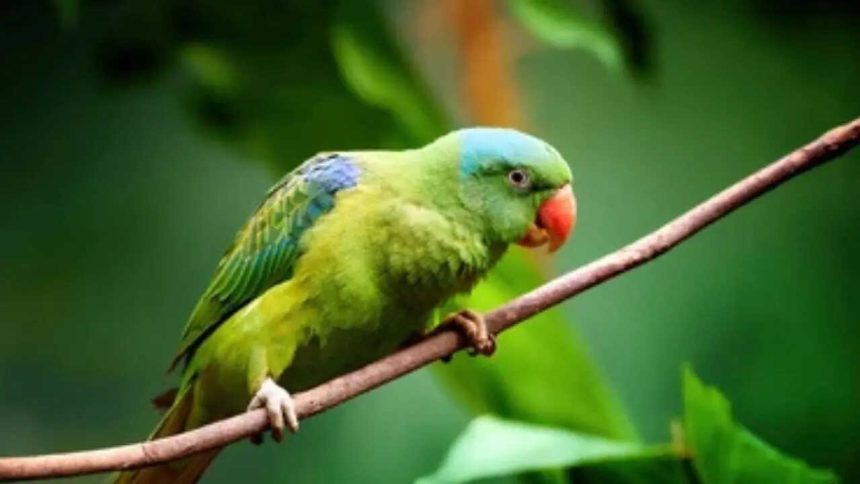
For centuries, parrots have fascinated humans with their uncanny ability to replicate speech, often with startling accuracy. From the colorful macaws to the clever African Greys, these birds have a unique knack for mimicking sounds, including human voices. But have you ever wondered what lies behind this remarkable talent? Can parrots truly understand the meaning behind the words they so effortlessly mimic, or are they simply skilled vocal impressionists? As we explore the fascinating world of parrot vocalization, we may uncover some surprising answers.
Understanding Parrot Intelligence
Parrots are renowned for their exceptional intelligence, often rivalling that of primates and dolphins. Their advanced cognitive abilities allow them to learn and adapt at an incredible pace, making them one of the most fascinating creatures in the animal kingdom. Studies have shown that parrots possess a large brain-to-body mass ratio, indicating a high level of intelligence and cognitive flexibility. This intelligence, combined with their innate curiosity, enables parrots to learn and mimic human speech with remarkable accuracy.
However, the question remains: do parrots truly comprehend the meaning behind the words they mimic? While they can learn to associate certain words or phrases with specific actions or outcomes, it is unlikely that they grasp the nuanced complexities of human language. Their understanding is likely limited to the context in which they learned the phrase, rather than a deeper comprehension of the words’ meanings. This raises interesting questions about the nature of language and intelligence, and whether parrots’ mimicry is a result of true understanding or simply a remarkable example of vocal imitation.
The Science of Parrot Vocalization
So, how do parrots manage to mimic human voices with such precision? The answer lies in their unique syrinx, a vocal organ located at the base of the trachea. The syrinx is made up of two pairs of cartilaginous rings, which are covered in muscles and connective tissue. By manipulating these muscles and adjusting the tension in the syrinx, parrots can produce a wide range of sounds, from simple chirps to complex vocalizations. This remarkable flexibility, combined with their advanced hearing and auditory processing abilities, enables parrots to learn and replicate human speech with remarkable accuracy.
Furthermore, research has shown that parrots possess a unique ability to learn and mimic the acoustic characteristics of human speech, including pitch, tone, and rhythm. This allows them to create remarkably realistic vocalizations, often indistinguishable from the original. However, this ability also raises questions about the potential limitations of parrot vocalization. While they can mimic human speech with remarkable accuracy, can they truly create their own original vocalizations, or are they limited to replicating the sounds they have learned?
The Implications of Parrot Vocalization
The study of parrot vocalization has significant implications for our understanding of language and intelligence in the animal kingdom. By exploring the cognitive and neural mechanisms underlying parrot mimicry, scientists can gain valuable insights into the evolution of language and the complex relationships between cognition, communication, and social behavior. Additionally, the study of parrot vocalization can inform the development of more effective conservation strategies, as well as provide new approaches to teaching and training parrots in captivity.
As we continue to marvel at the remarkable abilities of parrots, we are reminded of the intricate and complex relationships between humans and animals. Through their remarkable mimicry, parrots challenge our assumptions about the nature of language and intelligence, and encourage us to re-examine our place within the natural world. Whether or not parrots truly understand the meaning behind the words they mimic, their remarkable vocal abilities continue to inspire and delight us, offering a fascinating glimpse into the intricate and often surprising world of animal cognition.