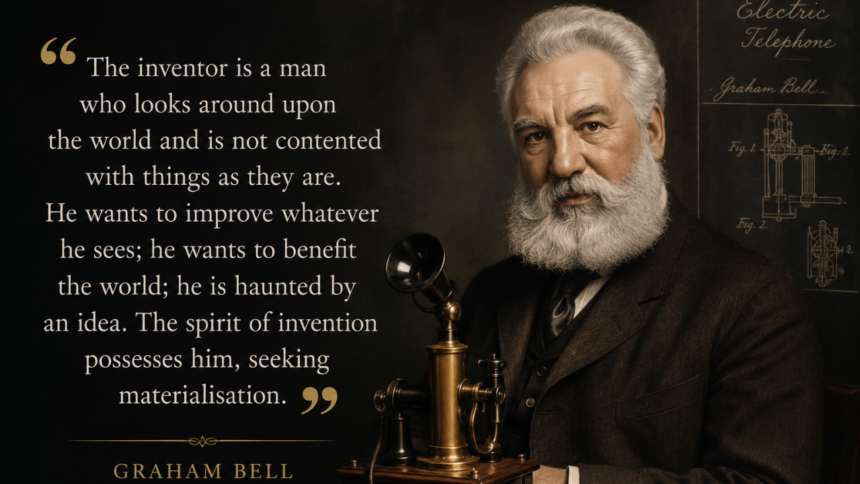
The world of science and technology is filled with stories of innovators who refused to accept the limitations of their time. As Alexander Graham Bell once said, ‘The inventor is a man who looks around upon the world and is not satisfied with things as they are.’ This quote celebrates the power of curiosity and innovation, highlighting the importance of questioning the status quo and seeking to improve it. Every invention begins with a simple question: ‘Can this be made better?’ The world’s greatest innovators did not accept limitations as permanent or believe that existing solutions were the best possible ones. Instead, they looked at everyday problems as opportunities waiting to be solved.
The Role of Curiosity in Driving Innovation
Curiosity is the driving force behind innovation. It is the spark that ignites the flame of creativity and fuels the passion for discovery. When we are curious, we are more likely to ask questions, seek out new information, and challenge our assumptions. This mindset is essential for innovation, as it allows us to approach problems from new angles and find novel solutions. The greatest innovators throughout history have been driven by curiosity, from Leonardo da Vinci’s fascination with human anatomy to Steve Jobs’ passion for merging technology and design.
Curiosity also allows us to learn from our mistakes and failures. When we are not afraid to try new things and take risks, we are more likely to stumble upon unexpected breakthroughs. Thomas Edison, for example, is famously quoted as saying, ‘I have not failed. I’ve just found 10,000 ways that won’t work.’ This mindset is essential for innovation, as it allows us to persist in the face of adversity and continue to push the boundaries of what is possible.
The Impact of Innovation on Society
Innovation has the power to transform society and improve our daily lives. From the development of the internet to the creation of life-saving medicines, innovation has driven progress and improved our standard of living. When we innovate, we create new opportunities, new industries, and new jobs. We also improve our ability to respond to challenges and solve complex problems. The impact of innovation can be seen in every aspect of our lives, from the way we communicate and access information to the way we travel and work.
The impact of innovation is not limited to the technological realm. Innovation can also be seen in the arts, social sciences, and humanities. When we innovate, we create new forms of expression, new ways of thinking, and new perspectives on the world. We also challenge our assumptions and push the boundaries of what is possible. The greatest innovators are those who are able to bridge different disciplines and bring together seemingly disparate ideas to create something entirely new.
The Future of Innovation
As we look to the future, it is clear that innovation will continue to play a major role in shaping our world. With the rise of emerging technologies such as artificial intelligence, blockchain, and the Internet of Things, we are on the cusp of a new era of innovation. These technologies have the potential to transform industries, create new opportunities, and improve our daily lives. However, they also raise important questions about the ethics of innovation and the impact of technology on society.
As we move forward, it is essential that we prioritize curiosity and innovation. We must create an environment that encourages experimentation, risk-taking, and creativity. We must also ensure that the benefits of innovation are shared by all, and that the negative consequences are mitigated. By doing so, we can unlock the full potential of innovation and create a brighter future for ourselves and for generations to come. The power of curiosity and innovation is a powerful force that can drive progress and improve our world. By embracing this force, we can create a better future for all.