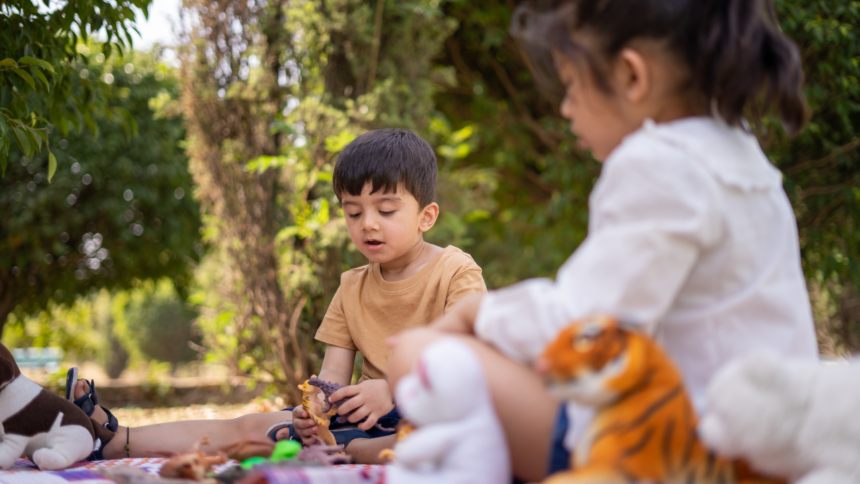
The phrase "all work and no play" is a common warning that echoes through homes and classrooms around the world. But what if I told you that the opposite is actually true? That play, rather than being a frivolous indulgence, is in fact a fundamental aspect of childhood development, and one that should be taken very seriously indeed. This is the view of psychologist Jonathan Haidt, who recently shared the following insightful quote on social media: "For children, play is serious learning. It’s the work of childhood." Whether or not we agree with Haidt’s assertion, one thing is certain: childhood is a critical period of growth and development, and the activities we engage in during this time have a profound impact on our future selves.
Unlocking the Power of Play
Play is often seen as a leisure activity, something we do for fun and enjoyment. And while it’s true that play can be enjoyable, its benefits extend far beyond mere entertainment. Research has shown that play is essential for cognitive development, social skills, and even physical health. Through play, children learn to navigate the world around them, develop problem-solving skills, and build relationships with others. They also have the opportunity to explore their creativity, test boundaries, and develop a sense of self.
One of the most significant benefits of play is its ability to promote cognitive development. When children engage in play, they are constantly learning and adapting, using their imagination and creativity to navigate complex social and physical environments. This type of play-based learning has been shown to have long-term benefits, with children who engage in more play-based learning exhibiting better cognitive skills and academic achievement later in life.
The Importance of Free Play
So what does free play look like, and why is it so essential for childhood development? Free play, also known as unstructured play, is play that is not directed or guided by an adult or external authority. It’s play that is driven by the child’s own interests and curiosity, and is often characterized by a sense of freedom and autonomy. In free play, children are able to explore, experiment, and learn at their own pace, making mistakes and taking risks in a safe and supportive environment.
Free play is essential for childhood development because it allows children to take ownership of their learning, to make choices and decisions, and to develop a sense of agency and control over their own lives. It also provides opportunities for socialization, as children learn to interact and communicate with others in a natural and authentic way. And, perhaps most importantly, free play allows children to develop their creativity and imagination, skills that are essential for success in an ever-changing and rapidly evolving world.
The Role of Parents and Caregivers
So what can parents and caregivers do to support the power of play in childhood development? The answer is simple: provide opportunities for unstructured play, and get out of the way. While it’s tempting to plan and direct playtime, research has shown that this can actually be counterproductive, stifling creativity and imagination and limiting the child’s ability to learn and grow. Instead, parents and caregivers should aim to create a safe and supportive environment that encourages children to explore and learn at their own pace.
This might involve setting aside time each day for free play, whether that’s in the backyard, at the park, or in a designated play area. It might also involve providing children with a range of toys and materials, such as blocks, LEGO, and art supplies, that allow them to express their creativity and imagination. And, of course, it involves being present and engaged, offering guidance and support when needed, but also respecting the child’s autonomy and agency.
By supporting the power of play, we can help children develop into happy, healthy, and well-adjusted adults, equipped with the skills and confidence to succeed in an ever-changing world. So next time you’re tempted to plan and direct playtime, remember the words of Jonathan Haidt: "For children, play is serious learning. It’s the work of childhood." Let’s take play seriously, and give our children the gift of a happy and healthy childhood.