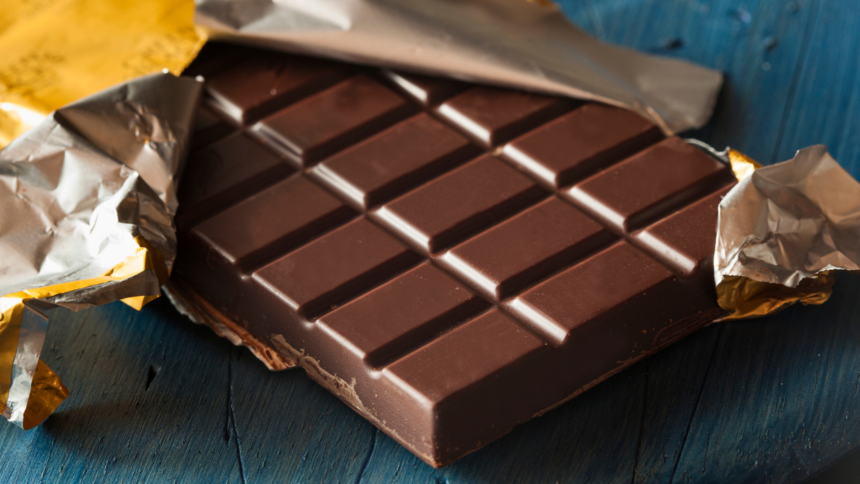
When is a square not just a square? When it’s a piece of chocolate, of course. Whether it’s a Dairy Milk, Lindt, Hershey’s or almost any other chocolate bar, there’s one design feature that has remained surprisingly consistent for generations: those neat little squares or rectangles pressed into the surface. Most of us barely notice them. We snap off a piece, pop it into our mouths and move on. But those tiny segments are far from decorative. They are the result of practical engineering, smart manufacturing and a little psychology, all working together to make chocolate easier to eat, share and produce. Take a closer look at your next chocolate bar and you’ll see that those neat little squares have a purpose that goes far beyond aesthetics.
The History of Chocolate’s Perfect Slices
Believe it or not, the history of chocolate’s perfect slices dates back to the early 20th century when chocolate bars were first invented. At that time, chocolate was a relatively new and expensive luxury item that people couldn’t afford to waste. To make the most of every bar, chocolate makers developed a technique called ‘tempering’ which involved heating and cooling the chocolate to create a stable crystal structure that made it easier to shape and snap. But tempering alone wasn’t enough – chocolate makers also needed to find a way to portion their bars into neat, easy-to-eat pieces. That’s where the square or rectangular shape came in. By dividing the bar into uniform pieces, chocolate makers could ensure that each piece had an equal amount of chocolate and was the perfect size for snacking.
But there’s more to the story than just practicality. The square shape of chocolate bars also has a psychological component. Research has shown that people find it easier to eat and enjoy food when it’s divided into small, manageable portions. This is known as the ‘portion control effect’, and it’s been used by food manufacturers for decades to make their products more appealing and easier to consume. By dividing the chocolate bar into neat little squares, manufacturers can create a sense of control and satisfaction in the consumer, making them more likely to enjoy their product and come back for more.
The Science of Chocolate’s Perfect Slices
So, what makes a chocolate square ‘perfect’? The answer lies in the science of chocolate itself. Chocolate is made from a combination of cocoa solids, sugar, milk (if it’s a milk chocolate) and other ingredients. When melted, these ingredients come together to form a liquid that can be shaped and molded into a variety of forms. But when cooled, the chocolate solidifies and forms a crystal structure that determines its texture and appearance. The perfect square of chocolate has a precise crystal structure that makes it easy to snap and gives it a satisfying ‘twang’ when bitten into. This is achieved through a process called ‘tempering’ which involves heating and cooling the chocolate to create the perfect crystal structure.
But tempering alone isn’t enough. The perfect square of chocolate also needs to have a precise balance of ingredients and a smooth, even texture. This is achieved through a combination of careful manufacturing techniques and quality control processes. Chocolate makers use a range of tools and equipment to ensure that their chocolate is made to the highest standards, from the initial mixing of the ingredients to the final packaging of the finished product.
The Future of Chocolate’s Perfect Slices
As we look to the future of chocolate, it’s clear that the perfect square remains an essential part of the chocolate-making process. Whether you’re a chocolate lover or just a casual snacker, the perfect square of chocolate is something to be savored and enjoyed. And with the rise of artisanal chocolate makers and small-batch producers, the perfect square is more accessible than ever before. So next time you reach for a chocolate bar, take a closer look at those neat little squares and appreciate the sweet science that goes into creating the perfect slice.
As we enjoy our chocolate bars, it’s easy to forget the story behind those perfect little squares. But next time you take a bite, remember the history, the science and the psychology that goes into creating the perfect slice. The next time you reach for a chocolate bar, you’ll never look at it the same way again.