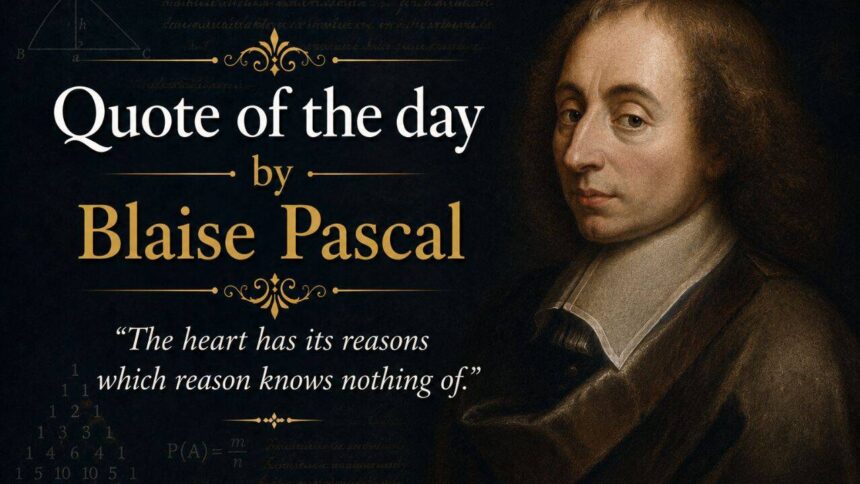
Blaise Pascal’s profound words, ‘The heart has its reasons of which reason knows nothing,’ have long been a source of fascination for philosophers and scientists alike. This quote embodies the paradoxical nature of human decision-making, where the most fundamental choices we make in life – who to trust, where to call home, and who to love – defy rational explanation. We may think we’ve carefully weighed the pros and cons, but in reality, these decisions are often driven by an unseen force that cannot be captured in a tidy argument or a logical equation.
Emotional Intuition and the Science of Decision-Making
While reason provides us with a critical lens to evaluate information, our emotions play a more significant role in shaping our choices. Research in neuroscience has shown that the brain’s emotional centers are far more active than its rational ones, especially when it comes to making decisions that involve social relationships or personal values. This is why we often find ourselves drawn to people or places without fully understanding why, even after conducting a thorough analysis.
The role of intuition in decision-making is also a crucial aspect of this phenomenon. Intuition is not simply a gut feeling; it’s a complex process that involves the rapid processing of sensory information and the activation of emotional responses. By tapping into our intuition, we can gain a deeper understanding of the unconscious factors that influence our choices, even if we can’t articulate them in a logical argument.
The Power of Storytelling in Human Connection
Another factor that contributes to the unexplainable nature of human connection is the power of storytelling. When we share our personal experiences and emotions with others, we create a shared narrative that transcends rational explanation. This is why we often connect with people on a deeper level through personal anecdotes and shared memories, rather than through abstract ideas or logical arguments.
Storytelling has a profound impact on our brains, releasing oxytocin and other neurotransmitters that foster social bonding. By sharing our stories, we create a sense of empathy and understanding that cannot be replicated through reason alone. This is why we often find ourselves forming close relationships with people who share similar experiences or values, even if we can’t articulate why.
The Limits of Language in Capturing Human Experience
Finally, the limits of language in capturing human experience are a significant contributor to the unexplainable nature of human connection. While language allows us to communicate complex ideas and emotions, it ultimately fails to capture the richness and complexity of human experience. This is why we often find ourselves struggling to put into words the reasons behind our choices or the nature of our relationships.
Language is a tool that can only approximate the nuances of human experience, leaving us with a sense of incompleteness and uncertainty. By acknowledging the limits of language, we can begin to appreciate the complexity and richness of human connection, even if we can’t fully explain it.
The next time you find yourself struggling to articulate the reasons behind your choices or the nature of your relationships, remember Pascal’s profound words: ‘The heart has its reasons of which reason knows nothing.’ By embracing the unexplainable nature of human connection, we can gain a deeper appreciation for the complexity and richness of human experience, and perhaps even learn to trust our intuition and emotions more fully.