Deep within the labyrinthine networks of mangrove forests, where sea and earth converge, lies a secret world teeming with life. Mangroves, the unsung heroes of coastal ecosystems, have long been a subject of fascination for scientists and conservationists alike. Despite occupying a mere fraction of the Earth’s land surface, these salt-tolerant trees hold the key to understanding the intricate balance between nature and human existence. In the face of climate change, sea level rise, and the increasing vulnerability of coastlines, the importance of mangroves has never been more pressing.
The Coastal Shields
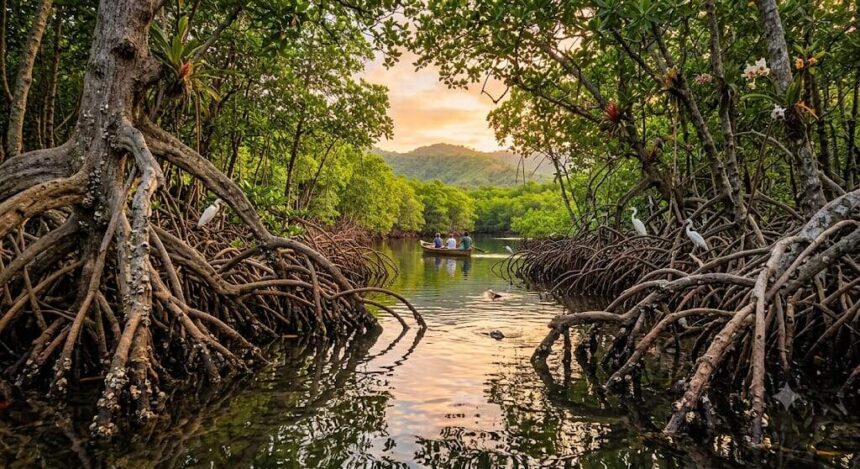
Mangroves serve as a critical line of defense against the fury of storms, protecting shorelines from erosion, damage, and loss of life. The tangled network of roots, trunks, and branches provides a natural barrier, absorbing wave energy and reducing the impact of surging tides. This is a testament to the remarkable adaptability of mangroves, which thrive in environments where most other trees would perish. The roots of mangroves extend far into the ocean, where they can survive with their feet submerged in water for extended periods, a unique characteristic that allows them to absorb and filter pollutants and excess nutrients.
The importance of mangroves as coastal shields cannot be overstated. They safeguard the livelihoods of millions of people who depend on the coast for their homes, businesses, and food. By preserving mangroves, we not only protect our communities but also the marine ecosystems that rely on them for nursery grounds, food, and habitat. The sheer resilience of mangroves is a testament to their ecological significance and a reminder of the need to conserve and restore these precious ecosystems.
Wildlife Havens and Carbon Sinks
Behind the scenes of the mangrove’s protective role lies a vibrant tapestry of life. These forests are a haven for an incredible array of wildlife, from juvenile fish and crustaceans to birds, monkeys, and even crocodiles. Mangroves provide a nursery for many marine species, including commercially important fish like shrimp, crab, and lobster. By preserving mangroves, we are safeguarding the future of these species and the ecosystems they inhabit.
Mangroves are also one of the most efficient carbon sinks on the planet, capable of storing up to four times more carbon than tropical rainforests. This is due in part to the unique structure of mangrove forests, which allows for an abundance of organic matter to accumulate on the forest floor. As mangroves grow and decay, they lock away carbon dioxide, reducing the amount of greenhouse gases in the atmosphere and slowing the pace of climate change. The potential of mangroves as carbon sinks is a game-changer in the fight against climate change, and it highlights the urgent need to protect and restore these ecosystems.
The Future of Blue Forests
As the world grapples with the challenges of climate change, mangrove forests are being recognized for their critical role in mitigating its impacts. Efforts to conserve and restore mangroves are underway, with governments, NGOs, and local communities working together to protect these ecosystems. The future of mangroves is uncertain, however, as they face threats from deforestation, pollution, and coastal development. To ensure the continued health and resilience of mangrove forests, we must prioritize their conservation and restoration, recognizing the critical role they play in supporting life on Earth.
Mangroves are a testament to the awe-inspiring diversity and interconnectedness of life on our planet. As we strive to protect and preserve these ecosystems, we are reminded of our responsibility to the natural world and to future generations. By embracing the power of blue forests, we can create a more resilient, sustainable, and thriving world for all.