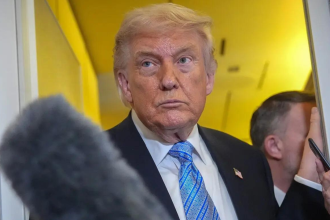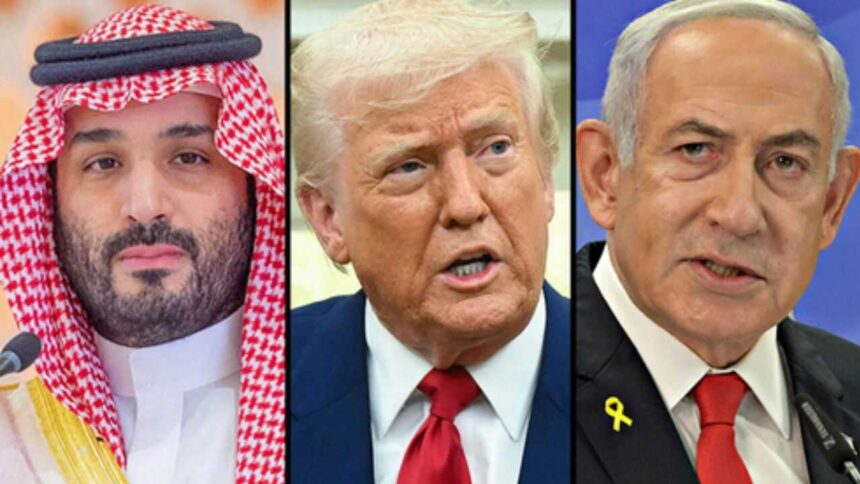
US President Donald Trump has introduced a significant condition for the proposed US-Saudi civil nuclear agreement, stating that the deal’s approval hinges on Saudi Arabia’s willingness to normalize diplomatic relations with Israel by joining the Abraham Accords. This move marks a significant shift in the Trump administration’s foreign policy approach, as it seeks to solidify a broader Middle East peace initiative. The Abraham Accords, which were signed in September 2020, represent a landmark agreement between Israel, the United Arab Emirates, and Bahrain, aiming to foster economic cooperation, tourism, and security collaborations among the participating nations.
Historic Implications of the Abraham Accords
The Abraham Accords have been hailed as a groundbreaking achievement in the pursuit of peace and stability in the Middle East. By encouraging Saudi Arabia to join the Accords, the Trump administration aims to create a more comprehensive and inclusive framework for regional cooperation. This development has the potential to reshape the geopolitical landscape of the Middle East, as it could lead to increased economic integration, improved security cooperation, and a more cohesive approach to addressing common challenges.
The proposed US-Saudi civil nuclear agreement has been a subject of intense debate, with many experts expressing concerns about the potential risks of nuclear proliferation in the region. However, the Trump administration has emphasized that the deal would not permit uranium enrichment or any military nuclear program, ensuring that Saudi Arabia’s nuclear capabilities are limited to peaceful purposes. This assurance is crucial in addressing the concerns of neighboring countries and the international community, as it provides a safeguard against the potential misuse of nuclear technology.
Saudi Arabia’s Calculus
Saudi Arabia’s decision to join the Abraham Accords would mark a significant departure from its traditional stance on Israel. The kingdom has historically been a key player in the Arab-Israeli conflict, and its participation in the Accords would require a substantial shift in its foreign policy approach. However, the potential benefits of joining the Accords, including increased economic cooperation and improved security collaboration, may outweigh the costs of normalized relations with Israel. Saudi Arabia’s calculations will likely be influenced by its desire to strengthen its position in the region, counterbalance the influence of Iran, and attract foreign investment to drive its economic diversification efforts.
The Trump administration’s push for Saudi Arabia to join the Abraham Accords has been met with a mixed response from other countries in the region. Some nations, such as the United Arab Emirates and Bahrain, have welcomed the initiative, while others, such as Iran and Turkey, have expressed opposition to the idea of normalized relations between Saudi Arabia and Israel. As the situation continues to evolve, it remains to be seen how Saudi Arabia will navigate the complex web of regional alliances and rivalries to make a decision that aligns with its national interests.
Broader Regional Implications
The potential consequences of Saudi Arabia joining the Abraham Accords extend far beyond the kingdom’s borders. A normalization of relations between Saudi Arabia and Israel could have a profound impact on the regional balance of power, potentially leading to a realignment of alliances and a shift in the dynamics of the Arab-Israeli conflict. The move could also create new opportunities for economic cooperation and trade between Israel and other Arab states, potentially paving the way for a more integrated and interconnected Middle East.
As the world watches the developments in the Middle East with great interest, one thing is clear: the Trump administration’s push for Saudi Arabia to join the Abraham Accords has introduced a new variable into the complex equation of regional politics. The outcome of this initiative will depend on a delicate interplay of factors, including the calculations of Saudi Arabia, the responses of other regional players, and the ability of the international community to navigate the challenges and opportunities that arise from this historic moment. The fate of the proposed US-Saudi civil nuclear agreement hangs in the balance, as the world waits to see whether Saudi Arabia will take the decisive step of joining the Abraham Accords and normalizing relations with Israel.