The announcement by US President Donald Trump of a possible peace deal with Iran and the opening of the Strait of Hormuz has sent shockwaves across the globe, with the potential to reshape the dynamics of international oil trade. The Strait of Hormuz, a vital shipping lane connecting the Persian Gulf to the Arabian Sea, has long been a source of tension between Iran and the West. Trump’s announcement, made on social media, was brief but telling: ‘Ships of the World, start your engines,’ he wrote. ‘Let the oil flow!’ The implications of this deal are far-reaching, and India, as one of the world’s largest oil-importing nations, is watching with keen interest.
Impact on Global Oil Trade
The opening of the Strait of Hormuz would significantly increase the global oil supply, potentially leading to a decrease in oil prices. This would have a positive impact on oil-importing nations like India, which relies heavily on foreign oil to meet its energy needs. India’s oil imports account for a significant portion of its trade deficit, and a reduction in oil prices would help to narrow this gap. Furthermore, the increased oil supply would also lead to a decrease in shipping costs, as vessels would no longer need to take the longer route around Africa to avoid the Strait of Hormuz.
The peace deal with Iran would also pave the way for increased investment in the country’s oil sector. Iran has the second-largest oil reserves in the world, and foreign investment could help to increase production and export capacity. This would not only benefit Iran but also contribute to global energy security. The deal would also have a positive impact on the global economy, as a stable and secure oil supply is essential for economic growth and development.
Implications for India’s Economy
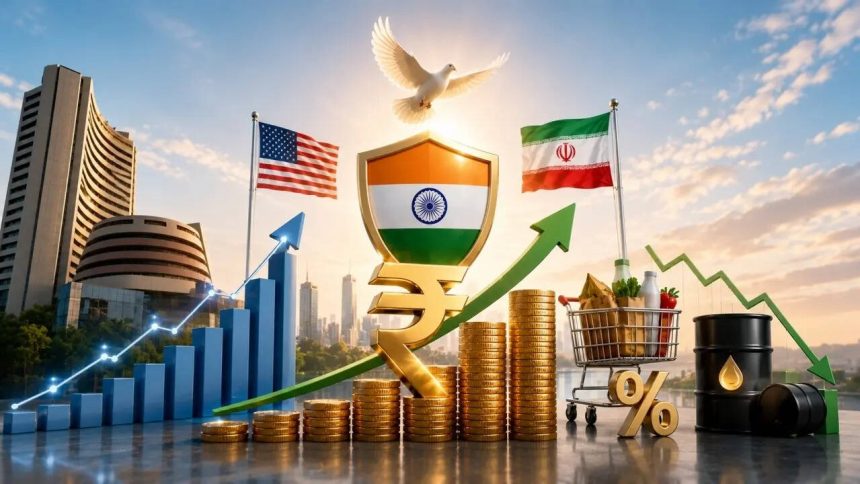
For India, the implications of the peace deal with Iran are significant. A decrease in oil prices would lead to a reduction in the country’s trade deficit, which would help to stabilize the rupee and boost economic growth. The increased oil supply would also lead to a decrease in inflation, as transportation costs would decrease. This would have a positive impact on the overall economy, as lower inflation would lead to higher consumer spending and investment. Furthermore, the peace deal would also pave the way for increased trade between India and Iran, which would benefit both countries.
India has long been interested in developing its ties with Iran, and the peace deal would provide a significant opportunity for cooperation in areas such as energy, trade, and infrastructure development. The two countries have already discussed the possibility of building a pipeline to transport gas from Iran to India, which would help to meet India’s growing energy needs. The peace deal would also provide a boost to India’s ‘Act East’ policy, which aims to increase trade and investment with Southeast Asia and the Middle East.
Challenges and Opportunities Ahead
While the peace deal with Iran and the opening of the Strait of Hormuz present significant opportunities for India and the global economy, there are also challenges that need to be addressed. The deal would require the cooperation of all parties involved, including Iran, the US, and other regional players. There is also a risk of instability in the region, particularly if other countries in the Middle East feel threatened by the deal. Furthermore, the deal would require significant investment in infrastructure development, including pipelines and shipping facilities.
Despite these challenges, the potential benefits of the peace deal with Iran and the opening of the Strait of Hormuz are significant. For India, the deal would provide a major boost to its economy, helping to reduce the trade deficit, stabilize the rupee, and increase economic growth. The deal would also provide a significant opportunity for cooperation between India and Iran, which would benefit both countries. As the world watches with bated breath, one thing is certain: the announcement by Trump has opened up a new era for global oil trade, and India is poised to play a significant role in it.