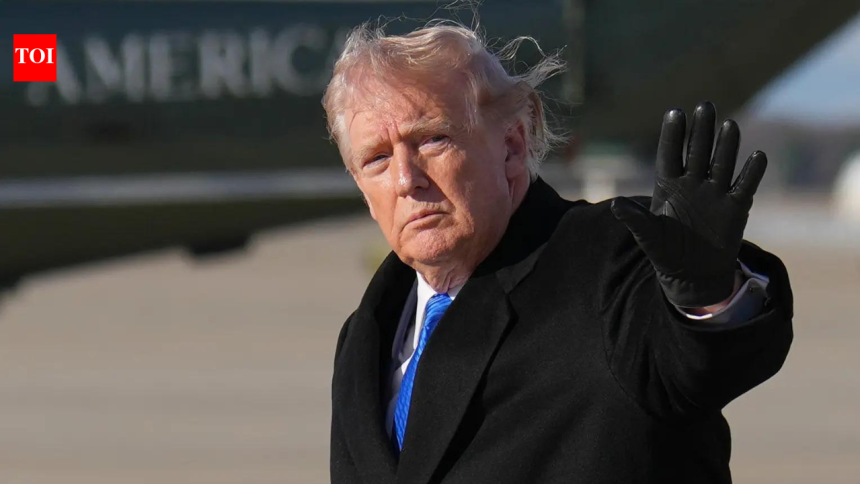
The world was left stunned when the US President referred to the Strait of Hormuz as the ‘Strait of Trump’ in a recent speech, leaving many to wonder if it was a mere slip of the tongue or a deliberate attempt to assert his influence. The comment, which was quickly brushed off as a joke, has sparked a flurry of debate about the President’s intentions and the potential implications of such a statement. As the world struggles to make sense of this bizarre incident, one thing is clear: the President’s words have once again sent shockwaves across the globe.
The Strait of Hormuz: A Critical Waterway
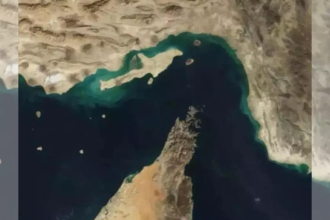
The Strait of Hormuz is one of the most critical oil shipping routes in the world, with a significant portion of the world’s oil supply passing through it every day. The waterway, which connects the Persian Gulf to the Gulf of Oman, is a mere 21 miles wide at its narrowest point, making it a highly congested and sensitive area. Any disruption to the flow of oil through the strait could have far-reaching consequences for the global economy, making it a highly strategic and closely watched region. The President’s comment, even if made in jest, has raised eyebrows and sparked concerns about the potential for increased tensions in the region.
The incident has also highlighted the complex and often fraught relationship between the US and Iran, with the Strait of Hormuz being a key point of contention. The US has long been concerned about Iran’s influence in the region and its potential to disrupt the flow of oil, while Iran has accused the US of attempting to strangle its economy through sanctions and other measures. The President’s comment, whether intentional or not, has added fuel to the fire, with many in Iran seeing it as a blatant attempt to assert US dominance over the region.
The Psychology of the President’s Comment
So, what could have driven the President to make such a comment? Was it a simple mistake, or was there something more behind it? Some have speculated that the comment was a deliberate attempt to assert the President’s influence and dominance over the region, while others have seen it as a manifestation of the President’s well-known tendency to improvise and think on his feet. Whatever the reason, the comment has provided a fascinating glimpse into the mind of the President and his approach to international relations. It has also raised questions about the President’s understanding of the complex geopolitical dynamics at play in the region and his ability to navigate these delicate issues with the requisite care and sensitivity.
The incident has also sparked a wider debate about the role of personality and psychology in international relations. Some have argued that the President’s comment is a classic example of the ‘Dunning-Kruger effect’, where individuals overestimate their own abilities and knowledge, leading to reckless and impulsive decisions. Others have seen it as a manifestation of the President’s ‘transactional’ approach to international relations, where relationships are viewed as zero-sum games and the focus is on achieving short-term gains rather than building long-term partnerships. Whatever the explanation, one thing is clear: the President’s comment has highlighted the importance of personality and psychology in shaping international relations and the need for leaders to approach these complex issues with care, sensitivity, and a deep understanding of the underlying dynamics.
Implications and Future Directions
So, what are the implications of the President’s comment, and where do we go from here? The incident has highlighted the need for careful diplomacy and sensitivity in international relations, particularly in regions as complex and volatile as the Middle East. It has also underscored the importance of understanding the psychological and personality factors that drive decision-making at the highest levels, and the need for leaders to approach these issues with a deep understanding of the underlying dynamics and a commitment to building long-term partnerships. As the world watches with bated breath to see how this incident will play out, one thing is clear: the President’s comment has provided a fascinating glimpse into the mind of the President and the complex world of international relations.
The incident has also raised important questions about the role of the US in the region and its ability to navigate the complex web of relationships and alliances that exist there. As the US seeks to assert its influence and protect its interests, it must do so in a way that is sensitive to the concerns and needs of other nations and regions. This will require a deep understanding of the complex geopolitical dynamics at play, as well as a commitment to building long-term partnerships and avoiding reckless and impulsive decisions. The President’s comment, whether intentional or not, has highlighted the importance of these issues and the need for careful and thoughtful leadership in international relations.
The world will be watching with great interest to see how this incident plays out and what implications it may have for the future of international relations. One thing is certain, however: the President’s comment has provided a fascinating glimpse into the mind of the President and the complex world of international relations, and has highlighted the need for careful diplomacy, sensitivity, and a deep understanding of the underlying dynamics. As we move forward, it is essential that we approach these complex issues with care and thoughtfulness, and that we prioritize building long-term partnerships and avoiding reckless and impulsive decisions.