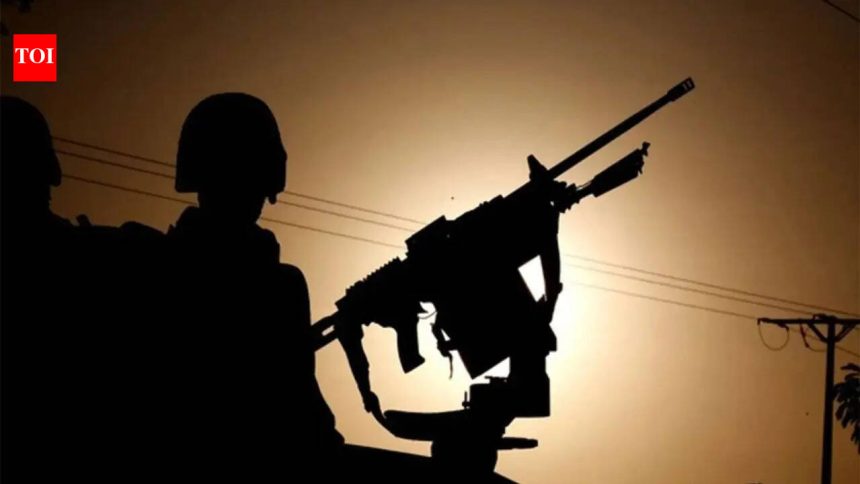
A wave of violence has swept through the Naseerabad and Kachhi districts of Balochistan, as pro-independence armed groups have claimed responsibility for twin attacks that have left a trail of destruction and chaos in their wake. The attacks, which targeted key infrastructure and installations, have raised concerns about the escalating violence in the region and the ability of the authorities to maintain law and order. The armed groups, which have been fighting for independence from Pakistan, have been carrying out a campaign of violence and intimidation against the government and its forces, and the latest attacks are seen as a significant escalation of their campaign.
Background to the Conflict
The conflict in Balochistan has its roots in the province’s complex history and the sense of disillusionment and marginalization felt by many of its people. The province, which is rich in natural resources, has long been plagued by poverty, underdevelopment, and a lack of basic services, and many Baloch people feel that they have been denied their rightful share of the province’s wealth and resources. The pro-independence armed groups, which have been active in the province for many years, have been fighting for greater autonomy and self-rule, and have carried out numerous attacks against government targets and installations.
The Pakistani government has responded to the violence with a heavy hand, and has launched a series of military operations against the armed groups. However, these operations have had limited success, and have often resulted in significant human rights abuses and suffering for the civilian population. The conflict has also had a significant impact on the local economy, and has led to a decline in investment and a rise in unemployment and poverty.
The Latest Attacks
The latest attacks, which were carried out in the Naseerabad and Kachhi districts, were significant in terms of their scale and sophistication. The armed groups, which used explosives and other weapons, targeted key infrastructure and installations, including bridges, roads, and government buildings. The attacks were well-planned and well-coordinated, and were clearly designed to cause maximum damage and disruption. The groups claimed responsibility for the attacks through statements and videos released on social media, and warned of further violence if their demands for independence are not met.
The Pakistani government has condemned the attacks, and has vowed to take tough action against those responsible. However, the government’s response has been criticized by many, who argue that it has failed to address the underlying causes of the conflict and has instead relied on military force to try and quell the violence. The government has also been accused of human rights abuses, and of carrying out extra-judicial killings and disappearances of suspected militants and their supporters.
Implications and Future Directions
The latest attacks in Balochistan have significant implications for the region and for Pakistan as a whole. The conflict in Balochistan is a major challenge for the Pakistani government, and has the potential to destabilize the entire country. The government’s response to the conflict will be crucial in determining its outcome, and will require a careful balance between military action and dialogue and negotiation. The international community also has a role to play, and can help to support efforts to resolve the conflict peacefully and to promote greater understanding and cooperation between the different parties involved.
The people of Balochistan deserve a peaceful and stable future, and it is the responsibility of all parties to work towards this goal. The latest attacks are a reminder of the urgent need for a peaceful resolution to the conflict, and of the need for the government and the armed groups to engage in dialogue and negotiation. The international community must also play its part, and must support efforts to promote peace and stability in the region. Only through a peaceful and negotiated settlement can the conflict in Balochistan be brought to an end, and can the people of the province look forward to a brighter and more prosperous future.