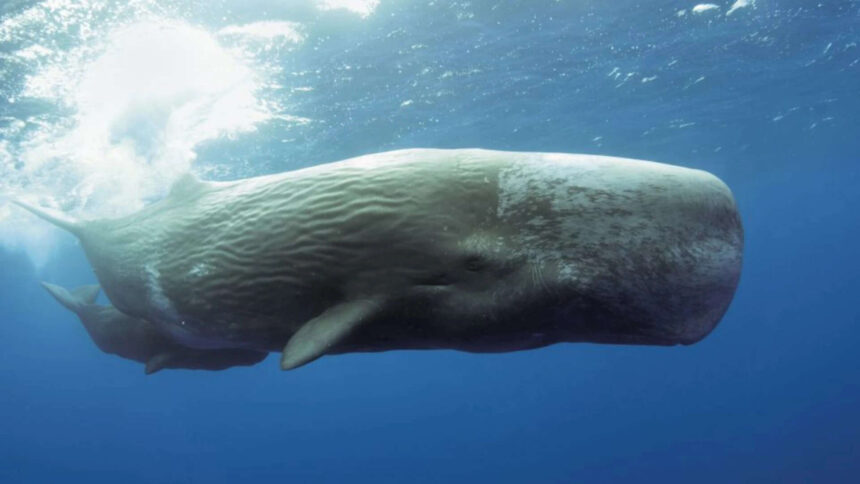
The ocean’s depths have long been a mystery, with many of its inhabitants remaining shrouded in secrecy. However, a recent breakthrough in artificial intelligence has shed new light on the complex communication system of sperm whales, a species previously known for its elusive nature. Scientists have been studying the vocalizations of these marine giants for decades, but it wasn’t until the application of AI that they were able to decipher the code behind their language. This groundbreaking research has revealed that sperm whales possess a phonetic alphabet, similar to that of human languages, and that populations in the Mediterranean Sea have developed distinct regional dialects.
Decoding the Sperm Whale’s Phonetics
Researchers utilized a combination of AI-driven algorithms and audio recordings of sperm whales to crack the code of their language. By analyzing the unique patterns and frequencies of their vocalizations, they were able to identify a set of distinctive sounds, which they believe make up the phonetic alphabet. This breakthrough has significant implications for our understanding of sperm whale communication and their social behavior. The discovery also highlights the possibility of a more complex and nuanced language than previously thought.
The AI-driven analysis revealed that sperm whales use a range of clicks, whistles, and pulses to convey information. These vocalizations are not just random noises, but rather a sophisticated system of communication that allows the whales to share information about food sources, social hierarchy, and potential threats. The researchers believe that the phonetic alphabet is a key component of this system, allowing the whales to convey complex ideas and emotions through a combination of sounds.
Regional Dialects in the Mediterranean
One of the most surprising findings of the study was the discovery of regional dialects among Mediterranean sperm whales. The researchers analyzed audio recordings from populations in the eastern and western Mediterranean and found that the whales from different regions had distinct vocal patterns. This suggests that the whales have developed their own unique dialects, similar to those found in human languages. The researchers believe that these dialects may be a result of geographical isolation, with the whales adapting their communication systems to suit their local environments.
The discovery of regional dialects has significant implications for our understanding of sperm whale behavior and social structure. It suggests that the whales are capable of complex communication and may even have their own cultural traditions. The researchers believe that further study is needed to fully understand the implications of this finding and to explore the potential for regional dialects in other sperm whale populations.
The Future of Sperm Whale Research
The breakthrough in sperm whale communication has opened up new avenues for research and conservation efforts. By understanding the complexities of their language, scientists may be able to better protect these magnificent creatures and their habitats. The researchers are already working on developing new technologies to decode and analyze sperm whale vocalizations, which could lead to a greater understanding of their behavior and social structures. This research has the potential to revolutionize our understanding of one of the ocean’s most mysterious inhabitants.
The study of sperm whales is a reminder of the vast mysteries that still remain in the ocean. However, with the help of AI and innovative research techniques, we are beginning to unlock the secrets of these marine giants. As we continue to explore and learn more about the sperm whale’s language, we may uncover even more surprises and discoveries that challenge our current understanding of these incredible creatures.