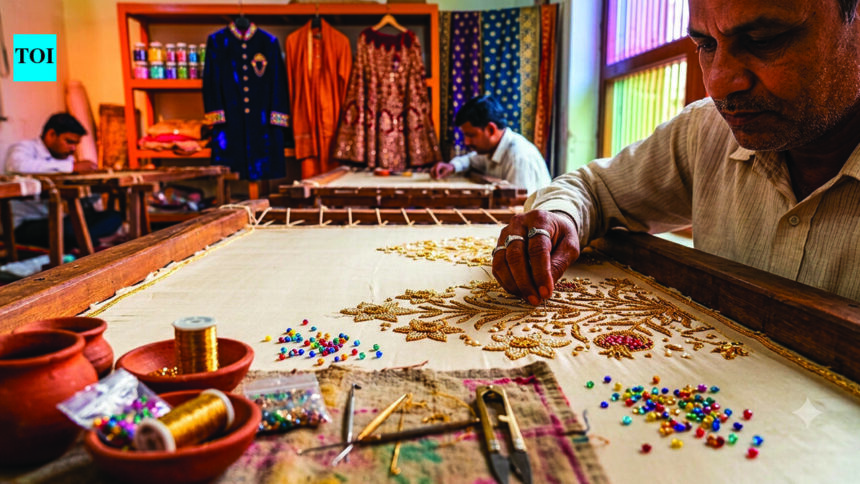
In a recent conversation that has sparked renewed interest in one of India’s richest cultural heritage traditions, veteran fashion designer Ritu Kumar revealed a fascinating chapter in the history of Zardozi, the ancient embroidery craft that has captivated artisans and connoisseurs alike for centuries. During a podcast conversation with fashion entrepreneur Masoom Minawala, Kumar shared a surprising revelation: she had coined the term Zardozi while working on an exhibition in the 1980s. As news of this conversation spread like wildfire, designers, researchers, and enthusiasts alike are revisiting the intricacies of this magnificent craft, which has woven its way into the very fabric of Indian history.
A Tradition Rooted in the Mughal Era
Zardozi, an Arabic term that translates to ‘gold embroidery,’ has its roots in the opulent courts of the Mughal Empire, where artisans would adorn royal garments, tapestries, and even architectural features with intricate gold and silver threads. The craft’s origins date back to the 16th century, during the reign of Emperor Shah Jahan, who was known for his love of grandeur and splendor. Skilled craftsmen would painstakingly weave gold and silver threads onto fabric using a range of techniques, including the use of intricate patterns, florals, and foliage motifs. The result was a breathtakingly beautiful fabric that shimmered and shone, a true testament to the artistry and expertise of the craftsmen.
Over the centuries, Zardozi has evolved, with different regions and communities adapting the craft to their unique styles and traditions. From the ornate patterns of the Mughal era to the simpler, more rustic designs of rural India, Zardozi has remained a beloved and revered craft, passed down through generations of artisans. Today, Zardozi is recognized as a UNESCO-recognized intangible cultural heritage, a testament to its enduring significance and beauty.
Rediscovering the Art of Zardozi
As designers and researchers delve into the history and techniques of Zardozi, they are uncovering new insights into the craft’s evolution and significance. From the use of rare and exotic materials to the intricate techniques used to create the iconic gold and silver threads, Zardozi is a craft that is as much about technique as it is about artistry and creativity. By learning from the masters and exploring new ways to incorporate Zardozi into modern design, designers are breathing new life into this ancient craft, ensuring its continued relevance and beauty for generations to come.
As the conversation around Zardozi continues to grow, one thing is clear: this timeless craft has a rich history, a deep significance, and a profound beauty that continues to captivate and inspire us all. Whether you’re a seasoned artisan, a fashion enthusiast, or simply someone who appreciates the beauty of traditional crafts, Zardozi is a story that is worth exploring, and one that will leave you in awe of the skill, creativity, and artistry that has gone into creating this magnificent craft.
A Legacy that Endures
As we look to the future, it is clear that Zardozi’s legacy will continue to endure, a testament to the power of tradition, creativity, and artistry. Whether it’s on the catwalk, in the studio, or in the hands of skilled artisans, Zardozi remains a shining example of the beauty and richness that can be created when tradition meets innovation. As we celebrate the art of Zardozi, we are reminded of the importance of preserving our cultural heritage, and the role that artisans and designers can play in keeping these traditions alive.
As the conversation around Zardozi continues to grow, one thing is clear: this timeless craft has a rich history, a deep significance, and a profound beauty that continues to captivate and inspire us all.