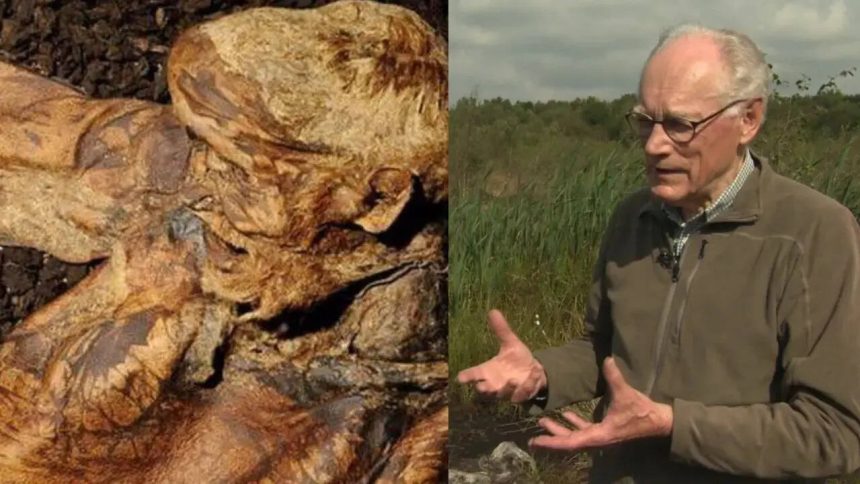
The landscape around Wilmslow, Cheshire, appears unassuming at first glance, with commuter trains passing nearby and modern housing estates creeping ever closer to the open ground. However, beneath this ordinary veneer lies a fascinating story of ancient history, waiting to be unearthed. In 1984, a group of workers at Lindow Moss, a peat bog, stumbled upon a human head, which would eventually uncover a mystery that had been buried for nearly 2,000 years. The discovery of Lindow Man, as the remains came to be known, has since become one of the most significant archaeological finds in British history.
The Discovery and Initial Findings
The Lindow Moss peat bog, where the human head was found, is a vast expanse of wetland that has been in use since ancient times. The peat, which is a type of soil made of partially decayed plant matter, has unique preservative properties that have allowed it to maintain a remarkable level of intactness over the centuries. When the workers first discovered the head, they were unaware of the significance of their find, but as the excavation progressed, it became clear that this was no ordinary burial. The remains, which included a head, torso, and limbs, were remarkably well-preserved, with skin, hair, and even internal organs still intact.
As news of the discovery spread, a team of archaeologists and scientists was assembled to investigate the site and uncover the secrets of Lindow Man. The initial findings suggested that the body was that of a man in his mid-20s, who had been ritually sacrificed and buried in the peat bog around 300 BCE. The level of preservation was astounding, with even the most delicate features, such as eyelashes and fingernails, still visible. The discovery sparked a flurry of interest, with many experts eager to learn more about this ancient individual and the circumstances surrounding his death.
The Significance of Lindow Man
The discovery of Lindow Man has been hailed as one of the most significant archaeological finds in British history, providing a unique glimpse into the lives of ancient Britons. The remarkably preserved remains have allowed scientists to gain a deeper understanding of the culture, rituals, and way of life of the people who lived in the region during the Iron Age. The fact that the body was ritually sacrificed and buried in the peat bog suggests a high level of spiritual and cultural significance, with the individual possibly being a member of the elite or a person of great importance.
Further analysis of the remains has revealed a wealth of information about the diet, health, and lifestyle of Lindow Man. The presence of various parasites and diseases has provided valuable insights into the living conditions and hygiene practices of ancient Britons, while the analysis of the stomach contents has shed light on the types of food that were consumed during this period. The discovery has also sparked a renewed interest in the history and culture of the region, with many locals and visitors alike eager to learn more about the fascinating story of Lindow Man.
Uncovering the Secrets of the Past
As scientists continue to study the remains of Lindow Man, new discoveries are being made, and our understanding of this ancient individual is being refined. The use of advanced technologies, such as DNA analysis and radiocarbon dating, has allowed researchers to build a more detailed picture of the life and death of Lindow Man. The discovery of other bodies in the peat bog, including a woman and a child, has also raised questions about the nature of the rituals and practices that were carried out in this region during the Iron Age.
The story of Lindow Man serves as a powerful reminder of the importance of preserving our cultural heritage and the significance of archaeological discoveries in uncovering the secrets of the past. As we continue to learn more about this ancient individual and the world in which he lived, we are reminded of the enduring power of history to captivate and inspire us. The discovery of Lindow Man is a testament to the ingenuity and curiosity of human beings, and it will undoubtedly remain one of the most fascinating and intriguing stories of our time.