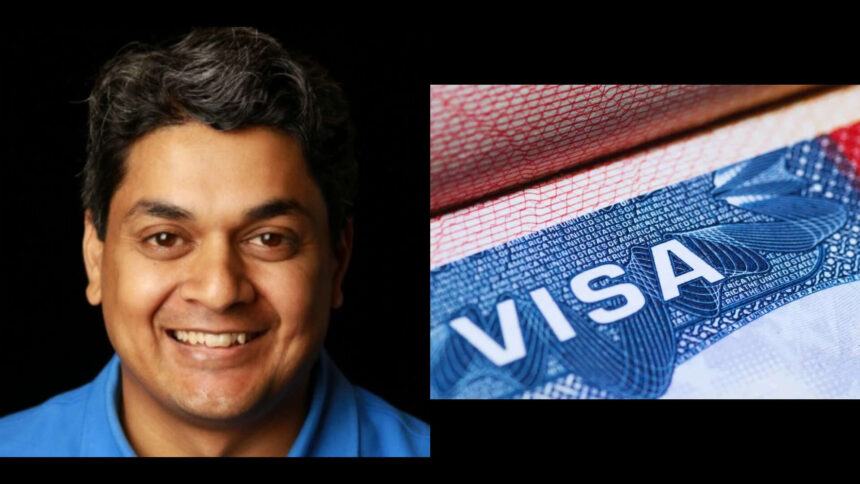
Sridhar Vanka’s LinkedIn post went viral earlier this week, sparking a heated debate on social media about the precarious lives of tech visa holders in the US. The former Meta techie, who spent 14 years building a life in the United States, made the difficult decision to return to his hometown of Hyderabad, India, after being laid off in May. His reason? The ever-ticking clock on his immigration status had finally run out. As the tech industry continues to grapple with the complexities of the H-1B visa program, Vanka’s story serves as a stark reminder of the uncertain future facing thousands of foreign-born tech workers in the US.
Fourteen Years of Building a Life, But at What Cost?
Vanka’s journey to the US began in 2008, when he was granted an H-1B visa to work as a software engineer at a prominent tech firm. Over the years, he rose through the ranks, becoming a technical program manager at Meta in 2022. His decision to return to India was not taken lightly, but the reality of his situation was inescapable. ‘I’m tired of living in limbo, constantly worrying about my immigration status,’ Vanka wrote on LinkedIn. ‘The constant uncertainty is taking a toll on my mental health.’ His words struck a chord with many in the tech community, who have been following the developments with growing concern.
The H-1B visa program, which allows foreign workers to fill high-skilled labor gaps in the US, has been a contentious issue for years. While it has enabled thousands of tech workers like Vanka to build successful careers in the US, it has also been criticized for its restrictive requirements and arbitrary cap on the number of visas issued each year. The program’s complexities have led to numerous lawsuits and Congressional hearings, but to date, there has been no comprehensive reform. As a result, many foreign-born tech workers continue to live in fear of deportation, unable to plan for their futures or invest in their communities.
The Human Cost of Visa Uncertainty
For Vanka, the uncertainty began long before his layoff. He had always known that his H-1B visa was temporary, but he had hoped to eventually secure a green card or citizenship. However, the process has been slow and arduous, and he has been forced to navigate a complex and often bureaucratic system. ‘I’ve been trying to get a green card for over five years, but it’s been an endless cycle of paperwork and waiting,’ he explained. ‘The uncertainty is taking a toll on my family and me.’ His experience is far from unique; countless foreign-born tech workers face similar challenges, struggling to balance their professional ambitions with the fear of deportation.
The human cost of visa uncertainty cannot be overstated. Many foreign-born tech workers have built successful careers in the US, only to be forced to leave when their visas expire. They have invested in their education, their health, and their communities, but they remain vulnerable to the whims of the visa system. As the tech industry continues to evolve and grow, it is imperative that policymakers address the complex issues surrounding the H-1B visa program. It is time to create a more humane and sustainable system, one that recognizes the value and contributions of foreign-born tech workers.
A Call to Action for Policymakers
Vanka’s story serves as a powerful reminder of the urgent need for immigration reform. As the tech industry continues to grapple with the complexities of the H-1B visa program, policymakers must take action to create a more sustainable and humane system. This requires a comprehensive overhaul of the visa program, one that prioritizes the needs of foreign-born tech workers and their families. Only then can we ensure that the best and brightest minds from around the world can contribute to the US tech industry without fear of deportation.
The clock may be ticking for Vanka, but it is not too late for policymakers to act. By working together to create a more inclusive and equitable immigration system, we can ensure that the US remains a beacon of opportunity for foreign-born tech workers and their families.