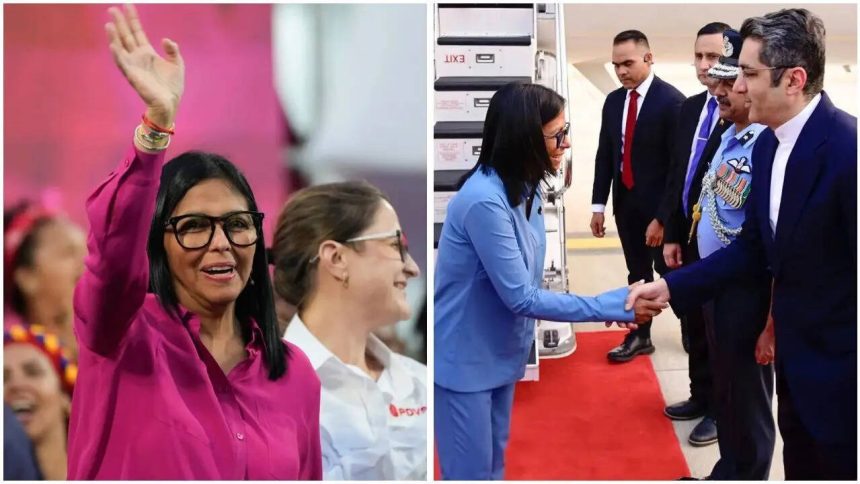
Venezuela’s acting President Delcy Rodriguez arrived in India on Wednesday, marking the beginning of a five-day diplomatic visit aimed at strengthening energy cooperation between the two nations. As New Delhi seeks to diversify its crude oil procurement amid supply disruptions from the West Asia crisis, Rodriguez’s visit is seen as a strategic move to tap into the vast energy potential of Venezuela, the world’s fifth-largest oil exporter. The high-profile visit comes as India faces a pressing need to secure its energy needs, and Venezuela, reeling from years of economic mismanagement, looks to India as a key partner in its quest to revive its ailing energy sector.
Energy Diplomacy at Play
At the heart of Rodriguez’s visit is the promise of energy-rich Venezuela partnering with India’s ambitious energy sector to create new opportunities for growth and development. With India’s energy demand projected to grow exponentially in the coming years, Venezuela sees a golden opportunity to bolster its economy by tapping into the Indian market. This strategic move is expected to create new avenues for trade and investment between the two nations, paving the way for a long-term energy partnership.
During her visit, Rodriguez is set to hold high-level talks with Indian government officials, including External Affairs Minister S Jaishankar, to discuss the potential for joint energy projects and trade agreements. The Indian side, led by Oil Minister Hardeep Singh Puri, is expected to explore the possibility of importing more Venezuelan crude oil, which could help to reduce India’s dependence on the Middle East. This development is seen as a significant step towards diversifying India’s energy imports and reducing the risks associated with relying on a single region for energy supplies.
India’s Quest for Energy Security
India’s energy needs are growing rapidly, driven by a large and expanding population, increasing industrialization, and a growing middle class. With the country’s energy demand projected to reach 1,400 million metric tons of oil equivalent by 2040, India faces significant challenges in securing its energy needs. The West Asia crisis has disrupted oil supplies, pushing up prices and forcing India to look for alternative sources of energy. Venezuela, with its vast oil reserves, is seen as a potential partner in India’s quest for energy security.
The Indian government has been actively pursuing energy diplomacy to secure its energy needs, engaging with various countries to explore new energy partnerships. The visit of Venezuela’s acting President is seen as a significant development in this context, marking a new chapter in energy cooperation between the two nations. With India’s growing energy demand and Venezuela’s vast oil reserves, the potential for a long-term energy partnership is vast and promising.
A New Era in Bilateral Ties
Rodriguez’s visit is also seen as a significant step towards strengthening bilateral ties between India and Venezuela. The two nations have traditionally enjoyed warm relations, with India being one of Venezuela’s largest trading partners in the region. The visit is expected to pave the way for a new era in bilateral ties, marked by increased cooperation in areas such as energy, trade, and investment.
As Rodriguez concludes her five-day visit, the Indian government is expected to emerge with a new energy strategy, one that takes into account the changing global energy landscape and the need for diversification. With Venezuela’s vast energy potential and India’s growing energy demand, the future of their energy partnership looks bright and promising. The visit of Venezuela’s acting President marks a significant milestone in the journey towards a new era of energy cooperation between the two nations.
As India navigates the complex world of energy diplomacy, the visit of Venezuela’s acting President serves as a reminder of the need for strategic thinking and partnerships to secure its energy needs. With the potential for a long-term energy partnership between India and Venezuela, the future of their bilateral ties looks bright and promising.