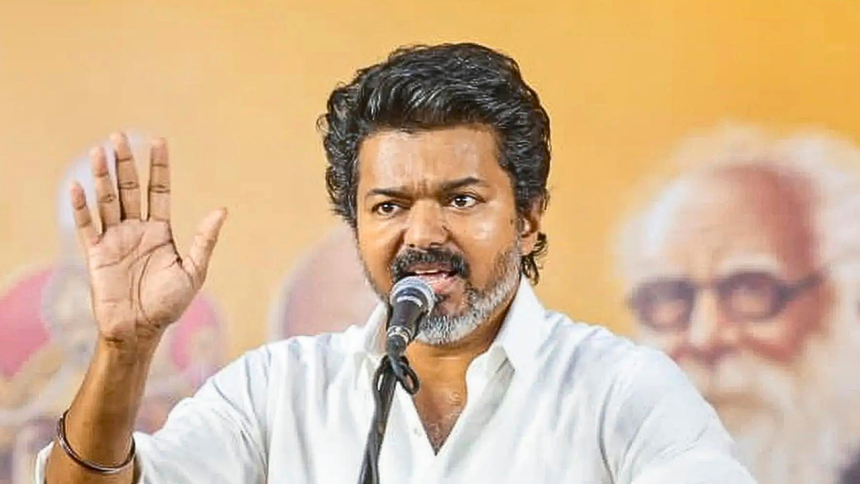
The upcoming meeting between actor-politician Vijay and Tamil Nadu governor Rajendra Vishwanath Arlekar has sparked intense debate over the role of the governor in government formation. As Vijay prepares to stake his claim to form the government for the third time, the question on everyone’s mind is: should the governor ascertain majority before inviting a party to form the government? This is not just a matter of protocol, but a crucial aspect of India’s democratic framework. The governor’s decision will have far-reaching implications for the state’s political landscape and the future of its citizens.
Understanding the Governor’s Role
The governor’s role in government formation is governed by the Indian Constitution, which grants them the power to appoint the chief minister and other ministers. However, this power is not absolute, and the governor is expected to act in accordance with the constitutional principles of democracy and fairness. The governor’s primary responsibility is to ensure that the party or coalition with a majority in the legislative assembly is invited to form the government. But what happens when the majority is not clear-cut, or when there are multiple claimants to power?
In such situations, the governor must exercise their discretion and make a decision based on the available information. This is where the concept of ascertaining majority comes in. The governor may invite the party or coalition with the most seats to form the government, or they may ask for proof of majority, such as a letter of support from other parties or independent legislators. The goal is to ensure that the government formed is stable and has the confidence of the house.
The Vijay Factor
Vijay’s meeting with the governor has added a new dimension to the debate over government formation. As a popular actor-turned-politician, Vijay has a significant following in Tamil Nadu, and his party has made significant gains in the recent elections. However, the question remains whether he has the numbers to form a stable government. The governor will have to carefully consider Vijay’s claim and weigh the options before making a decision.
The Vijay factor has also raised questions about the role of celebrity politicians in Indian democracy. While some argue that celebrities can bring a new level of energy and charisma to politics, others are skeptical about their ability to govern effectively. The governor’s decision will not only determine the fate of Vijay’s government but also set a precedent for future interactions between celebrity politicians and the governor’s office.
Implications for Indian Democracy
The governor’s decision in Tamil Nadu will have significant implications for Indian democracy as a whole. The role of the governor is not limited to government formation; it also extends to ensuring that the state is governed in accordance with the constitution. The governor’s ability to ascertain majority and make informed decisions will determine the stability and effectiveness of the government. A wrong decision can lead to political instability, horse-trading, and even horse-trading, which can undermine the democratic process.
As the country watches the developments in Tamil Nadu with bated breath, it is clear that the governor’s decision will have far-reaching consequences. The governor must balance the competing demands of different parties and stakeholders while upholding the principles of democracy and fairness. The meeting between Vijay and the governor is not just a routine political exercise; it is a test of India’s democratic institutions and their ability to adapt to changing circumstances. The outcome will determine the future of Tamil Nadu and the direction of Indian democracy.