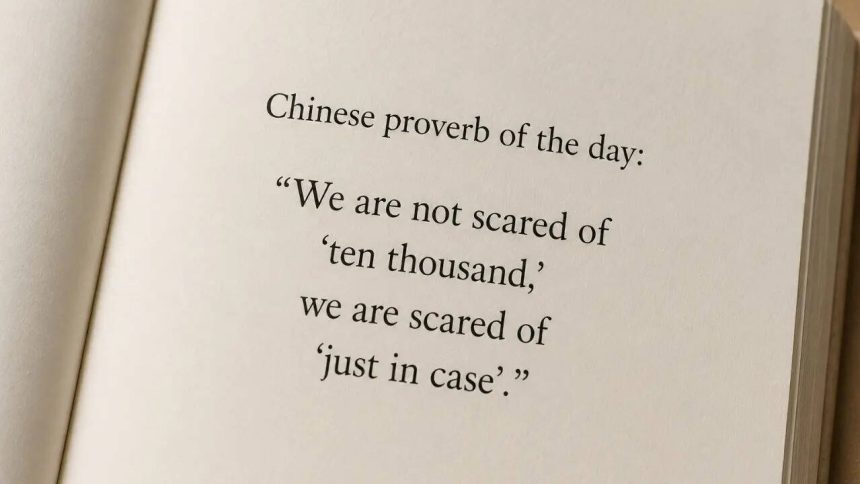
The human brain is a master of self-preservation, wired to respond to threats with a fight-or-flight response that has been honed over millions of years. However, this instinct can sometimes get the better of us, leaving us paralyzed by fear of the unknown. It’s a phenomenon that has puzzled psychologists and philosophers for centuries, and one that is more relevant today than ever before.
The Power of What-If Scenarios
Imagine a scenario where you’re on a plane, soaring through the skies at 30,000 feet. The chances of a catastrophic accident are infinitesimally small, but the thought of it happening is enough to send your heart racing and your palms sweating. This is the power of what-if scenarios, a mental construct that can make even the most rational person irrational. By playing out worst-case scenarios in our minds, we create a sense of uncertainty that can be more daunting than the reality itself.
This is because our brains are wired to respond to potential threats, rather than actual ones. When we’re faced with a concrete situation, our brain can assess the risks and take calculated steps to mitigate them. But when we’re faced with uncertainty, our brain goes into overdrive, conjuring up all manner of worst-case scenarios and leaving us feeling anxious and helpless.
The Science of Fear and Anxiety
So what happens in the brain when we experience fear and anxiety? Research suggests that it’s a complex interplay of neural pathways, involving the amygdala, the prefrontal cortex, and the hippocampus. The amygdala, responsible for detecting threats, sends out warning signals to the rest of the brain, which can trigger a range of physiological responses, from a racing heart to a sweaty palm. The prefrontal cortex, responsible for rational thinking, tries to intervene, but often gets overwhelmed by the amygdala’s warnings.
The hippocampus, responsible for memory and learning, gets caught in the middle, trying to make sense of the chaos. As a result, we may experience flashbacks, nightmares, or even a sense of dread that lingers long after the initial threat has passed.
Overcoming the Power of What-Ifs
So how can we overcome the power of what-ifs and learn to manage our fear and anxiety? The answer lies in developing a more rational and nuanced approach to uncertainty. By acknowledging that what-ifs are just mental constructs, we can begin to challenge our assumptions and take a more balanced view of the world.
This means learning to distinguish between real and perceived threats, and taking concrete steps to mitigate risks. It also means developing coping strategies, such as mindfulness, exercise, and social support, to help us manage our anxiety and build resilience.
Ultimately, it’s not the dangers themselves that scare us, but the uncertainty of what might happen. By recognizing this, we can begin to break free from the grip of what-ifs and live more fully in the present moment.
So the next time you find yourself paralyzed by fear of the unknown, remember the wise words of that ancient Chinese proverb: ‘Ten thousand dangers don’t scare us, but one ‘what if’ does.’ It’s time to take back control of our minds and learn to live with uncertainty, rather than being held hostage by it.