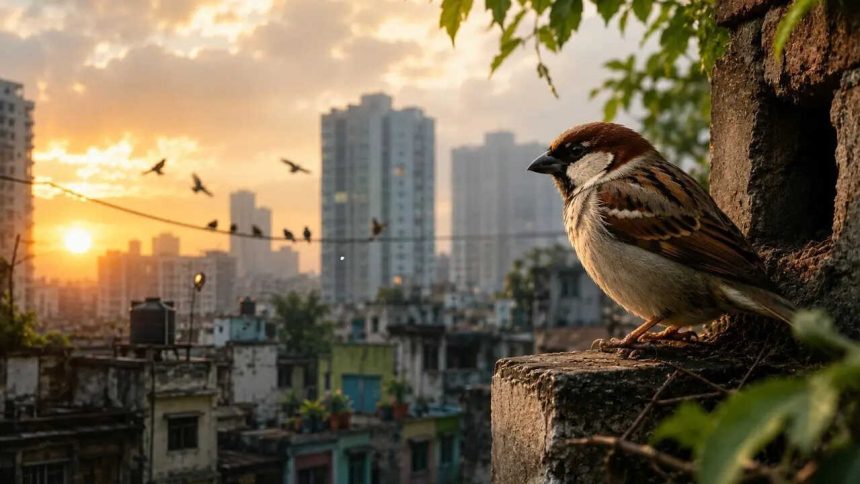
The morning dawn breaks, and an eerie silence falls. The once familiar chirping melodies of the sparrow have grown silent, leaving behind an unsettling stillness. As the dew-kissed leaves glisten in the early morning light, the absence of the sparrow’s song is jarring, a stark reminder that something is amiss in our natural world.
The Sparrow’s Plight: A Loss of Habitat and Deteriorating Ecosystems
The house sparrow, once a ubiquitous presence in our urban and rural landscapes, is facing unprecedented challenges. The rapid urbanization and destruction of natural habitats have led to a significant decline in the sparrow’s population. As humans continue to encroach upon their territories, the sparrow’s ability to find food, shelter, and breed has been severely compromised. The loss of food sources, such as seeds, fruits, and insects, has further exacerbated the situation, leaving the sparrow struggling to survive.
The impact of climate change is also being felt, as extreme weather events and changing temperature patterns affect the sparrow’s ability to adapt. Prolonged periods of drought, heatwaves, and storms have taken a toll on the sparrow’s populations, pushing them to the brink of extinction in many areas. The lack of suitable habitats, combined with the increasing presence of predators and human activities, has created a perfect storm that threatens the very existence of the sparrow.
The Human Factor: Our Role in the Sparrow’s Decline
As humans, we have played a significant role in the sparrow’s decline. Our actions, from habitat destruction to pesticide use, have had a devastating impact on the sparrow’s populations. The widespread use of pesticides, in particular, has been linked to the decline of the sparrow, as these chemicals have contaminated the food chain and disrupted the delicate balance of ecosystems. Furthermore, the increasing reliance on technology and urbanization has led to a decline in green spaces and natural habitats, leaving the sparrow with limited options for survival.
Additionally, the changing attitudes towards nature and the environment have contributed to the sparrow’s plight. As humans become increasingly disconnected from the natural world, we have lost touch with the importance of preserving biodiversity and maintaining healthy ecosystems. The value placed on human development and economic growth has come at the expense of the sparrow’s well-being, highlighting the urgent need for a shift in our priorities.
A Call to Action: Restoring the Sparrow’s Place in Our World
As we stand at the precipice of a potential ecological disaster, it is time to take action. We must acknowledge the role we have played in the sparrow’s decline and work towards creating a more sustainable future. By restoring habitats, reducing pesticide use, and promoting biodiversity, we can help to revive the sparrow’s populations and restore their place in our world.
It will not be an easy task, but it is a necessary one. We must come together as a community, governments, and individuals, to create a world that is conducive to the sparrow’s survival. By doing so, we will not only be saving the sparrow but also preserving the very foundation of our ecosystems and the planet’s biodiversity.
The morning dawn may still be quiet, but it is not too late to restore the sparrow’s song. With determination, collective action, and a commitment to preserving our natural world, we can bring back the chirping melodies that once filled our mornings, and in doing so, we can ensure a brighter, more sustainable future for generations to come.