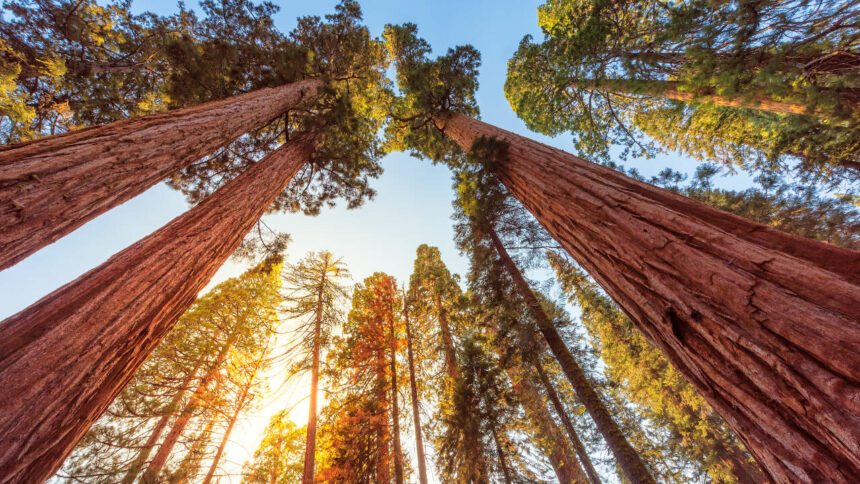
In the heart of California’s redwood forests, a paradox has emerged that challenges the very notion of nature’s resilience. The towering sequoias, some of the oldest and largest trees on the planet, have long been understood to require fire to reproduce. For centuries, fires would sweep through the forest, clearing the underbrush and creating a mosaic of open spaces and charred trunks that would allow the seeds of these magnificent trees to germinate.
Fire and Life: An Ancient Dance
Sequoias, along with other conifers like pine and fir, have coevolved with fire over millions of years. In fact, research has shown that the seeds of these trees are designed to germinate in the heat of a fire, where the flames would have cleared away the competition and provided a sterile environment for the seedling to take root. This symbiotic relationship between fire and the sequoias is a testament to the intricate web of life that exists in the natural world.
But here’s the rub: in recent years, the frequency and ferocity of wildfires in these forests have become increasingly alarming. Driven by climate change and human activity, these fires are not just clearing the underbrush, but are also scorching the very trees that rely on them for reproduction. The result is a devastating paradox: the same fires that help these trees to thrive in the long term are now killing them off in the short term.
Consequences of a Changed Climate
The consequences of this paradox are far-reaching and alarming. As the sequoias die, not only do we lose a vital component of the ecosystem, but we also lose the very mechanism that allowed these trees to survive and thrive in the first place. This has significant implications for the biodiversity of these forests, and for the resilience of ecosystems in the face of climate change.
Furthermore, the loss of these ancient trees also has profound cultural and spiritual implications. For thousands of years, the indigenous peoples of this region have revered these trees as sacred beings, and have lived in harmony with them. The loss of these trees would not only be a tragedy for the natural world, but also a loss of cultural heritage and a severing of a deep connection to the land.
The Future of Fire and Life
So what can we do to mitigate this paradox and ensure the survival of these incredible trees? One solution is to adopt more prescribed burns and controlled fires that mimic the natural patterns of fire in the forest. This would allow us to manage the risk of wildfires while also maintaining the delicate balance of the ecosystem.
Ultimately, the future of fire and life in these forests will depend on our ability to adapt to the changing climate and to find a new balance between human activity and the natural world. As we move forward, we must recognize the intricate web of life that exists in these forests, and work to preserve the delicate balance that has been achieved over millions of years. The fate of the sequoias, and of the ecosystem as a whole, hangs in the balance.
As we stand at the threshold of this new era, we are reminded of the profound interconnectedness of all living things, and of the sacred responsibility that we have to protect and preserve the natural world. The sequoias stand as a testament to the beauty and resilience of nature, and it is up to us to ensure that their story continues for generations to come.