{“title”:”The Dark Side of Moral Ambiguity: Hannah Arendt’s Haunting Insight”,”content”:”
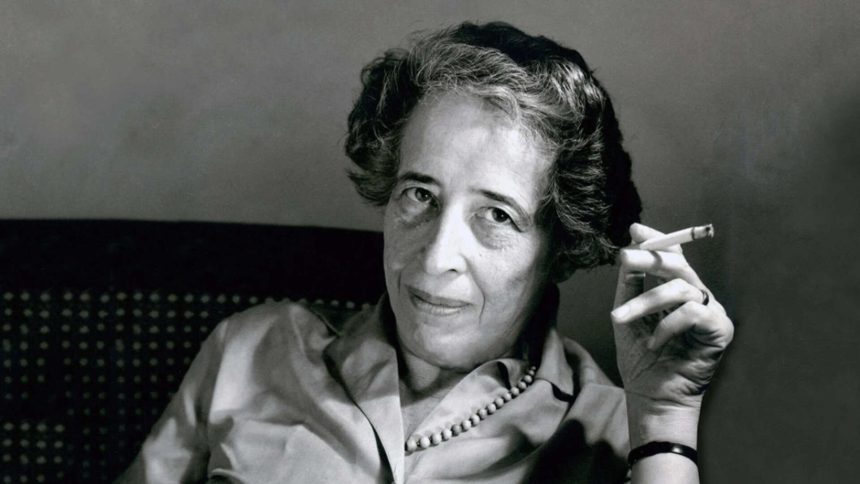
In a world where the lines between good and evil are often blurred, it’s easy to become complacent in our assumption that the worst atrocities are committed by those who are unapologetically wicked. But what if this isn’t the case? What if, as the German-born philosopher Hannah Arendt once suggested, the sad truth is that most evil is done by people who never make up their minds to be good or evil? This deceptively simple statement has haunted philosophers, politicians, and ordinary citizens for generations, leaving us to grapple with the uncomfortable reality that our moral ambiguity may be the very source of our greatest evils.
When Moral Ambiguity Turns Deadly
Arendt’s words are a stark reminder that the absence of clear moral conviction can have devastating consequences. From the Holocaust to the Rwandan genocide, we’ve seen how ordinary individuals can become complicit in some of the most heinous crimes of the 20th century. It wasn’t the fanatical ideologues or the hardened criminals who were responsible for these atrocities; it was often the quiet, unassuming bystanders who failed to act, who failed to condemn, and who failed to resist. Their moral ambiguity, their refusal to take a stand, ultimately led to the destruction of countless lives.
But Arendt’s insight goes beyond the realm of historical events. It speaks to the human condition itself, where we are all capable of moral compromise and rationalization. We justify our actions, we downplay their consequences, and we convince ourselves that we’re doing the right thing, even when we’re not. Our moral ambiguity is a fragile, shifting construct that can be easily eroded by the pressures of conformity, the lure of power, or the fear of reprisal.
The Psychology of Moral Ambiguity
So, what drives this moral ambiguity? Is it a lack of empathy, a failure of imagination, or simply a lack of courage? Research suggests that our brains are wired to seek simplicity and certainty, and that we often prefer to avoid the complexities and uncertainties of moral decision-making. We rely on heuristics, mental shortcuts that allow us to make quick, intuitive judgments, rather than taking the time to consider the full range of moral implications. This can lead to what psychologists call “moral disengagement,” where we disconnect ourselves from the consequences of our actions and convince ourselves that we’re not really responsible.
But moral disengagement is a slippery slope. Once we start to justify our actions, to rationalize our behavior, and to distance ourselves from the consequences, we open ourselves up to the possibility of further moral compromise. We start to see the world in shades of gray, rather than black and white, and we begin to lose our sense of moral direction. This is the danger of moral ambiguity: it’s not just a personal failing, but a collective one, that can have far-reaching consequences for ourselves and for society as a whole.
The Need for Moral Courage
Arendt’s haunting insight serves as a reminder that our moral ambiguity is not just a personal failing, but a societal one. We need to recognize the dangers of moral compromise, to confront our own moral disengagement, and to take a stand for what is right, even when it’s difficult or unpopular. We need to cultivate moral courage, the willingness to speak out against injustice, to challenge the status quo, and to stand up for what we believe in, even when we’re alone or outnumbered.
As we navigate the complexities of the 21st century, we would do well to remember Arendt’s warning. We would do well to recognize the dangers of moral ambiguity, to confront our own moral disengagement, and to take a stand for what is right. For it is only by acknowledging our own moral limitations, and by striving to do better, that we can create a world that is more just, more compassionate, and more human.
“,”excerpt”:”Hannah Arendt’s haunting insight that most evil is done by people who never make up their minds to be good or evil has left philosophers and politicians grappling with the uncomfortable reality of moral ambiguity.”,”tags”:[“politics”,”philosophy”,”morality”,”hannah arendt”],”meta_description”:”The Dark Side of Moral Ambiguity: Hannah Arendt’s Haunting Insight on the dangers of moral compromise and the importance of moral courage.”}