{“title”:”Monsoon Hope Eases as El Niño’s Grip Weakens”,”content”:”
The Indian monsoon, a lifeline for the country’s agriculture and economy, has long been under the threat of a potentially below-normal rainfall season. Despite El Niño’s strengthening grip on the world’s climate, a glimmer of hope has emerged with the World Meteorological Organisation’s latest monthly global seasonal climate update. The update revealed the possibility of a “positive” Indian Ocean Dipole (IOD), which could neutralise the negative impact of El Niño and ensure a relatively normal monsoon season, bringing much-needed relief to the country’s parched lands and farmers.
Understanding the El Niño-IOD Nexus
The relationship between El Niño and the Indian Ocean Dipole is complex and has far-reaching implications for India’s monsoon season. El Niño, a natural phenomenon characterised by warmer-than-average sea surface temperatures in the Pacific Ocean, typically leads to below-normal rainfall in India. Conversely, a positive Indian Ocean Dipole (IOD) event, where the sea surface temperature in the western Indian Ocean is higher than in the eastern Indian Ocean, tends to boost rainfall in India, potentially offsetting the negative impact of El Niño. While El Niño’s influence on the monsoon is well-documented, the IOD’s role in modulating India’s climate remains a subject of ongoing research and debate.
The World Meteorological Organisation’s latest update highlights the importance of the IOD in shaping India’s monsoon patterns. The organisation’s predictions suggest that the IOD’s positive phase could mitigate the negative impact of El Niño, potentially leading to a “near-normal” monsoon season. This development has sent ripples of hope across the country, with farmers and policymakers eagerly awaiting the monsoon’s arrival in June.
The Road Ahead
While the World Meteorological Organisation’s update has provided a glimmer of hope, the road ahead remains uncertain. The organisation’s predictions are based on historical trends and statistical models, and the actual outcome of the monsoon season will depend on various factors, including the evolution of El Niño and the IOD. Additionally, the impact of climate change on India’s monsoon patterns is a pressing concern, with rising temperatures and changing precipitation patterns potentially altering the country’s climate.
The Indian government has been actively monitoring the situation and has taken steps to prepare for a below-normal monsoon season. However, a “near-normal” monsoon season, as predicted by the World Meteorological Organisation, would be a welcome respite for the country’s farmers and economy. As the monsoon season draws near, the nation holds its breath, hoping that the positive IOD phase will indeed offset the negative impact of El Niño and deliver a relatively normal monsoon season.
The Human Angle
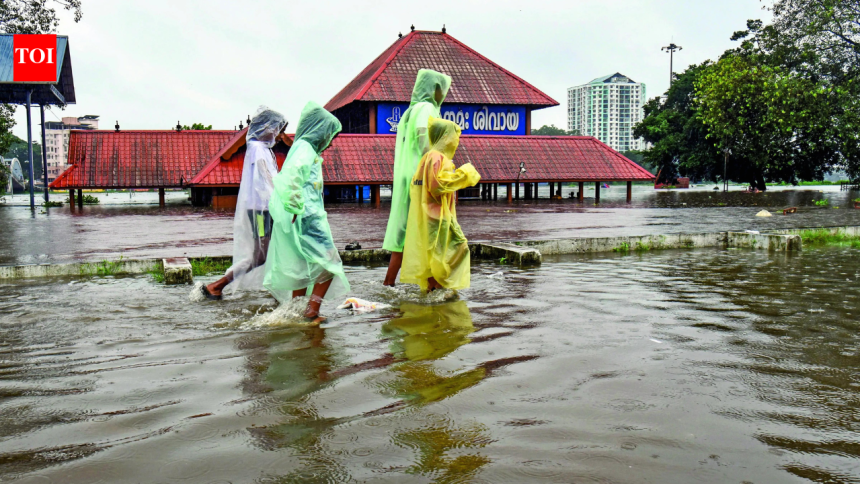
The Indian monsoon is not just a climate phenomenon; it has a profound impact on the lives of millions of people across the country. For farmers, the monsoon is a make-or-break season, with the failure of crops leading to financial ruin and food insecurity. For rural communities, the monsoon is a lifeline, providing essential water for drinking, irrigation, and other domestic uses. The uncertainty surrounding the monsoon season has already taken a toll on farmers and rural communities, with many facing financial hardship and food insecurity.
The positive IOD phase, if it materialises, would bring much-needed relief to these communities. A relatively normal monsoon season would ensure that crops are planted and harvested on time, providing a steady income for farmers and ensuring food security for rural communities. The psychological impact of a normal monsoon season cannot be overstated, with communities facing reduced stress and anxiety about the availability of food and water.
The Indian monsoon is a reminder of the country’s vulnerability to climate change and the need for proactive measures to adapt to its impacts. As the nation prepares for the monsoon season, policymakers and researchers must continue to study the complex relationships between El Niño, the Indian Ocean Dipole, and the monsoon. By doing so, they can develop effective strategies to mitigate the negative impacts of climate change and ensure a more resilient and sustainable future for the country.
The World Meteorological Organisation’s prediction of a positive IOD phase has provided a glimmer of hope for India’s monsoon season. As the nation holds its breath, waiting for the monsoon’s arrival in June, it is clear that the road ahead remains uncertain. However, one thing is certain – the impact of the monsoon season will be felt far and wide, touching the lives of millions of people across the country. With the positive IOD phase, India may yet avoid a below-normal monsoon season, bringing much-needed relief to its parched lands and farmers.
“,”excerpt”:”The World Meteorological Organisation’s latest update has offered a ray of hope for India’s monsoon season, predicting a positive Indian Ocean Dipole (IOD) phase that could offset the negative impact of El Niño.”,”tags”:[“monsoon”,”El Niño”,”Indian Ocean Dipole”,”climate change”,”World Meteorological Organisation”],”meta_description”:”A glimmer of hope for India’s monsoon season as the World Meteorological Organisation predicts a positive Indian Ocean Dipole (IOD) phase.”}