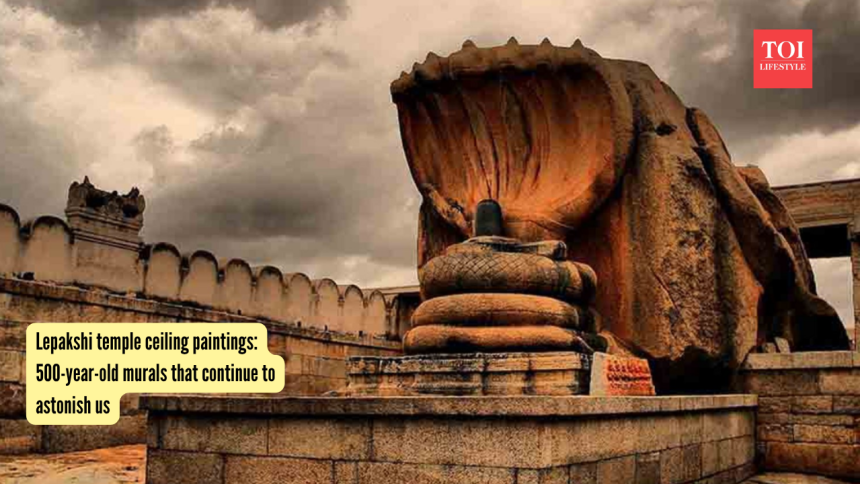
Perched atop a verdant hill in the southern Indian state of Andhra Pradesh lies the enchanting village of Lepakshi, home to one of the most breathtaking temple complexes in the country. The Lepakshi temple, a masterpiece of ancient craftsmanship, boasts an impressive array of intricate carvings, sculptures, and above all, its spectacular ceiling paintings that continue to mesmerize visitors from far and wide. These 500-year-old murals are not only a testament to the artistic prowess of our ancestors but also a window into the region’s rich cultural heritage.
A Window into Hindu Mythology
As one enters the temple complex, the first thing that strikes the eye is the magnificent ceiling painting, which appears to stretch on forever. The vibrant colors, the delicate details, and the sheer scale of the artwork are nothing short of breathtaking. The murals depict various scenes from Hindu mythology, including the epic battle between the gods and demons. The artwork is a masterful representation of the ancient tales, bringing to life the likes of Lord Vishnu, Lord Brahma, and Lord Shiva. The intricate details of the paintings, including the minute expressions on the gods’ faces, demonstrate the high level of craftsmanship that went into creating these works of art.
The ceiling painting is not just a visual feast but also a fascinating example of the way ancient storytellers wove their tales. Long before the advent of books and the internet, our ancestors used to narrate their epics through paintings and sculptures. A traveler who couldn’t read could still ‘read’ an entire epic simply by following the painted figures from one scene to the next. This art form allowed people to access and share their knowledge and stories with ease, transcending the boundaries of language and literacy.
The Art of Preservation
Despite being over 500 years old, the Lepakshi temple ceiling paintings remain remarkably well-preserved. The temple’s architecture, which combines the ancient Dravidian and Pallava styles, has played a significant role in protecting the murals from the elements. The use of natural materials, such as wood and stone, has helped to maintain the paintings’ vibrancy and integrity. The Indian government and local authorities have also taken significant steps to conserve the artwork, including the installation of a state-of-the-art climate control system to regulate temperature and humidity levels.
The preservation of the Lepakshi temple ceiling paintings is not just a matter of safeguarding a piece of cultural heritage but also a testament to the country’s commitment to preserving its rich history. The government’s efforts to conserve the artwork have been instrumental in ensuring that future generations can continue to marvel at the beauty and artistry of our ancestors.
A Cultural Gem
The Lepakshi temple complex is more than just a tourist destination; it is a cultural gem that reflects the artistic and spiritual essence of our country. The temple’s architecture, sculptures, and ceiling paintings are a testament to the region’s rich cultural heritage and the artistic prowess of our ancestors. As we continue to navigate the complexities of modern life, it is essential that we preserve and cherish our cultural heritage, including the Lepakshi temple ceiling paintings. By doing so, we can ensure that our children and grandchildren can continue to marvel at the beauty and artistry of our ancestors.
The Lepakshi temple complex is a must-visit destination for anyone interested in art, history, and culture. The temple’s stunning architecture, intricate sculptures, and breathtaking ceiling paintings make it a truly unforgettable experience. As you wander through the temple complex, you can’t help but feel a deep sense of connection to our ancestors and their artistic creations. The Lepakshi temple ceiling paintings are a true masterpiece, a testament to the enduring power of art and culture.