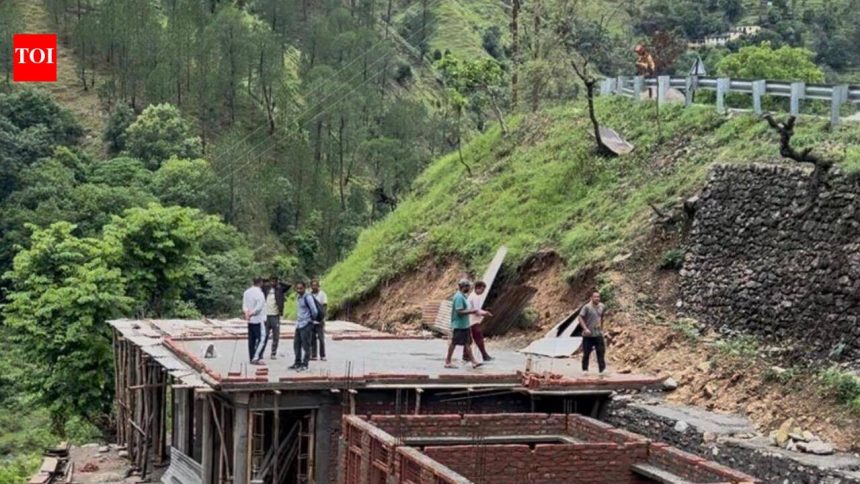
The arrival of heavy rain in Bageshwar’s Harbadh village has brought more than just relief from the scorching heat – it has also exposed the vulnerabilities of the under-construction rehabilitation houses meant for families displaced by last year’s monsoon disaster. For four families who have been living in uncertainty for months, the sight of deep cracks in the structures that were supposed to be their new homes is a stark reminder of the safety fears that have been lurking beneath the surface. The rehabilitation site, chosen by the government to resettle these families, is now at the center of a growing concern over the wisdom of selecting a location that may not be as safe as initially thought.
Concerns Over Site Selection
The selection of the Harbadh village site for the rehabilitation houses was made with the intention of providing a safe and stable environment for the displaced families. However, the appearance of cracks in the under-construction structures has raised questions about the suitability of the site. The heavy rain that caused the damage has also highlighted the potential risks associated with the location, including the possibility of landslides and flooding. As the families wait to move into their new homes, they are left to wonder if the site is truly safe for them to live in.
The government’s decision to build the rehabilitation houses in Harbadh village was likely made with the best of intentions, but the lack of proper planning and consideration for the site’s vulnerability to natural disasters has put the families at risk. The cracks in the structures are not just a minor setback, but a symptom of a larger problem that needs to be addressed. The families are calling for a thorough investigation into the site selection process and for the government to take immediate action to ensure their safety.
Impact on Displaced Families
The appearance of cracks in the rehabilitation houses has had a devastating impact on the displaced families, who have already been through so much. The uncertainty and fear that they are experiencing are palpable, and the lack of a safe and stable home is exacerbating their trauma. The families are struggling to come to terms with the fact that the houses that were meant to be their new beginnings are now a source of danger and uncertainty. As they wait for the government to take action, they are left to pick up the pieces and try to rebuild their lives once again.
The psychological impact of the disaster and the subsequent displacement has been significant, and the appearance of cracks in the rehabilitation houses has only added to the families’ stress and anxiety. The lack of a safe and stable home has made it difficult for them to move on from the trauma of the past and to start rebuilding their lives. The government needs to take immediate action to address the concerns of the families and to provide them with a safe and stable environment in which to live.
Way Forward
The appearance of cracks in the rehabilitation houses in Harbadh village is a wake-up call for the government to re-examine its approach to disaster rehabilitation and to prioritize the safety and well-being of the affected families. The government needs to take a comprehensive approach to addressing the concerns of the families, including conducting a thorough investigation into the site selection process and taking immediate action to ensure their safety. This may involve relocating the families to a safer location or providing additional support and resources to help them rebuild their lives.
The government also needs to learn from its mistakes and to take steps to prevent similar disasters from occurring in the future. This includes investing in disaster risk reduction and management initiatives, such as early warning systems and evacuation plans, and providing training and support to communities that are vulnerable to natural disasters. By taking a proactive and comprehensive approach to disaster rehabilitation, the government can help to reduce the risk of disasters and to minimize their impact on communities.