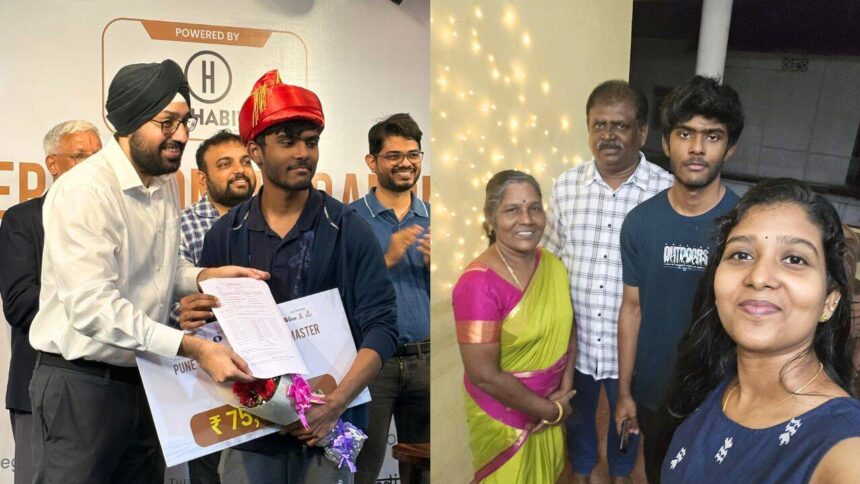
For most teenagers, the pressure of sitting their Class 10 board exams can be overwhelming, with anxiety and stress levels often reaching a boiling point. However, for 15-year-old Aswath S, the feeling of nervousness is nothing new, having already made a name for himself in the highly competitive world of chess. Aswath has just become India’s 98th Grandmaster, a feat that requires an enormous amount of dedication, hard work, and natural talent. His journey to the top is an inspiring story of perseverance and passion, one that is sure to motivate aspiring chess players across the country.
Early Beginnings and the Rise to Fame
Aswath’s love affair with chess began when he was just six years old, with his father introducing him to the game. What started as a casual hobby soon turned into an all-consuming passion, with Aswath spending hours upon hours practicing and honing his skills. His parents, recognizing their son’s talent and dedication, provided him with the necessary support and resources to pursue his dream of becoming a chess Grandmaster. Aswath’s big break came when he won his first national championship at the age of 12, a victory that catapulted him into the spotlight and earned him recognition within the chess community.
As Aswath’s reputation grew, so did his commitment to the game. He began to participate in international tournaments, where he faced off against some of the world’s top young players. Despite the intense competition, Aswath held his own, consistently delivering impressive performances that caught the attention of chess enthusiasts and experts alike. His meteoric rise through the ranks has been nothing short of phenomenal, with many predicting that he will go on to become one of India’s most successful chess players in the years to come.
Overcoming Challenges and Staying Focused
Aswath’s journey to becoming a Grandmaster has not been without its challenges. The young prodigy has had to balance his chess career with his academic responsibilities, often finding himself torn between the two. However, with the support of his family and coaches, Aswath has managed to stay focused and motivated, prioritizing his goals and working tirelessly to achieve them. His ability to handle pressure and perform under stress has been particularly impressive, with Aswath consistently delivering his best when it matters most.
Aswath’s success can also be attributed to his rigorous training regimen, which includes a combination of physical exercise, mental preparation, and strategic planning. He works closely with his coaches to analyze his games, identifying areas for improvement and developing strategies to outmaneuver his opponents. This meticulous approach has paid off, with Aswath’s results consistently improving over the past few years. As he looks to take his game to the next level, Aswath will need to continue pushing himself, both on and off the board.
The Future of Indian Chess
Aswath’s achievement is not just a testament to his individual talent and hard work; it also highlights the growing strength of Indian chess. With 98 Grandmasters and counting, India is rapidly emerging as a major force in the world of chess. Aswath, along with other young players, is at the forefront of this movement, inspiring a new generation of chess enthusiasts and paving the way for future success. As the sport continues to gain popularity across the country, it will be exciting to see how Aswath and his fellow players perform on the international stage.
As Aswath looks to the future, he remains committed to his craft, driven by a passion for the game and a desire to continually improve. With his Grandmaster title secure, he will now set his sights on even greater challenges, including representing India at the Olympics and competing in the prestigious World Chess Championship. For now, though, Aswath can bask in the glory of his achievement, proud of the fact that he has become a role model for young chess players everywhere. His story serves as a reminder that with dedication, perseverance, and natural ability, anything is possible, even at the tender age of 15.