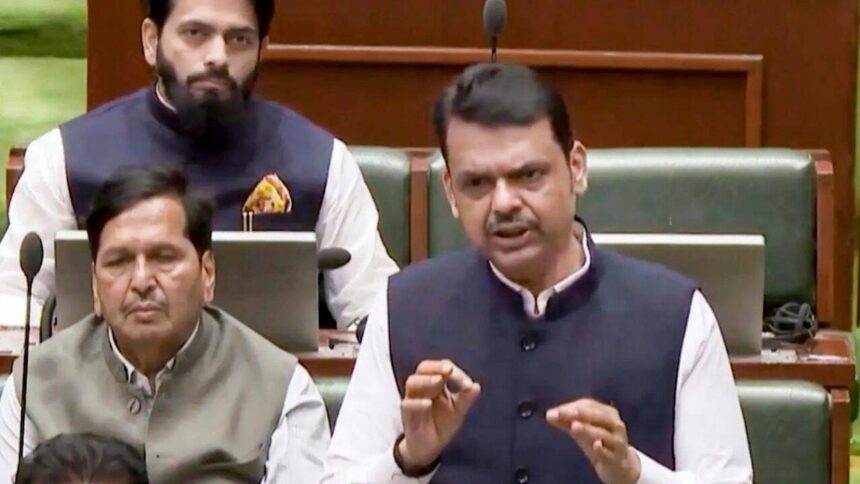
In a significant move, Maharashtra Chief Minister Devendra Fadnavis has formed a seven-member panel to draft legislation for a Uniform Civil Code (UCC), marking a crucial step towards implementing the long-debated law. The panel, headed by retired Supreme Court judge Justice Ranjana Desai, is expected to submit its draft by the winter session of the state legislature. This development comes at a time when the UCC has been a topic of intense discussion across the country, with many advocating for a uniform set of laws governing personal matters, regardless of religion or community.
Background and Implications
The formation of the panel is a major breakthrough in the implementation of the UCC, which has been a part of the Bharatiya Janata Party’s (BJP) manifesto for several years. The UCC aims to replace the existing personal laws based on religion, such as the Hindu Code Bills, the Muslim Personal Law, and the Christian Personal Law, with a uniform set of laws applicable to all citizens. This move is expected to have far-reaching implications, not only for the state of Maharashtra but also for the country as a whole, as it could pave the way for a more unified and secular legal framework.
The panel, comprising experts from various fields, including law, social sciences, and religion, will be responsible for consulting with stakeholders, examining existing laws, and drafting a comprehensive legislation that takes into account the diverse needs and concerns of different communities. The draft law is likely to be tabled in the winter session of the state legislature, where it will be debated and discussed by lawmakers before being passed into law.
Challenges and Opportunities
The implementation of the UCC is not without its challenges, as it will require careful consideration of the complex and sensitive issues involved. The panel will have to navigate the delicate balance between respecting the rights and traditions of different communities and ensuring that the law is fair, just, and equitable for all. Additionally, the UCC will require significant changes to existing laws and social norms, which could be met with resistance from some quarters.
Despite these challenges, the implementation of the UCC also presents a unique opportunity for the country to move towards a more secular and unified legal framework. A uniform set of laws governing personal matters could help to reduce conflicts and disputes arising from differences in personal laws, promote social cohesion and integration, and strengthen the rule of law. Furthermore, the UCC could also help to address issues such as gender inequality, child marriage, and other social evils that are often perpetuated through outdated and discriminatory laws.
Way Forward
The formation of the panel and the drafting of the UCC legislation are significant steps towards creating a more just and equitable society. The panel’s draft law will be closely watched by lawmakers, scholars, and civil society organizations, who will be eager to see how the legislation addresses the complex issues involved. As the process moves forward, it is essential that all stakeholders engage in constructive dialogue and debate, putting aside their differences and working towards a common goal of creating a fair and just legal framework for all.
The successful implementation of the UCC in Maharashtra could also have a ripple effect, inspiring other states to follow suit and paving the way for a more unified and secular legal framework across the country. As the country moves forward on this critical issue, it is essential that lawmakers, policymakers, and civil society organizations work together to create a law that is fair, just, and equitable for all, regardless of religion, community, or social status.