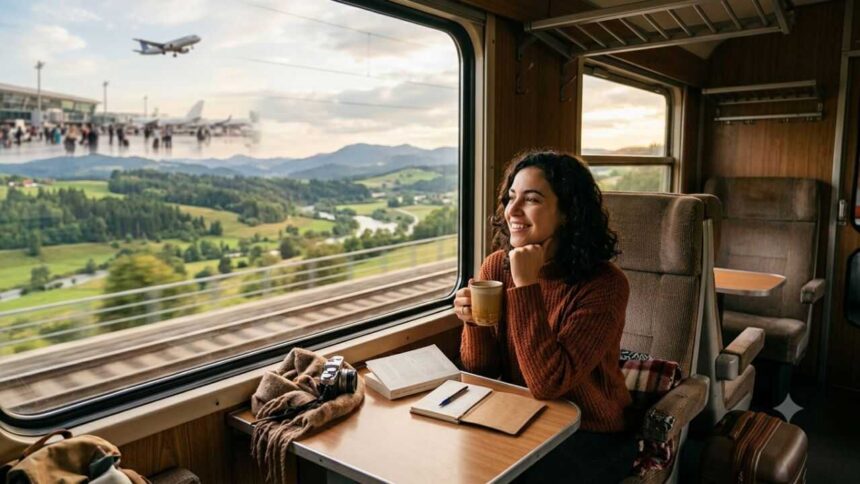
For many travellers, the idea of embarking on a 10-hour train journey when a two-hour flight is available may seem counterintuitive. However, for some, the allure of a train seat, a window view, and the steady movement of a railway carriage is too great to resist. As it turns out, this preference is not just about the scenery or the lack of security checks, but also about the psychological benefits that come with train travel. Researchers have found that the slow and steady pace of train journeys can have a profound impact on our mental wellbeing, allowing us to relax, reflect, and recharge in a way that the hustle and bustle of air travel often cannot.
The Therapeutic Effects of Train Travel
One of the primary reasons people choose train travel over flying is the sense of calm and tranquility it provides. The gentle rocking motion of the train, the sound of the wheels on the tracks, and the ever-changing scenery outside the window can be incredibly soothing. This is because our brains are wired to respond to repetitive motions and sounds, which can induce a state of relaxation and reduce stress levels. Furthermore, the lack of pressure to constantly be productive or entertained, as is often the case with air travel, allows passengers to unwind and let their minds wander.
Additionally, train travel provides an opportunity for social interaction, whether it’s striking up a conversation with a fellow passenger or enjoying quality time with family and friends. This social aspect of train travel can have a profound impact on our mental health, as it allows us to feel connected and part of a community. In an era where loneliness and isolation are increasingly prevalent, the social benefits of train travel should not be underestimated.
The Psychology of Time Perception
Another factor at play when it comes to choosing train travel over flying is our perception of time. While a 10-hour train journey may seem like an eternity to some, others may find that the time passes quickly, thanks to the comfortable seating, ample legroom, and variety of onboard amenities. This is because our brains are capable of manipulating our perception of time, making it feel shorter or longer depending on our level of engagement and enjoyment. When we are relaxed and absorbed in our surroundings, time seems to fly by, whereas when we are stressed or bored, it can feel like an eternity.
Furthermore, the predictable and steady pace of train travel can make the journey feel more manageable and less daunting. Unlike air travel, which often involves a series of stressful and unpredictable events, such as security checks and flight delays, train travel is generally more straightforward and easy to navigate. This sense of control and predictability can be incredibly reassuring, making the journey feel less overwhelming and more enjoyable.
The Future of Train Travel
As the world becomes increasingly fast-paced and technology-driven, the appeal of train travel is likely to endure. In fact, many countries are investing heavily in their rail infrastructure, recognizing the economic, environmental, and social benefits of train travel. From high-speed trains to scenic rail routes, the options for train travel are more varied than ever, catering to a wide range of tastes and preferences.
Whether you’re a seasoned train traveller or just looking for a more relaxing and enjoyable way to reach your destination, the benefits of train travel are clear. So next time you’re planning a trip, consider ditching the plane and opting for the train instead. You might just find that the journey is more enjoyable than the destination itself.