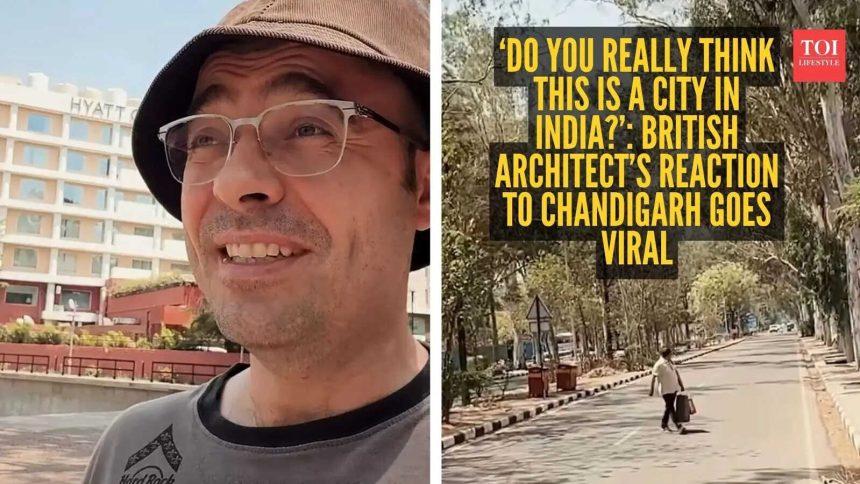
The recent video posted by British architect Russell Henderson from Chandigarh has sparked a heated debate on social media, with many weighing in on the city’s impressive planning, greenery, and order. Henderson’s astonishment at the city’s beauty and organization was evident in his question, ‘Do you really think this is a city in India?’ This reaction is not unique, as many foreigners often have preconceived notions about India, shaped by images of poverty, chaos, and disorganization. However, Chandigarh, a city designed by Swiss-French architect Le Corbusier, has been defying these stereotypes for decades, offering a glimpse into a more organized and planned side of India.
Challenging Global Perceptions
The city’s well-planned infrastructure, wide roads, and abundant green spaces have made it a model for urban planning in India. The city’s design, which emphasizes functionality and efficiency, has created a unique and pleasant living environment, distinct from the crowded and chaotic streets often associated with Indian cities. This has led to a growing interest in Chandigarh among tourists and foreigners, who are eager to experience the city’s blend of modernity and tradition. As a result, the city has become a cultural ambassador for India, showcasing the country’s ability to create and maintain well-planned and organized urban spaces.
Moreover, Chandigarh’s success has also sparked a sense of pride among Indians, who see the city as a symbol of their country’s potential for growth and development. The city’s achievements have also raised questions about the role of urban planning in shaping the quality of life for citizens, and the need for more cities in India to adopt similar models. As the country continues to urbanize at a rapid pace, the importance of planned development and sustainable growth cannot be overstated, and Chandigarh stands as a shining example of what can be achieved with careful planning and vision.
The Power of Social Media
The fact that Russell Henderson’s video went viral on social media highlights the significant role that platforms like Twitter and Instagram play in shaping global perceptions of India. Social media has made it possible for people to share their experiences and perspectives with a global audience, creating new opportunities for cultural exchange and understanding. However, it also raises important questions about the responsibility that comes with sharing information and images, and the potential for misinformation and stereotypes to spread quickly. As social media continues to grow in influence, it is essential to consider the impact of our posts and tweets on global perceptions, and to strive for accuracy and sensitivity in our representations of different cultures and cities.
The reaction to Henderson’s video also underscores the complexities of cultural perception and the dangers of making assumptions based on limited information. Many Indians were quick to point out that Chandigarh is not representative of the entire country, and that India is a diverse and complex nation with many different cultures, cities, and experiences. This highlights the need for nuance and sensitivity in our discussions of different cultures, and the importance of avoiding simplistic or stereotypical representations.
A New Narrative for India
As the world becomes increasingly interconnected, it is essential to create a new narrative for India, one that moves beyond stereotypes and showcases the country’s diversity, complexity, and potential. Chandigarh, with its unique blend of modernity and tradition, is an important part of this narrative, offering a glimpse into a more organized and planned side of India. By sharing stories and experiences like Henderson’s, we can work to create a more nuanced and accurate understanding of India, and to challenge the preconceived notions that have shaped global perceptions of the country for so long.
Ultimately, the debate sparked by Russell Henderson’s video is a reminder of the power of social media to shape our perceptions of the world, and the importance of nuance and sensitivity in our discussions of different cultures. As we move forward in an increasingly interconnected world, it is essential to approach these discussions with empathy, understanding, and a willingness to learn and grow. By doing so, we can work to create a more just and equitable global community, one that values diversity and promotes cross-cultural understanding.