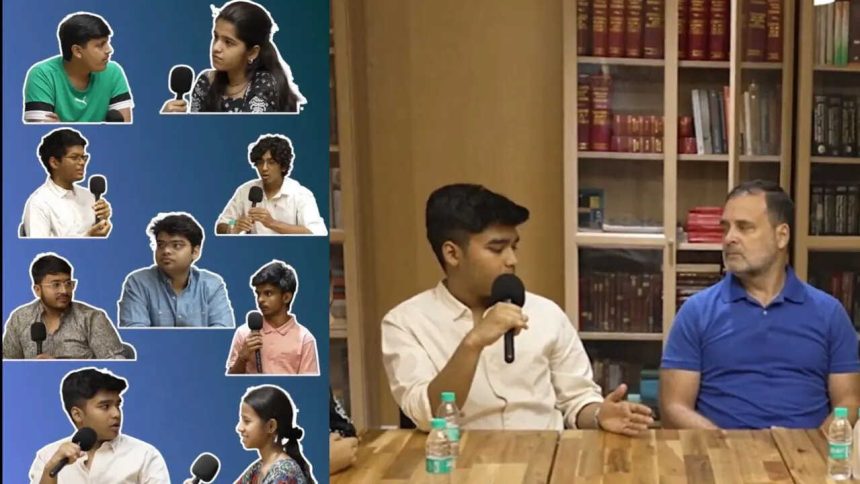
Rahul Gandhi’s recent encounter with CBSE class 12 students, who were subjected to online harassment and intimidation after raising concerns over incorrect answer sheets, has once again highlighted the BJP-led government’s tendency to silence dissent through personal attacks and labels. The students, who were accused of being ‘anti-national’, ‘Pakistani’, and even ‘Soros agents’ by some online users, met the Lok Sabha leader of opposition on Sunday, a move that has sparked a heated debate about the limits of free speech and the role of social media in shaping public discourse.
Labeling Dissent as Anti-National
The term ‘anti-national’ has become a favorite weapon of the BJP-led government to silence anyone who dares to question its policies or decisions. From students and activists to journalists and intellectuals, many have been labeled ‘anti-national’ for speaking out against the government’s actions. But what exactly does it mean to be ‘anti-national’? Is it simply a euphemism for dissent, or is there something more sinister at play?
While some may argue that labeling dissent as anti-national is a legitimate way to maintain national security and unity, others see it as a ploy to stifle free speech and criticism. The fact that students who raised concerns about incorrect answer sheets were labeled ‘anti-national’ and ‘Soros agents’ raises serious questions about the government’s intentions and the impact of social media on public discourse.
The Role of Social Media in Shaping Public Discourse
Social media has become a powerful tool for shaping public opinion and discourse. With the rise of online platforms, anyone can now share their views and opinions with the world. However, this has also led to the spread of misinformation and hate speech, which can have serious consequences. The online harassment and intimidation faced by the CBSE students is a prime example of how social media can be used to silence dissent and intimidate those who dare to speak out.
Moreover, the labeling of dissent as anti-national has created a chilling effect on free speech, making people hesitant to express their opinions or raise concerns about government policies. This is a worrying trend, especially in a democracy where dissent and criticism are essential for holding the government accountable.
A Call to Action
Rahul Gandhi’s meeting with the CBSE students is a welcome move, but it is only a small step towards addressing the bigger issue. The BJP-led government needs to take concrete steps to address the labeling of dissent as anti-national and the impact of social media on public discourse. This includes creating a safe and respectful online environment where people can express their opinions without fear of intimidation or harassment.
Ultimately, the goal should be to foster a culture of constructive criticism and debate, where people can engage in respectful discussions and exchange of ideas. Anything less would be a betrayal of the democratic values that our country was founded upon.
The BJP-led government’s tendency to silence dissent through personal attacks and labels is a worrying trend that needs to be addressed. By labeling dissent as anti-national and ‘Soros agents’, the government is not only stifle free speech but also undermining the very fabric of our democracy. It is time for the government to take concrete steps to address this issue and create a safe and respectful online environment where people can express their opinions without fear of intimidation or harassment.