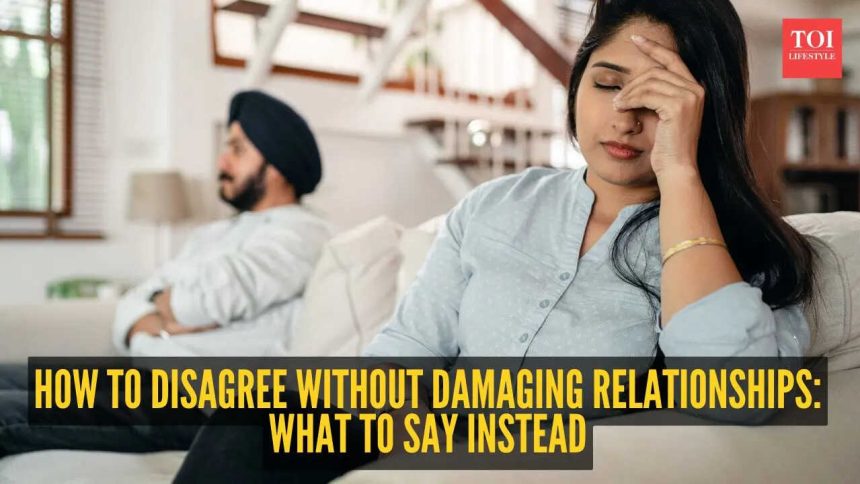
Imagine yourself in a heated discussion with a loved one, a colleague, or a friend. The conversation has taken a turn, and it’s clear that you’re on opposite sides of the issue. Your instinct might be to shout ‘You’re wrong!’ or ‘That’s not true!’ But in that moment, you know that such a response will only lead to defensiveness, hurt feelings, and a weakened relationship. Disagreeing without damaging relationships is a delicate art that requires finesse, empathy, and a willingness to listen. It’s a skill that can be learned, and with practice, you’ll become a master bridge-builder rather than a relationship destroyer.
Mastering the Art of Disagreement: 5 Essential Phrases
Disagreements can be a natural part of any relationship, whether personal or professional. The key is to navigate these disagreements in a way that respects the other person’s perspective, even if you don’t agree with it. Relationship expert John Gottman emphasizes the importance of ‘repair attempts’ during a clash, which involve actively working to repair the relationship and prevent further damage. One of the most effective ways to do this is by using specific phrases that diffuse tension and encourage open discussion. Here are five essential phrases to get you started:
1. ‘I see what you’re saying, but…’ This phrase acknowledges the other person’s perspective while also allowing you to express your own thoughts and feelings. By starting with a nod to their point of view, you’re showing that you’re listening and willing to engage in a constructive conversation.
2. ‘That’s an interesting perspective. Can you help me understand why you think that?’ This phrase encourages the other person to share their reasoning and provides an opportunity for you to gain a deeper understanding of their point of view. By asking for clarification, you’re showing that you value their opinion and are willing to learn from them.
3. ‘I disagree, but I appreciate your honesty.’ This phrase acknowledges the other person’s courage in sharing their opinion, while also making it clear that you don’t agree with their perspective. By expressing appreciation for their honesty, you’re showing that you value their willingness to speak up, even if you don’t agree with what they’re saying.
4. ‘I’m not sure I agree, but can we talk more about this?’ This phrase opens the door for further discussion and creates a safe space for both parties to share their thoughts and feelings. By expressing uncertainty, you’re showing that you’re willing to listen and consider alternative perspectives.
5. ‘What do you think we could do to resolve this?’ This phrase shifts the focus from ‘winning’ the argument to finding a mutually beneficial solution. By asking the other person for their input, you’re showing that you value their perspective and are willing to work together to find a resolution.
Using these phrases can help you navigate disagreements in a way that strengthens relationships rather than damaging them. By learning to disagree without being disagreeable, you’ll become a more effective communicator, a better listener, and a more empathetic friend, colleague, or partner.
Putting Disagreeing Without Damaging Relationships into Practice
Disagreeing without damaging relationships requires practice, patience, and a willingness to learn. It’s not about being right or wrong; it’s about being open, honest, and respectful. By using the phrases above, you’ll be well on your way to mastering the art of disagreement and building stronger, more resilient relationships. So the next time you find yourself in a heated discussion, take a deep breath, choose your words carefully, and remember that the goal is to build bridges, not burn them.
Becoming a Relationship Mastermind
Disagreeing without damaging relationships is just one aspect of being a relationship mastermind. To truly excel in this area, you’ll need to cultivate a range of skills, including active listening, empathy, and effective communication. Here are a few additional tips to help you become a relationship mastermind:
Practice mindfulness: Being present in the moment can help you stay calm and focused during disagreements. Try practicing mindfulness techniques, such as meditation or deep breathing, to help you stay centered.
Use ‘I’ statements: Instead of blaming or accusing the other person, try using ‘I’ statements to express your thoughts and feelings. This can help prevent defensiveness and create a safe space for discussion.
Listen actively: Make an effort to truly listen to the other person’s perspective, and try to understand where they’re coming from. This can help you find common ground and build a stronger connection.
Be willing to apologize: Recognize when you’ve made a mistake or said something hurtful, and be willing to apologize and make amends. This can help repair relationships and build trust.
By incorporating these skills into your daily life, you’ll become a master of disagreeing without damaging relationships. You’ll be able to navigate even the most challenging conversations with ease, and you’ll build stronger, more resilient relationships as a result.
Learning to disagree without damaging relationships takes time and practice, but the benefits are well worth the effort. By mastering the art of disagreement, you’ll become a more effective communicator, a better listener, and a more empathetic friend, colleague, or partner. So the next time you find yourself in a heated discussion, remember to breathe, choose your words carefully, and work towards building bridges, not burning them.