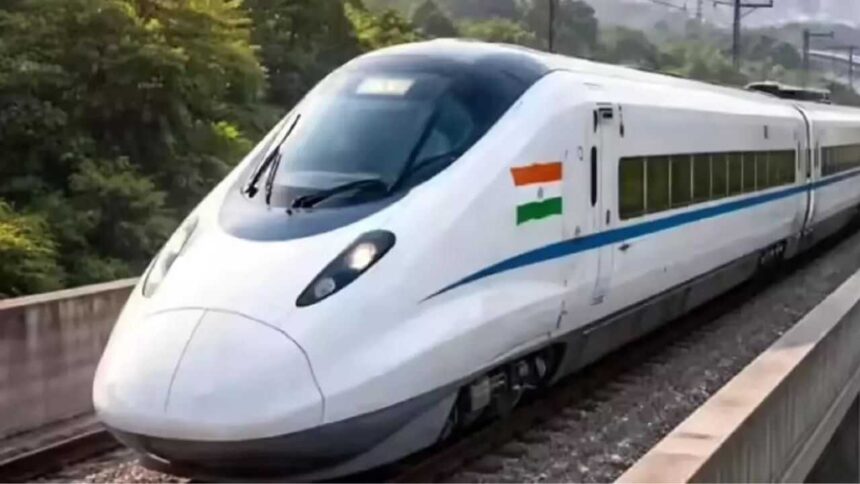
As India prepares to embark on its next phase of bullet train projects, the government has announced plans to establish its own design standards for civil structures, including bridges, elevated sections, tunnels, and stations. This move marks a significant shift away from relying on foreign standards, as the country aims to create a network of high-speed rail lines with a design speed of 350 kmph. The decision is expected to not only reduce costs but also ensure that the infrastructure is tailored to India’s unique geographical and environmental conditions.
Designing for Speed and Safety
The new design standards will be developed by a team of experts from various fields, including engineering, architecture, and environmental science. The team will draw on international best practices while incorporating local factors such as climate, geology, and urban planning. The standards will cover all aspects of civil structures, from the type of materials used to the construction techniques employed. By standardizing these elements, the government hopes to streamline the construction process, minimize delays, and ensure that the bullet train network is both safe and efficient.
The emphasis on safety is particularly crucial, given the high speeds at which the trains will be traveling. The government has stated that the design standards will prioritize passenger safety, with features such as advanced signaling systems, emergency response plans, and regular maintenance schedules. Additionally, the standards will take into account the potential environmental impact of the projects, including noise pollution, land acquisition, and wildlife conservation.
Seven New Corridors on the Horizon
The government has identified seven new bullet train corridors that will be developed using the standardized design approach. These corridors will connect major cities across the country, including Delhi, Mumbai, Chennai, and Kolkata. The projects are expected to stimulate economic growth, create jobs, and improve the overall quality of life for millions of Indians. The corridors will also be designed to accommodate future expansions and upgrades, ensuring that the network remains flexible and adaptable to changing needs.
The development of these corridors will require significant investment, but the government is confident that the long-term benefits will far outweigh the costs. The bullet train network is expected to reduce travel times, increase productivity, and boost tourism, among other benefits. As the projects move forward, the government will work closely with state governments, local communities, and private sector partners to ensure that the benefits are shared equitably and that the environmental impact is minimized.
A New Era for Indian Railways
The decision to standardize design for bullet train infrastructure marks a new era for Indian Railways, as the country seeks to modernize its transportation network and become a major player in the global economy. The move is seen as a significant step towards achieving the government’s vision of a faster, more efficient, and more sustainable transportation system. As the country looks to the future, it is clear that the development of the bullet train network will play a critical role in shaping India’s economic and social landscape.
The government’s commitment to standardizing design for civil structures is a testament to its dedication to creating a world-class transportation system. As the projects move forward, Indians can expect to see significant improvements in the country’s rail network, from faster travel times to more comfortable and convenient travel experiences. With its emphasis on safety, sustainability, and efficiency, the bullet train network is poised to become a source of national pride and a symbol of India’s growing status as a global leader in transportation innovation.