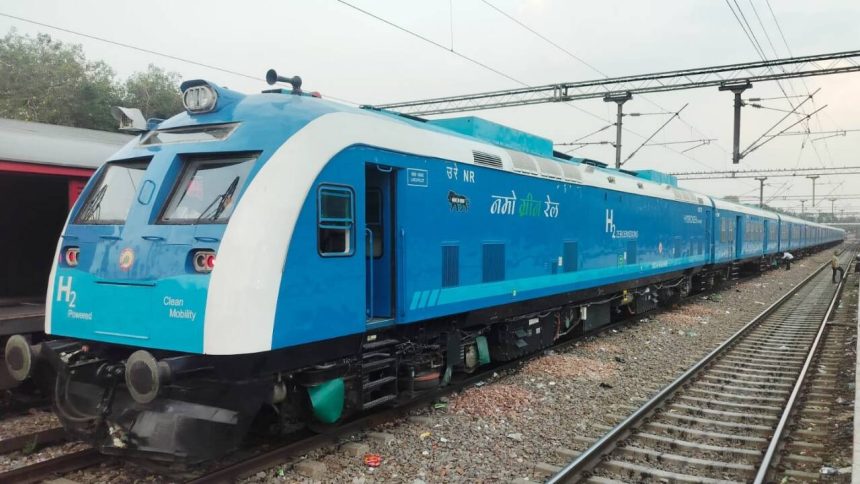
The Indian Railways has made a significant stride in the country’s journey towards sustainable transportation by introducing its first-ever hydrogen-powered train. The new locomotive is set to be flagged off by Prime Minister Narendra Modi on July 17, marking a major milestone in the nation’s efforts to reduce carbon emissions and reliance on fossil fuels. This ambitious move is expected to not only reduce the country’s ecological footprint but also pave the way for a cleaner, greener future for generations to come.
Route and Launch Date
The hydrogen train, which is currently being tested on a 100-kilometer stretch between the cities of Kalka and Shimla in Himachal Pradesh, is expected to begin its commercial run soon. The route, which passes through some of the most picturesque landscapes in the country, will not only showcase the train’s capabilities but also provide a unique travelling experience to passengers. The train’s launch date has been set for July 17, with Prime Minister Modi scheduled to flag off the train in a ceremonial function.
The introduction of the hydrogen-powered train is part of the Indian Railways’ broader plan to transition to cleaner modes of transportation. The country’s rail network, which is one of the largest in the world, has been a significant contributor to the nation’s carbon emissions. By shifting to hydrogen fuel, the Indian Railways hopes to reduce its reliance on diesel and reduce the country’s carbon footprint.
What Makes it Special
The hydrogen-powered train is a significant technological advancement in the field of sustainable transportation. The train’s primary power source is a fuel cell that uses hydrogen to generate electricity, which powers the locomotive. This not only reduces the train’s carbon emissions but also makes it a more efficient mode of transportation. The train’s hydrogen fuel cells are also designed to be more durable and require less maintenance compared to traditional diesel locomotives.
One of the unique features of the hydrogen-powered train is its ability to be refueled in just 5 minutes, making it a more efficient mode of transportation compared to traditional diesel trains. The train’s hydrogen fuel cells are also designed to be more environmentally friendly, with zero emissions and no noise pollution. This makes it an attractive option for passengers who are looking for a sustainable and comfortable mode of transportation.
Future Plans and Challenges
The introduction of the hydrogen-powered train is just the beginning of the Indian Railways’ plan to transition to cleaner modes of transportation. The country’s rail network is expected to play a significant role in reducing the nation’s carbon emissions and promoting sustainable development. However, the transition to hydrogen fuel will also come with its own set of challenges, including the need for an extensive network of hydrogen refueling stations and the high cost of hydrogen fuel. Despite these challenges, the Indian Railways is confident that the introduction of hydrogen-powered trains will pave the way for a cleaner and more sustainable future for the nation.
As the Indian Railways continues to push the boundaries of sustainable transportation, the introduction of the hydrogen-powered train is a significant step towards a greener future. With its ability to reduce carbon emissions and promote sustainable development, this train is set to revolutionize the way we think about transportation in India.