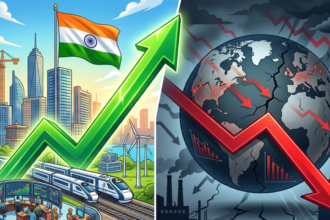
The union government’s efforts to boost infrastructure development have borne fruit, with both the road and railway ministries utilising their entire capital expenditure (Capex) for the financial year 2025-26. The Indian Railways, in particular, has seen a significant surge in passenger earnings, with revenue rising by 6% to approximately Rs 80,000 crore. However, freight revenue has lagged behind, clocking a modest increase of 2%. Despite this, the overall fiscal performance of the railways has been satisfactory, with the sector managing to utilise its allocated Capex of Rs 1.4 lakh crore.
Passenger Earnings on the Right Track
The 6% jump in passenger earnings is a welcome development, considering the challenges posed by the COVID-19 pandemic and subsequent economic downturn. The revival of domestic travel and tourism has contributed significantly to this growth, with the railways witnessing a steady increase in passenger traffic over the past year. Furthermore, the introduction of various passenger-friendly initiatives, such as the Tejas Express and Vande Bharat trains, has helped to boost ridership and enhance the overall travel experience.
The railways have also seen a significant increase in non-fare revenue, with earnings from advertising and other sources rising by 15%. This indicates a shift towards diversifying revenue streams and reducing dependence on freight and passenger fares. However, freight revenue, which accounts for a substantial portion of the railways’ overall earnings, has been a cause for concern, with growth lagging behind expectations.
Freight Revenue: A Cause for Concern
The modest 2% growth in freight revenue is a worrying trend, considering the sector’s critical role in driving India’s economic growth. The railways have been facing intense competition from private players and road transport, which has led to a decline in freight volumes. Furthermore, the high operating costs associated with the railways’ outdated infrastructure have also contributed to the decline in freight revenue.
The government has introduced several initiatives to boost freight revenue, including the Dedicated Freight Corridor (DFC) project and the Indian Railways’ own freight pricing mechanism. However, these efforts have yet to yield significant results, and the sector continues to face challenges in terms of capacity utilisation and revenue growth.
Capex Utilisation: A Testament to Government Efforts
The utilisation of 100% of the allocated Capex by the road and railway ministries is a testament to the government’s commitment to infrastructure development. This has enabled both sectors to undertake significant projects, including highway expansion, railway modernisation, and the development of new infrastructure. The impact of these efforts will be visible in the coming years, as the sectors continue to drive economic growth and employment.
The government’s efforts have also helped to create a positive sentiment among investors, with several infrastructure projects seeing significant investment in recent months. The Indian Railways, in particular, has seen a surge in investment, with several private players expressing interest in partnering with the sector.
As the government continues to focus on infrastructure development, it is likely that both the road and railway sectors will see significant growth in the coming years. The utilisation of 100% Capex for the financial year 2025-26 is a significant achievement, and a testament to the government’s commitment to driving economic growth through infrastructure development.