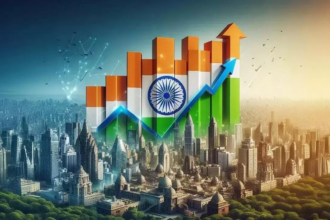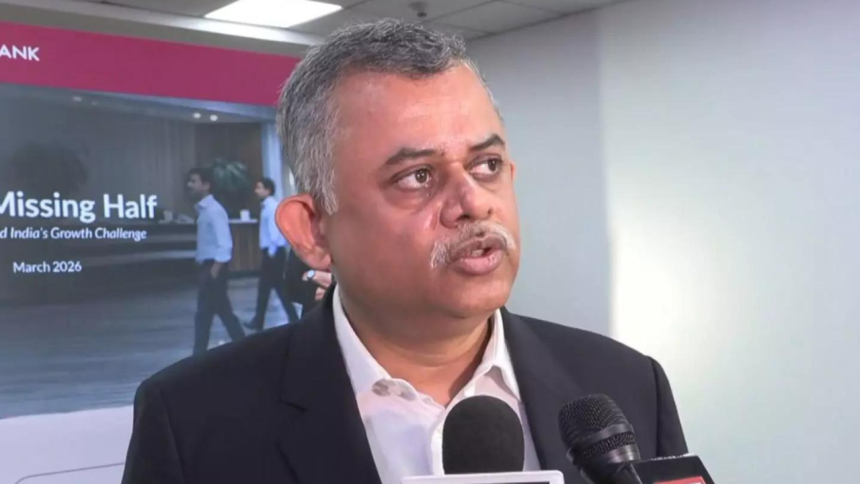
India’s economic growth remains an enigma, defying expectations of a slowdown as the global economy teeters on the brink of recession. Despite a host of challenges, including a sharp increase in crude oil prices, the country’s growth trajectory continues to defy skeptics. Neelkanth Mishra, India’s newly appointed Executive Director at the World Bank, has dismissed concerns that higher oil prices could derail the economy, instead predicting that India can sustain growth above 8%.
India’s Economic Resilience: A Story of Adaptation and Diversification
India’s economic resilience can be attributed to its ability to adapt to changing global conditions. The country has diversified its economy, with a significant shift towards services and manufacturing, reducing its dependence on oil imports. This diversification has helped to mitigate the impact of rising oil prices, which have historically been a significant concern for India’s economy. Additionally, the government’s efforts to promote renewable energy sources, such as solar and wind power, have helped to reduce the country’s reliance on fossil fuels.
The services sector, which accounts for over 60% of India’s GDP, has been a key driver of growth in recent years. The sector has seen significant investments in areas such as IT, finance, and tourism, which have helped to create new job opportunities and stimulate economic activity. Moreover, the government’s initiatives to promote digital payments and online transactions have helped to increase financial inclusion and reduce the country’s dependence on cash-based transactions.
India’s Economic Growth: A Long-Term Story
While short-term fluctuations in oil prices may pose a challenge to India’s economy, the country’s long-term growth prospects remain strong. India’s demographic dividend, with a large and growing youth population, is expected to drive economic growth in the coming years. The government’s efforts to invest in infrastructure, education, and healthcare have helped to create a favorable business environment, attracting foreign investment and stimulating economic activity.
Moreover, India’s economic growth is expected to be driven by a range of sectors, including manufacturing, construction, and agriculture. The government’s initiatives to promote Make in India, a campaign to encourage foreign companies to manufacture in India, have helped to attract significant investment in the sector. Additionally, the government’s efforts to promote agriculture, through initiatives such as the Pradhan Mantri Kisan Samman Nidhi (PM-KISAN) scheme, have helped to increase farmers’ incomes and stimulate economic activity in rural areas.
India’s Economic Future: A Bright Outlook
Despite the challenges posed by rising oil prices, India’s economic future remains bright. The country’s economic growth is expected to sustain above 8% in the coming years, driven by a range of factors, including demographic changes, infrastructure investments, and government initiatives. As Neelkanth Mishra noted, India’s economic growth is not just a short-term phenomenon, but a long-term story that is expected to drive the country’s development in the coming years.
India’s economic resilience is a testament to the country’s ability to adapt to changing global conditions. As the global economy continues to navigate uncertain times, India’s economic growth remains a beacon of hope, a reminder that even in the face of adversity, growth and prosperity are still within reach.