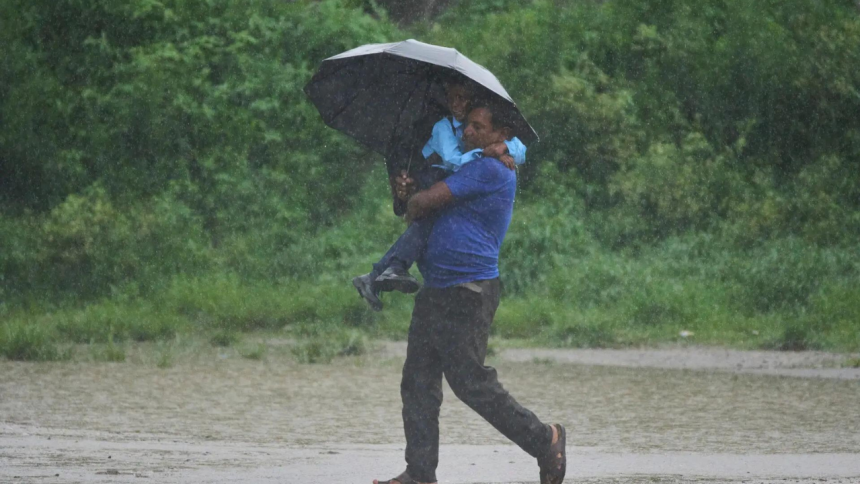
The monsoon season, a critical period for India’s agriculture and economy, is facing an uncertain future as the Indian Meteorological Department (IMD) has predicted that the average rainfall in the country during the second half of the monsoon season (August-September) is likely to be ‘below normal’. This forecast comes as a warning sign, especially with the threat of El Niño, a natural climate phenomenon associated with a weak monsoon, still looming large. As the country prepares for the crucial months ahead, the question on everyone’s mind is: what does this mean for India’s farmers, economy, and the environment?
El Niño: The Monsoon’s Worst Enemy
The IMD’s forecast is a reflection of the ongoing risk of El Niño, which is characterized by warmer-than-average sea surface temperatures in the Pacific Ocean. This phenomenon has a profound impact on India’s monsoon, leading to below-average rainfall and severe drought. With El Niño already showing signs of making a comeback, the IMD’s prediction is not entirely surprising. However, it is a stark reminder of the unpredictable nature of the monsoon and the need for the country to be prepared for the worst. India’s farmers, who rely heavily on the monsoon for their crops, are particularly vulnerable to the effects of El Niño. A below-average rainfall can spell disaster for their crops, leading to crop failures, economic losses, and food shortages.
Furthermore, the impact of El Niño is not limited to the agricultural sector. A weak monsoon can also have far-reaching consequences for the country’s water resources, leading to droughts and water scarcity. This, in turn, can affect the country’s power generation, as hydroelectric power plants depend on water levels to generate electricity. The effects of a weak monsoon can also be seen in the country’s environment, with a decrease in rainfall leading to soil erosion, landslides, and other natural disasters. In short, a below-average rainfall during the second half of the monsoon season can have far-reaching consequences for India’s economy, farmers, and the environment.
The Importance of Preparation
While the IMD’s forecast is a cause for concern, it is also a reminder of the importance of preparation and planning. The government and other stakeholders need to work together to mitigate the effects of a weak monsoon. This can be achieved through a combination of short-term and long-term measures, such as providing support to farmers, investing in drought-resistant crops, and implementing water conservation measures. Additionally, the government can also take steps to improve the country’s weather forecasting capabilities, enabling farmers and other stakeholders to make informed decisions about their crops and other activities. By being proactive and prepared, India can minimize the impact of a weak monsoon and ensure a more resilient and sustainable future for its farmers, economy, and environment.
The IMD’s forecast is a wake-up call for India to be prepared for the challenges ahead. With the threat of El Niño still looming large, the country needs to come together to address the issues related to the monsoon. By working together, India can ensure a more stable and predictable monsoon season, one that benefits its farmers, economy, and the environment.
A New Era for India’s Monsoon Management
The IMD’s forecast is also an opportunity for India to rethink its approach to monsoon management. The country needs to adopt a more proactive and adaptive approach to deal with the challenges posed by a weak monsoon. This can be achieved through the use of advanced weather forecasting technologies, climate modeling, and other tools that can help predict and prepare for the monsoon. Additionally, the government can also take steps to promote sustainable agriculture practices, such as organic farming and agroforestry, which can help reduce the country’s dependence on the monsoon. By embracing a new era of monsoon management, India can ensure a more resilient and sustainable future for its farmers, economy, and environment.
The monsoon season is a critical period for India, and the country needs to be prepared for the challenges ahead. The IMD’s forecast is a reminder of the importance of preparation and planning, and the need for the country to adopt a more proactive and adaptive approach to monsoon management. By working together, India can ensure a more stable and predictable monsoon season, one that benefits its farmers, economy, and the environment.