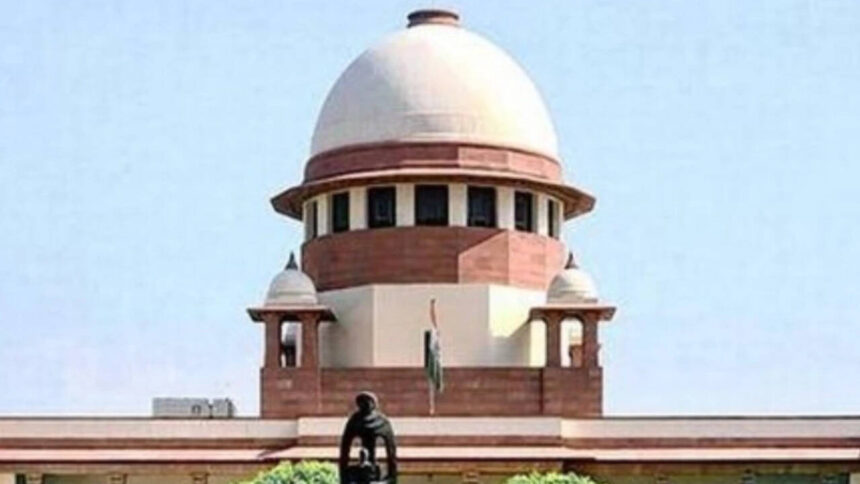
The wheels of justice are often said to turn slowly, but a recent remark by the Supreme Court has highlighted the alarming rate at which trials are proceeding in India. Noting that a commercial suit filed in 2015 was still at the evidence stage in the Delhi High Court, the apex court wryly observed that even a snail would question the speed at which the trial was proceeding. This stinging rebuke has once again brought to the forefront the issue of judicial gridlock and the need for urgent reforms to ensure that justice is delivered in a timely manner.
Backlog of Cases
The Supreme Court’s comment is a stark reminder of the enormous backlog of cases that clog India’s judicial system. With over 30 million cases pending in various courts across the country, the judiciary is facing an unprecedented crisis. The situation is further complicated by the shortage of judges, inadequate infrastructure, and the lack of effective case management systems. As a result, cases drag on for years, with litigants often waiting for decades to get justice.
The impact of this delay is felt across the spectrum, from individual litigants to businesses and the economy as a whole. The uncertainty and delay in the resolution of disputes can have a chilling effect on investment, innovation, and growth. Moreover, the prolonged wait for justice can also lead to a loss of faith in the system, undermining the rule of law and the very fabric of democracy.
Reforms and Initiatives
In recent years, there have been several initiatives aimed at addressing the issue of judicial gridlock. The government has introduced measures such as the National Court Management System, which aims to streamline case management and reduce delays. Additionally, there has been a push to increase the use of technology, such as video conferencing and digital courts, to improve efficiency and reduce the burden on physical courtrooms.
Furthermore, the judiciary has also taken steps to prioritize cases and ensure that urgent matters are heard and disposed of expeditiously. The Supreme Court has also been proactive in taking up matters of public importance and ensuring that they are heard and decided in a timely manner. However, despite these efforts, much more needs to be done to address the scale and complexity of the problem.
Way Forward
The Supreme Court’s comment on the pace of trials should serve as a wake-up call for all stakeholders to come together and find solutions to this pressing issue. It is imperative that the government, the judiciary, and civil society work in tandem to implement reforms that can help reduce delays and improve the efficiency of the judicial system. This could include measures such as increasing the number of judges, improving court infrastructure, and leveraging technology to streamline case management.
Ultimately, the delivery of justice is the cornerstone of a functional democracy, and it is the responsibility of all stakeholders to ensure that the system is able to function effectively. As the Supreme Court’s remark so aptly puts it, even a snail would question the pace at which trials are proceeding in India. It is time for urgent action to address this issue and ensure that justice is delivered in a timely and efficient manner.