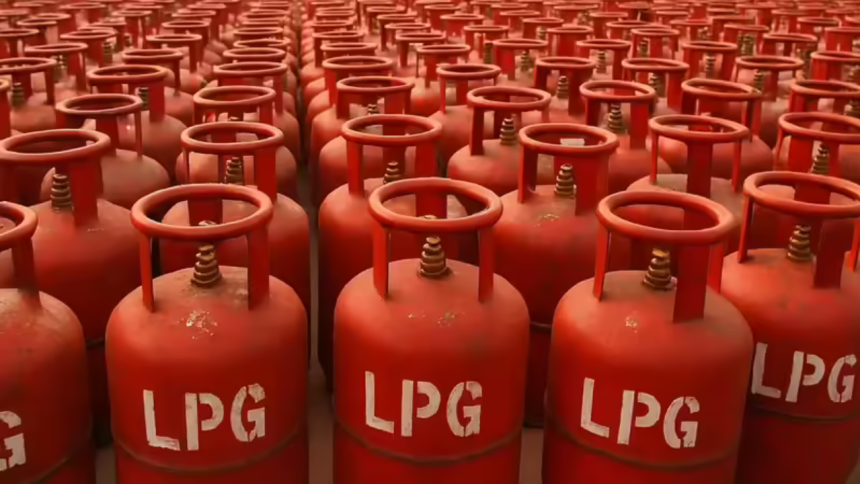
The Indian government’s efforts to bolster the supply of Liquefied Petroleum Gas (LPG) have yielded positive results, with the Ministry of Petroleum and Natural Gas confirming that the supply of LPG is stable. However, Oil Marketing Companies (OMCs) are still grappling with significant financial losses, incurring under-recoveries of nearly Rs 700 on every domestic LPG cylinder sold. This disparity highlights the complexities of the LPG market and the challenges faced by OMCs in maintaining profitability. The government has implemented various measures to strengthen LPG supplies, including increasing production, enhancing distribution networks, and promoting the use of LPG as a clean and efficient fuel. Despite these efforts, the financial burden on OMCs persists, underscoring the need for a more sustainable and equitable pricing mechanism.
LPG Supply and Demand Dynamics
The stability of LPG supplies can be attributed to the government’s proactive approach in addressing supply chain disruptions and enhancing production capacities. The expansion of LPG production facilities, coupled with the strategic location of import terminals, has enabled India to maintain a steady supply of LPG. Furthermore, the government’s initiatives to promote LPG as a substitute for traditional fuels, such as coal and firewood, have led to an increase in demand for LPG. As a result, the LPG market has experienced significant growth, with the number of LPG consumers rising steadily over the past few years. However, the increasing demand for LPG has also led to a surge in under-recoveries for OMCs, as the subsidized pricing mechanism has not kept pace with the rising costs of production and importation.
The under-recoveries incurred by OMCs are a result of the difference between the subsidized price at which LPG is sold to consumers and the actual cost of production and importation. The government has attempted to mitigate these losses by providing subsidies to OMCs, but the amount of subsidy has not been sufficient to cover the entire under-recovery. As a result, OMCs are forced to absorb the remaining loss, which has put a strain on their financial resources. The situation is further complicated by the fact that the subsidized pricing mechanism is not uniform across different regions, leading to variations in under-recoveries for OMCs operating in different parts of the country.
Impact on Oil Marketing Companies
The under-recoveries incurred by OMCs on every LPG cylinder sold have significant implications for their financial sustainability. The cumulative effect of these losses can erode the profitability of OMCs, making it challenging for them to invest in new projects and maintain their existing operations. The situation is particularly dire for smaller OMCs, which may not have the financial resources to absorb the losses. In addition to the financial impact, the under-recoveries also affect the ability of OMCs to provide high-quality services to their customers. The lack of investment in infrastructure and human resources can lead to a decline in the overall efficiency of LPG distribution networks, ultimately affecting the consumers who rely on LPG for their daily needs.
The government’s efforts to support OMCs have been focused on providing subsidies to offset the under-recoveries. However, the subsidy amount has not kept pace with the rising costs of production and importation, leaving OMCs to bear the brunt of the losses. The government needs to reconsider its pricing mechanism and provide a more sustainable solution to the under-recovery issue. One possible approach could be to implement a pricing formula that takes into account the fluctuations in global LPG prices and adjusts the subsidized price accordingly. This would help to reduce the under-recoveries and provide a more stable financial environment for OMCs.
Way Forward
The stability of LPG supplies is a positive development, but the financial losses incurred by OMCs remain a pressing concern. The government needs to work closely with OMCs to find a solution to the under-recovery issue, which is essential for maintaining the financial sustainability of the LPG industry. A comprehensive review of the pricing mechanism, coupled with investments in infrastructure and human resources, can help to reduce the under-recoveries and promote the growth of the LPG market. The government’s initiatives to promote LPG as a clean and efficient fuel have yielded positive results, and a more sustainable pricing mechanism can help to further accelerate the adoption of LPG. As the demand for LPG continues to rise, it is essential for the government and OMCs to work together to create a more equitable and sustainable LPG market that benefits both consumers and suppliers.
The future of the LPG industry depends on the ability of the government and OMCs to address the under-recovery issue and create a more sustainable pricing mechanism. The stability of LPG supplies is a positive step, but it is only the first part of the equation. The government and OMCs must now work together to find a solution to the financial losses and promote the growth of the LPG market. With the right approach, the LPG industry can continue to thrive, providing a clean and efficient fuel to millions of consumers across the country. The government’s commitment to the LPG sector is evident, and with a more sustainable pricing mechanism, the industry can look forward to a brighter future.